On the show tomorrow night, tracks from the following releases. Hope that some of you may be able to listen in online. Follow the links for further information.
Nuru Kane- CD Sigui- Colore / Diarama
Ba Cissoko- CD Electric Griot Land- Le Reve De L'Oiseau / Women
Smadj- CD Take It & Drive- C’est comme ci c’était fait / Tristan
Mohammad Qadri Dalal- CD Maqamat Insolites- Tarkîb jdîd
Thierry Robin & Gulabi Sapera- CD Rakhi - Yakeen / Bichu Rap / Neem
Richard Khuzami- CD Fused- Faruk's Funk / Malfouf / Go With Me / Bazar Bop
Ojos De Brujo- CD Techari-Color / Sultanas De Merkaillo / Todo Tiende
Next week Powerspot will be all Australian music.
Wednesday, June 21, 2006
Friday, June 16, 2006
Powerspot Playlist 14 June 06
On the show this week, I re-ran an interview with Eckhart Rahn, label manager of the Celestial Harmonies label, which is run out of Tucson Arizona. All music came from the label and artists included the following.
- BUTSUGA - JAMES ASHLEY FRANKLINNanae Yoshimura- Art of the Koto Vol 3
- THE COMPLETE PIANO MUSIC OF MIKALOJUS KONSTANTINAS CIURLIONIS, VOLUME ONE - NIKOLAUS LAHUSEN
- THE HUGO MASTERS: AN ANTHOLOGY OF CHINESE CLASSICAL MUSIC, VOLUME 1: BOWED STRINGS - VARIOUS ARTISTS
- SEA & MOUNTAIN: MUSIC IN THE KOREAN STYLE - MICHAEL ATHERTON
- George Deuter-
- O NOBILISSIMA VIRIDITAS: THE COMPLETE HILDEGARD VON BINGEN, VOLUME THREE - SINFONYE
- Kifo Mitsuhachi- Art of the Shakuhachi Vol 2
- THE ART OF THE KOTO, VOLUME THREE: WORKS FOR NIJUGEN - NANAE YOSHIMURA
- STREAM FLOWING: TRADITIONAL MUSIC FROM CHINA - WENG ZHENFA / FU RENCHANG
- MUSIC OF LAOS: THE BUDDHIST TRADITION - VARIOUS ARTISTS
- THE SEPHARDIC EXPERIENCE, VOLUME 1: THORNS OF FIRE - THE RENAISSANCE PLAYERS, WINSOME EVANS - DIRECTOR
- THE MUSIC OF ARMENIA, VOLUME ONE: SACRED CHORAL MUSIC - THE HAISSMAVOURK CHOIR/MIHRAN GHAZELIAN, DIRECTOR
- IN WINTER LIGHT: MUSIC FOR FLUTE AND GUITAR BY JOHN BUCKLEY - WILLIAM DOWDALL AND JOHN FEELEY
- THE MUSIC OF ISLAM (SAMPLER) - VARIOUS ARTISTS
- HOMRONG: CLASSICAL MUSIC FROM CAMBODIA - CHUM NGEK
As usual if you have any queries please contact me.


Friday, June 09, 2006
Ottmar Liebert Tour Dates Australia
Speaking with Ottmar Liebert'>Listen to the interview
July 2006: Australia/New ZealandQuartet:
OL - Flamenco + Electric Guitars, Jon Gagan - Bass Guitars and Keyboard, Dave Bryant - Percussion, Stephen Duros - Flamenco Guitar + Keyboard
Jul 14 Melbourne, Australia – The Arts Centre, Hamer Hall
Jul 15 Canberra, Australia – Canberra Theatre
Jul 20 Newcastle, Australia – Civic Theatre
Jul 21 Sydney, Australia – Marconi Club
Jul 22 Sydney, Australia – State Theatre
Jul 23 Adelaide, Australia – Norwood Concert Hall
Jul 25 Perth, Australia – Burswood Theatre
Jul 27 Auckland, New Zealand – Town Hall
Jul 28 Wellington, New Zealand – St. James Opera House
July 2006: Australia/New ZealandQuartet:
OL - Flamenco + Electric Guitars, Jon Gagan - Bass Guitars and Keyboard, Dave Bryant - Percussion, Stephen Duros - Flamenco Guitar + Keyboard
Jul 14 Melbourne, Australia – The Arts Centre, Hamer Hall
Jul 15 Canberra, Australia – Canberra Theatre
Jul 20 Newcastle, Australia – Civic Theatre
Jul 21 Sydney, Australia – Marconi Club
Jul 22 Sydney, Australia – State Theatre
Jul 23 Adelaide, Australia – Norwood Concert Hall
Jul 25 Perth, Australia – Burswood Theatre
Jul 27 Auckland, New Zealand – Town Hall
Jul 28 Wellington, New Zealand – St. James Opera House
Thursday, June 08, 2006
Sarodist Adrian McNeil in concert 25 June 06 2.30pm
Sangeet Australia: Supporting Hindustani Music presents
The Mehfil Series
Adrian McNeil (Sarod)
Pandit Ramchandra Suman (Tabla)
Acoustic Classical Music of India
Soul stirring and passionate Hindustani ragas in a traditional and intimate soiree setting.
tickets at the door $15/$12con/family discounts available
Where- Dickson Space
35-39 Dickson St
Newtown
www.sangeetaustralia.org
Adrian McNeil has lived, studied and performed in India for many years. He has made a number of recordings for national television and radio. A guitar student since childhood, Adrian began training in Hindustani music in 1980 as a disciple of Pt. Ashok Roy. He has intensively studied the musical instrument the sarod and Hindustani classical music for twentyfive years according to the strict precepts of the guru-shishya parampara traditional training method. For the last five years he has been a disciple of Prof. Sachindra Nath Roy and also the expert vocalist and musicologist Dr. Ashok Ranade, both based in Mumbai. Adrian has a Ph.D. in music and has published important articles and a book on Indian music, and has taught in music departments in Australia, USA, UK, India and Hong Kong.
Pandit Ramchandra Sumanji is a highly experienced tabla and pakhawaj player of unusual depth and talent. He received his musical training from an early age from two well known musicians, his uncle Pt. Lokmanji, and Guru Purushottam Dasji of Nathawadar Gharana. he has accompanied many of the great masters of Hindustani classical music such as the Dagar brothers, Siddeshwari Devi and many others in India and abroad. He is a celebrated Kathak dancer as well, an art form he studied for many years with Chiranjee Lalji, Shambhu Maharaj, Lachchu Maharaj and Birju Maharaj. His compelling percussion playing has all the lilt and grace of this exquisite dance form. He now lives in Sydney where he has many students at The Asian Dance and Music Centre (Australia) which he established in Bankstown.
Sangeet Australia is a small, grass roots, artist run organisation presenting monthly recitals, and a range of other activities including workshops and concerts for local and international artists alike, to increase awareness and understanding of this rich and complex tradition. Our focus is to present the most excellent standard of this music in a manner that is sensitive to and respectful of the artists involved. Sangeet Australia mehfils provide a unique opportunity to engage with this music in a relaxed and thoughtful way. To contact Sangeet Australia call 0416 352 900.
Sangeet Australia highly recommends:
‘Music Concepts. A Concise Dictionary of Hindustani Music’ the comprehensive work by eminent scholar-musician Dr. Ashok Da.Ranade now available on the excellent and reliable website of the ethical, artist run label of Underscore Records. For this and a host of high quality recordings in a variety of Indian musical styles see www.underscorerecords.com
Join our mailing list to keep up to date
with all our concerts.
www.sangeetaustralia.org
The Mehfil Series
Adrian McNeil (Sarod)
Pandit Ramchandra Suman (Tabla)
Acoustic Classical Music of India
Soul stirring and passionate Hindustani ragas in a traditional and intimate soiree setting.
tickets at the door $15/$12con/family discounts available
Where- Dickson Space
35-39 Dickson St
Newtown
www.sangeetaustralia.org
Adrian McNeil has lived, studied and performed in India for many years. He has made a number of recordings for national television and radio. A guitar student since childhood, Adrian began training in Hindustani music in 1980 as a disciple of Pt. Ashok Roy. He has intensively studied the musical instrument the sarod and Hindustani classical music for twentyfive years according to the strict precepts of the guru-shishya parampara traditional training method. For the last five years he has been a disciple of Prof. Sachindra Nath Roy and also the expert vocalist and musicologist Dr. Ashok Ranade, both based in Mumbai. Adrian has a Ph.D. in music and has published important articles and a book on Indian music, and has taught in music departments in Australia, USA, UK, India and Hong Kong.
Pandit Ramchandra Sumanji is a highly experienced tabla and pakhawaj player of unusual depth and talent. He received his musical training from an early age from two well known musicians, his uncle Pt. Lokmanji, and Guru Purushottam Dasji of Nathawadar Gharana. he has accompanied many of the great masters of Hindustani classical music such as the Dagar brothers, Siddeshwari Devi and many others in India and abroad. He is a celebrated Kathak dancer as well, an art form he studied for many years with Chiranjee Lalji, Shambhu Maharaj, Lachchu Maharaj and Birju Maharaj. His compelling percussion playing has all the lilt and grace of this exquisite dance form. He now lives in Sydney where he has many students at The Asian Dance and Music Centre (Australia) which he established in Bankstown.
Sangeet Australia is a small, grass roots, artist run organisation presenting monthly recitals, and a range of other activities including workshops and concerts for local and international artists alike, to increase awareness and understanding of this rich and complex tradition. Our focus is to present the most excellent standard of this music in a manner that is sensitive to and respectful of the artists involved. Sangeet Australia mehfils provide a unique opportunity to engage with this music in a relaxed and thoughtful way. To contact Sangeet Australia call 0416 352 900.
Sangeet Australia highly recommends:
‘Music Concepts. A Concise Dictionary of Hindustani Music’ the comprehensive work by eminent scholar-musician Dr. Ashok Da.Ranade now available on the excellent and reliable website of the ethical, artist run label of Underscore Records. For this and a host of high quality recordings in a variety of Indian musical styles see www.underscorerecords.com
Join our mailing list to keep up to date
with all our concerts.
www.sangeetaustralia.org
ain't it the truth
Recruitment - A True Classic
One day while walking down the street a highly successful executive woman
was tragically hit by a bus and she died. Her soul arrived up in heaven
where she was met at the Pearly Gates by St. Peter himself.
"Welcome to Heaven," said St.Peter. "Before you get settled in though, it
seems we have a problem. You see, strangely enough, we've never once had an
executive make it this far and we're not really sure what to do with you."
"No problem, just let me in." said the woman.
"Well, I'd like to, but I have higher orders. What we're going to do is let
you have a day in Hell and a day in Heaven and then you can choose whichever
one you want to spend an eternity in."
"Actually, I think I've made up my mind...I prefer to stay in Heaven", said
the woman.
"Sorry, we have rules..." And with that St. Peter put the executive in an
elevator and it went down-down-down to hell. The doors opened and she found
herself stepping out onto the putting green of a beautiful golf course. In
the distance was a country club and standing in front of her were all her
friends - fellow executives that she had worked with and they were all
dressed in evening gowns and cheering for her. They ran up and kissed her on
both cheeks and they talked about old times. They played an excellent round
of golf and at night went to the country club where she enjoyed an excellent
steak and lobster dinner. She met the Devil who was actually a really nice
guy (kinda cute) and she had a great time telling jokes and dancing. She was
having such a good time that before she knew it, it was time to leave.
Everybody shook her hand and waved good-bye as she got on the elevator.
The elevator went up-up-up and opened back up at the Pearly Gates and found
St. Peter waiting for her. "Now it's time to spend a day in heaven," he
said. So she spent the next 24 hours lounging around on clouds and playing
the harp and singing. She had a great time and before she knew it her 24
hours were up and St. Peter came and got her.
"So, you've spent a day in hell and you've spent a day in heaven. Now you
must choose your eternity," he said.
The woman paused for a second and then replied, "Well, I never thought I'd
say this, I mean, Heaven has been really great and all, but I think I had a
better time in Hell."
So St. Peter escorted her to the elevator and again she went down-down-down
back to Hell. When the doors of the elevator opened she found herself
standing in a desolate wasteland covered in garbage and Filth. She saw her
friends were dressed in rags and were picking up the garbage and putting it
in sacks. The Devil came up to her and put his arm around her.
"I don't understand," stammered the woman, "yesterday I was here and there
was a golf course and a country club and we ate lobster and we danced and
had a great time. Now all there is a wasteland of garbage and all my friends
look miserable."
The Devil looked at her and smiled. "Yesterday we were recruiting you; today
you're staff."
One day while walking down the street a highly successful executive woman
was tragically hit by a bus and she died. Her soul arrived up in heaven
where she was met at the Pearly Gates by St. Peter himself.
"Welcome to Heaven," said St.Peter. "Before you get settled in though, it
seems we have a problem. You see, strangely enough, we've never once had an
executive make it this far and we're not really sure what to do with you."
"No problem, just let me in." said the woman.
"Well, I'd like to, but I have higher orders. What we're going to do is let
you have a day in Hell and a day in Heaven and then you can choose whichever
one you want to spend an eternity in."
"Actually, I think I've made up my mind...I prefer to stay in Heaven", said
the woman.
"Sorry, we have rules..." And with that St. Peter put the executive in an
elevator and it went down-down-down to hell. The doors opened and she found
herself stepping out onto the putting green of a beautiful golf course. In
the distance was a country club and standing in front of her were all her
friends - fellow executives that she had worked with and they were all
dressed in evening gowns and cheering for her. They ran up and kissed her on
both cheeks and they talked about old times. They played an excellent round
of golf and at night went to the country club where she enjoyed an excellent
steak and lobster dinner. She met the Devil who was actually a really nice
guy (kinda cute) and she had a great time telling jokes and dancing. She was
having such a good time that before she knew it, it was time to leave.
Everybody shook her hand and waved good-bye as she got on the elevator.
The elevator went up-up-up and opened back up at the Pearly Gates and found
St. Peter waiting for her. "Now it's time to spend a day in heaven," he
said. So she spent the next 24 hours lounging around on clouds and playing
the harp and singing. She had a great time and before she knew it her 24
hours were up and St. Peter came and got her.
"So, you've spent a day in hell and you've spent a day in heaven. Now you
must choose your eternity," he said.
The woman paused for a second and then replied, "Well, I never thought I'd
say this, I mean, Heaven has been really great and all, but I think I had a
better time in Hell."
So St. Peter escorted her to the elevator and again she went down-down-down
back to Hell. When the doors of the elevator opened she found herself
standing in a desolate wasteland covered in garbage and Filth. She saw her
friends were dressed in rags and were picking up the garbage and putting it
in sacks. The Devil came up to her and put his arm around her.
"I don't understand," stammered the woman, "yesterday I was here and there
was a golf course and a country club and we ate lobster and we danced and
had a great time. Now all there is a wasteland of garbage and all my friends
look miserable."
The Devil looked at her and smiled. "Yesterday we were recruiting you; today
you're staff."
Wednesday, June 07, 2006
Powerspot 7 June 06
On the show tonight, you either heard or you missed the following.
I interviewed guitarist Ottmar Liebert who will be touring Australia in July. The interview can be downloaded here.
Music tonight came from mainly from the Ocora label out of France.
Valeria Miranda Family- Basta Ya
Musicians of the Nile- Taksim Arghoul
Ravi Shankar- Dhun Man Prasad
Fernando Machado- Virade Coimbra Fado of Coimbra Soares
Liu Yao Jin- Classical Music of China
Alim Qasimov- Rang, Uzzal, Zarbi Ussad- The Art of the Mugham
Vassilis Tsitsanis- Hoamge to Tsitsanis
Lakshmi Shankar- Raga Khafi- Seasons & Time
Munir Bashir- Taqsim- The Art of the Oud
Nusrat fateh Ali Khan- Manaqib Khawaja Mueenuddin Chisti- Live paris 1985
All tracks off a Ocora sampler entitled The World of Traditional World-Collection Ocora Radio France
I interviewed guitarist Ottmar Liebert who will be touring Australia in July. The interview can be downloaded here.
Music tonight came from mainly from the Ocora label out of France.
Valeria Miranda Family- Basta Ya
Musicians of the Nile- Taksim Arghoul
Ravi Shankar- Dhun Man Prasad
Fernando Machado- Virade Coimbra Fado of Coimbra Soares
Liu Yao Jin- Classical Music of China
Alim Qasimov- Rang, Uzzal, Zarbi Ussad- The Art of the Mugham
Vassilis Tsitsanis- Hoamge to Tsitsanis
Lakshmi Shankar- Raga Khafi- Seasons & Time
Munir Bashir- Taqsim- The Art of the Oud
Nusrat fateh Ali Khan- Manaqib Khawaja Mueenuddin Chisti- Live paris 1985
All tracks off a Ocora sampler entitled The World of Traditional World-Collection Ocora Radio France
Wednesday, May 31, 2006
Powerspot 31May06
On the show tonight(and in no particular order at time of writing) musical treats from the following to tempt and entice you to tune in.
U Srinivas & Michael Brook- CD
DreamRonu Majumdar- CD Lady Astride The Tiger
Ronu Majumdar / Ry Cooder / Jon Hassell- CD Hollow Bamboo
Hector Zazou- Les Nouvelles Polyphonies Corses
James Ashley Franklin- CD Butsuga music for shakuhachi
Harry Manx- Live at The Basement
Nuru Kane- CD Sigil
Ali Farka Toure & Toumani Diabate- in concert at Bozar Brussels Jan 29-2005 (promo release)
Kim Cunio & Heather Lee- CD Infloressence
Rachel Cogan- CD Sojourn
Daude Neguinha- CD Te Amo
Richard Khuzami- CD Fused
WengZhenfa-Sheng/Chinese Mouth Organ- Stream Flowing traditional music from China
I was hoping to speak with tabla master Bobby Singh this week but this will need to be held over for another week due to unforeseen circumstances. I will also run an interview next week with Ottmar Liebert, the 'nouveau flamenco' guitarist, who will be touring Australia in July.
Cheers....Hans
U Srinivas & Michael Brook- CD
DreamRonu Majumdar- CD Lady Astride The Tiger
Ronu Majumdar / Ry Cooder / Jon Hassell- CD Hollow Bamboo
Hector Zazou- Les Nouvelles Polyphonies Corses
James Ashley Franklin- CD Butsuga music for shakuhachi
Harry Manx- Live at The Basement
Nuru Kane- CD Sigil
Ali Farka Toure & Toumani Diabate- in concert at Bozar Brussels Jan 29-2005 (promo release)
Kim Cunio & Heather Lee- CD Infloressence
Rachel Cogan- CD Sojourn
Daude Neguinha- CD Te Amo
Richard Khuzami- CD Fused
WengZhenfa-Sheng/Chinese Mouth Organ- Stream Flowing traditional music from China
I was hoping to speak with tabla master Bobby Singh this week but this will need to be held over for another week due to unforeseen circumstances. I will also run an interview next week with Ottmar Liebert, the 'nouveau flamenco' guitarist, who will be touring Australia in July.
Cheers....Hans
Wednesday, May 24, 2006
Powerspot 24 may 06
Tonight's edition of Powerspot was a little bit different in that most of the program was given over to Lloyd Swanton, who many will know as the bass player for The necks, as well as leader of the group The catholics. He came in tonight to speak about the new release Gondola and we also had a bit of fun doing a sort of musical blindfold test.
Material on the show tonight came mainly from the CD Gondola by The catholics, certainly in the first 45 minutes or so. Other pieces played included works from the following artists and CD's. I'm glad to report that lloyd picked most of the artists and if you are interested in hearing this interview it should be uploaded next week. There will be a link to this on the Powerspot blog.
(In no particular order)
King Curtis- King Curtis Live at Fillmore West
Lonnie Liston Smith- CD Watercolors
Johnny Hartman- CD I Just Dropped By To Say Hello
Quincy Jones- CD Body Heat
Bugge Wesseltoft- CD Moving
Jon Hassell- CD Fascinoma
Horace Andy- CD True Love Shines Bright
Louie Vega presents Luisito Quintero- Cd Percussion Madness
Bill Laswell- Dub Chamber 3
Tune in next week to hear tabla player Bobby Singh talk about his instrument of choice and put on the musical blindfold.
Cheers....Hans
Material on the show tonight came mainly from the CD Gondola by The catholics, certainly in the first 45 minutes or so. Other pieces played included works from the following artists and CD's. I'm glad to report that lloyd picked most of the artists and if you are interested in hearing this interview it should be uploaded next week. There will be a link to this on the Powerspot blog.
(In no particular order)
King Curtis- King Curtis Live at Fillmore West
Lonnie Liston Smith- CD Watercolors
Johnny Hartman- CD I Just Dropped By To Say Hello
Quincy Jones- CD Body Heat
Bugge Wesseltoft- CD Moving
Jon Hassell- CD Fascinoma
Horace Andy- CD True Love Shines Bright
Louie Vega presents Luisito Quintero- Cd Percussion Madness
Bill Laswell- Dub Chamber 3
Tune in next week to hear tabla player Bobby Singh talk about his instrument of choice and put on the musical blindfold.
Cheers....Hans
Wednesday, May 10, 2006
Powerspot Playlist 10 May 06
On the show tonight, musical treats and delights from the following.
Next week we speak with Natacha Atlas re the new album.
Albin De La Simone - J'Ai Changé- CD So FRenchy So Chic
Nicolas Repac - La Nuit Mène Une Existence Obscure-CD So Frenchy So Chic
Têtes Raides - Les Radis-CD So FRenchy So Chic
Solade- CD Boro Song- For That / Oceamn Lullaby / What It Is
Jalilah’s Raks Sharki- CD In A Beirut Mood- Lebanese Banquet
Natacha Atlas- CD Mish Maoul- Haram Aleyk / Wahashni
Gotan Project- CD Lunatico- La Viguela
Jessica- V/A Putumayo Kids Present Reggae Playground- Ying Yang
Asheba- V/A Putumayo Kids Present Reggae Playground- Reggae Lullaby
Toots & The Maytals- V/A Putumayo Kids Present Reggae Playground- Take Me Home
V/A Jamaica Ska Down- Ken Lazarus- I Don’t Love You Anymore
V/A Jamaica Ska Down- Ken Lazarus- Beatles Got To Go
V/A Jamaica Ska Down- Monty Morris- What Are You Going To Do
V/A Jamaica Ska Down- Monty Morris- Sammy Dead
The catholics- CD- Gondola- CD Oaxaca
Nuru Kane- CD Sigil- Mami
Next week we speak with Natacha Atlas re the new album.
Albin De La Simone - J'Ai Changé- CD So FRenchy So Chic
Nicolas Repac - La Nuit Mène Une Existence Obscure-CD So Frenchy So Chic
Têtes Raides - Les Radis-CD So FRenchy So Chic
Solade- CD Boro Song- For That / Oceamn Lullaby / What It Is
Jalilah’s Raks Sharki- CD In A Beirut Mood- Lebanese Banquet
Natacha Atlas- CD Mish Maoul- Haram Aleyk / Wahashni
Gotan Project- CD Lunatico- La Viguela
Jessica- V/A Putumayo Kids Present Reggae Playground- Ying Yang
Asheba- V/A Putumayo Kids Present Reggae Playground- Reggae Lullaby
Toots & The Maytals- V/A Putumayo Kids Present Reggae Playground- Take Me Home
V/A Jamaica Ska Down- Ken Lazarus- I Don’t Love You Anymore
V/A Jamaica Ska Down- Ken Lazarus- Beatles Got To Go
V/A Jamaica Ska Down- Monty Morris- What Are You Going To Do
V/A Jamaica Ska Down- Monty Morris- Sammy Dead
The catholics- CD- Gondola- CD Oaxaca
Nuru Kane- CD Sigil- Mami
Tuesday, May 02, 2006
Powerspot 3 May 06
On the show tomorrow night, musical treats from the following (and at time of writing in no particular order)
The interview with Gotan project has been postponed. I'm hoping we can do it by next week.
Gotan Project- Lunatico
Bombay Dub Orchestra-Bombay Dub Orchestra
The catholics- Gondola
the ipanemas- samba is our gift
grupo batuque- ole ola futebol bonito
Bugge Wesseltoft- Live
Nils petter Molvaer- Remixes
Natacha Atlas- Mish Maoul
Kim Cunio & Heather Lee- Music from the Dead Sea Scrolls
Bobby Singh & Adrian McNeil- Aasha
The interview with Gotan project has been postponed. I'm hoping we can do it by next week.
Gotan Project- Lunatico
Bombay Dub Orchestra-Bombay Dub Orchestra
The catholics- Gondola
the ipanemas- samba is our gift
grupo batuque- ole ola futebol bonito
Bugge Wesseltoft- Live
Nils petter Molvaer- Remixes
Natacha Atlas- Mish Maoul
Kim Cunio & Heather Lee- Music from the Dead Sea Scrolls
Bobby Singh & Adrian McNeil- Aasha
Thursday, April 27, 2006
The Necks- news
THE NECKS IN EXCITING NEW AUSTRALIAN TV SERIES, WITH AUDIO ON INTERNET
10pm on Tuesday 2nd of May sees the first episode of SET, an exciting new
(Australian) ABC-TV series of live improvised and experimental music
performances, and the first episode kicks off with The Necks playing a 25
minute piece, Taghairm.
The audio from SET will also go to air on ABC Radio National's Music Deli,
on Friday 5th May at 8:00pm, repeated on Sunday 7th at 4:00pm, and then
again on Tuesday 9th at 2:00am
Necks fans outside Australia will be pleased to know that the audio will be
available at: http://www.abc.net.au/rn/musicdeli/default.htm
and as a free podcast for 7 days after the TV broadcast at the SET website:
http://www.abc.net.au/set
SET runs on Tuesdays at 10pm throughout 2006, in three batches of three
shows:
2nd May The Necks
9th May Francis Plagne
16th May Anthony Pateras
11th July Ernie Althoff, Rod Cooper
18th July Oren Ambarchi
25th July Splinter Orchestra
12th September Hi-God People, Jim Denley, Peter Blamey
19th September Stasis Duo, Amanda Stewart
26th September Rob Avenaim, Dale Gorfinkel, Lucas Abela
This is a fantastic initiative from the ABC, with a second series already
under discussion. Please let them know you approve, by phone or through
their website, www.abc.net.au
(Even if you live outside Australia, if you think it's great that a
government-funded national network is devoting half an hour of free-to-air
TV a week to cutting edge impro and experimental music, please let them know
by sending a message through the website link above!!)
10pm on Tuesday 2nd of May sees the first episode of SET, an exciting new
(Australian) ABC-TV series of live improvised and experimental music
performances, and the first episode kicks off with The Necks playing a 25
minute piece, Taghairm.
The audio from SET will also go to air on ABC Radio National's Music Deli,
on Friday 5th May at 8:00pm, repeated on Sunday 7th at 4:00pm, and then
again on Tuesday 9th at 2:00am
Necks fans outside Australia will be pleased to know that the audio will be
available at: http://www.abc.net.au/rn/musicdeli/default.htm
and as a free podcast for 7 days after the TV broadcast at the SET website:
http://www.abc.net.au/set
SET runs on Tuesdays at 10pm throughout 2006, in three batches of three
shows:
2nd May The Necks
9th May Francis Plagne
16th May Anthony Pateras
11th July Ernie Althoff, Rod Cooper
18th July Oren Ambarchi
25th July Splinter Orchestra
12th September Hi-God People, Jim Denley, Peter Blamey
19th September Stasis Duo, Amanda Stewart
26th September Rob Avenaim, Dale Gorfinkel, Lucas Abela
This is a fantastic initiative from the ABC, with a second series already
under discussion. Please let them know you approve, by phone or through
their website, www.abc.net.au
(Even if you live outside Australia, if you think it's great that a
government-funded national network is devoting half an hour of free-to-air
TV a week to cutting edge impro and experimental music, please let them know
by sending a message through the website link above!!)
Tuesday, April 25, 2006
Powerspot 26 April 06
Longish pieces on tonight's show, from the following artists and albums.
Natacha Atlas- CD Mish Maoul (Mantra)
Chem Ngek- Homrong - classical music of cambodia (Celestial Harmonies)
Grupo Naidy- iArriba Suena Marimba- Currulao Marimba Music from Colombia (Smithsonian Folkways / Fuse)
Various Artists- So Frenchy So Chic (Filter)
Moritz von Oswald & Mark Ernestus CD Rhythm & Sound Trax
Imprint / Outward (Basic Channel)
Tabla Beat Science Audio Grab from DVD Live
Bugge Wesseltoft- CD Moving- Track Moving
Natacha Atlas- CD Mish Maoul (Mantra)
Chem Ngek- Homrong - classical music of cambodia (Celestial Harmonies)
Grupo Naidy- iArriba Suena Marimba- Currulao Marimba Music from Colombia (Smithsonian Folkways / Fuse)
Various Artists- So Frenchy So Chic (Filter)
Moritz von Oswald & Mark Ernestus CD Rhythm & Sound Trax
Imprint / Outward (Basic Channel)
Tabla Beat Science Audio Grab from DVD Live
Bugge Wesseltoft- CD Moving- Track Moving
Wednesday, April 19, 2006
Powerspot 19 April 06

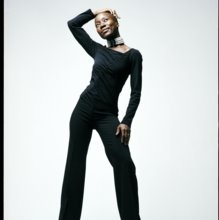
On the show tonight, musical treats and delights from the following.
(Artist- CD- Track- Label- website)
Satsuki Odamura- Koto Dreaming-Makura-Orpheus Music-(www.orpheusmusic.com.au & www.satsukikoto.com.au)
Satsuki Odamura's new CD, Koto Dreaming is a collection of innovative and uniquely Australian multicultural compositions for koto. Koto Dreaming breaks away from the traditional sounds and compositions for koto, and includes Satsuki's own collaborative compositions with Australian artists. It is a synthesis of her inspirations gained by her working closely with Australian artists and a culmination of her fifteen years accumulative experience as a koto virtuoso based in Australia. Koto Dreaming begins with a work commissioned by celebrated Australian composer Ross Edwards and includes pieces by composers Caroline Szeto, Anthony Briggs, Linsey Pollak, as well as Satsuki herself, in collaboration with Sandy Evans and Tony Lewis – who together comprise the trio Waratah.
Jon Hassell- CD Fascinoma- Caravenesque- Water Lily Acoustics - www.waterlilyacoustics.com
Jon Hassell—trumpet
Ry Cooder—guitar
Jacky Terrason—piano
Ronu Majumdar—bansuri
Rick Cox—guitar, bass clarinet, samples
Jamie Muhoberac—zendrum
Joachim Cooder—drums
Rick Masterson—tambura
Rose Okada—tambura
After twentysome years of recordings and performnaces, this is the first time I've ever played someone else's song. With this recording I locate myself squarely within that aspect of music which is fundamental and irreducible: the beauty of the sound. This is what Dane Rudyar calls "tone-magic" — a concept derived from ancient practice wherein the quality of the tone itself communicates meaning quite apart from any further arrangement of an "artifice" of music. At the same time I celebrate here my first contacts with musical exotica in the form of certain songs and melodies heard as a child on the radio or in movie scores. This music created a kind of permanent technicolor oasis in my spirit — a place where I always want to stop for a cool refreshing drink, whether from Duke Ellington and Juan Tizol's "Caravan", or Ravel or raga or gamelan or Gil, or Joao or Joujouka — and a place which became the underlying spring from which flowed my "fourth world" musical paradigm. Jon Hassell
Marc Anderson- Cd Time Fish- Asylum Downs
Knut Hamre & Steve Tibbetts - CD A- Olav Bergsland- Hannibal- (www.frammis.com)
Nusrat Fateh Ali Khan & Miichael Brook Remixed CD Star Rise- Nitin Sawhney- Tracery Remix- Real World- (www.realworld.com)
V/A-Eastern Uprising: Dance Music from the Asian Underground [compilation]- Krome Assassins- Return of the Shankar- Higher Ground- http://www.higherground.co.uk/
Nusrat Fateh Ali Khan & Miichael Brook Remixed Star Rise-Asian Dub Foundation- Taa Deem Remix- Real World- (www.realworld.com)
Various Artists- Music of Laos- The Buddhist Tradition- Sep Naichangva Khamenpaktho / Pheng Kaonok- Celestial Harmonies- www.celestialharmonies.com
Laos has remained a mystery to most Westerners even after the names of its neighboring countries—Vietnam, Cambodia and Thailand—have become commonplace. Music of Laos: The Buddhist Tradition is the result of a collaboration between the University of Applied Sciences in Emden, Germany, and the Ministry of Information and Culture of Laos. If Laos is still a mystery to the West, its music is even more obscure. As producer Gisa Jähnichen points out, little research has been done on musical practises in Laos. She determined that only 22 albums were ever issued of Lao music—some on cassette only, many of dubious quality, and most generally unavailable. Apart from the khen, most types of Lao music were woefully underrecorded. Buddhism has greatly affected both the ‘classical’ ceremonial ensembles and the rural or ‘folk’ singing and playing of the farmers and villages. Music happens at all the major events in the Lao calendar, especially at the beginning of the New Year and during full moons, and at weddings, funerals, and other special occasions. The songs performed at these events are not haphazard; there is a strong tradition of prayer and thanksgiving that can be heard at a village wedding as clearly as at a grand temple festival. It is this tradition that is represented on this recording. Recording the ceremonial ensemble of Champasak in Champasak province (which is the source of the first four tracks on this collection) offered an opportunity to record a fabulous set of instruments that had been made in 1750 and are still in use. But in Xieng Khuang, Jähnichen’s crew spent three days without water and electricity, and automotive repair seems to have been as much a part of the production team’s job as the actual recording. The infrastructure of Laos is not up to modern standards, and while the area of Luang Prabang was served by a new road, unregulated irrigration by local farmers made it difficult to get very far without having to alter course several times. Jähnichen also found that the religious/ritual music of the province was far less accessible than the classical court and entertainment styles. The last five tracks on this collection come from Luang Prabang, featuring the Pi Mai ensemble, and while they clearly feature a ‘classical’ ensemble and some fairly obvious ‘popular’ tunes, they nevertheless show the pervasive influence of Buddhism, as they were all part of the Buddhist New Year celebration held in April. Through it all, Jähnichen recorded as much as she could. “We made a cross-section of actual music practices; it was not our aim to record the whole musical history of a particular ethnic group.” With her crew she documented 24 different ethnic groups in Laos between June 1999 and May 2001. They made nearly 1000 audio recordings totaling almost 80 hours of material. Music of Laos: The Buddhist Tradition is obviously just a sample of the resulting archives. This volume, as the title indicates, serves merely to hint at the enormous presence and impact of Buddhist thought in various forms of Lao music.
Rokia Traore- Live at Le Cigale Paris 2004 (DVD) - Audio extract- Label Indigo- www.label-bleu.com
http://www.bbc.co.uk/radio3/womad2004/rokia_traore.shtml
I also did a quick interview with local musician, sound explorer and healer Vicki Hansen from the group IndiaJiva who have a special event coming up May 6 at Eastside Arts Centre. She spoke about her new label Medicine Music which will be officially launched on the night. More information at www.medicinemusic.com.au. Music in this section from her albums Global Roots-The Odyssey & Sacred Ragas. The interview will run for 14 minutes. The interview will be available for download over at the Powerspot blog by Thursday and will be online for a month.
Tuesday, April 11, 2006
Powerspot 12 April 06
On the show, tomorrow night, treats and delights from the following artists.
Mercan Dede-/ Secret Tribe CD Nar
Music of Laos- The Buddhist Tradition (Celestial Harmonies)
Laos has remained a mystery to most Westerners even after the names of its neighboring countries—Vietnam, Cambodia and Thailand—have become commonplace. Music of Laos: The Buddhist Tradition is the result of a collaboration between the University of Applied Sciences in Emden, Germany, and the Ministry of Information and Culture of Laos. If Laos is still a mystery to the West, its music is even more obscure. As producer Gisa Jähnichen points out, little research has been done on musical practises in Laos. She determined that only 22 albums were ever issued of Lao music—some on cassette only, many of dubious quality, and most generally unavailable. Apart from the khen, most types of Lao music were woefully underrecorded.
Buddhism has greatly affected both the ‘classical’ ceremonial ensembles and the rural or ‘folk’ singing and playing of the farmers and villages. Music happens at all the major events in the Lao calendar, especially at the beginning of the New Year and during full moons, and at weddings, funerals, and other special occasions. The songs performed at these events are not haphazard; there is a strong tradition of prayer and thanksgiving that can be heard at a village wedding as clearly as at a grand temple festival. It is this tradition that is represented on this recording.
Recording the ceremonial ensemble of Champasak in Champasak province (which is the source of the first four tracks on this collection) offered an opportunity to record a fabulous set of instruments that had been made in 1750 and are still in use. But in Xieng Khuang, Jähnichen’s crew spent three days without water and electricity, and automotive repair seems to have been as much a part of the production team’s job as the actual recording.
The infrastructure of Laos is not up to modern standards, and while the area of Luang Prabang was served by a new road, unregulated irrigration by local farmers made it difficult to get very far without having to alter course several times. Jähnichen also found that the religious/ritual music of the province was far less accessible than the classical court and entertainment styles. The last five tracks on this collection come from Luang Prabang, featuring the Pi Mai ensemble, and while they clearly feature a ‘classical’ ensemble and some fairly obvious ‘popular’ tunes, they nevertheless show the pervasive influence of Buddhism, as they were all part of the Buddhist New Year celebration held in April.
Through it all, Jähnichen recorded as much as she could. “We made a cross-section of actual music practices; it was not our aim to record the whole musical history of a particular ethnic group.” With her crew she documented 24 different ethnic groups in Laos between June 1999 and May 2001. They made nearly 1000 audio recordings totaling almost 80 hours of material. Music of Laos: The Buddhist Tradition is obviously just a sample of the resulting archives. This volume, as the title indicates, serves merely to hint at the enormous presence and impact of Buddhist thought in various forms of Lao music.
Philip Glass- CD Kundun- Escape to India
Philip Glass's score for Kundun is the realization of a long-cherished dream. For years, I had hoped to work with Glass, and in Kundun we found the ideal subject for a special collaboration. His Buddhist faith and deep understanding of Tibetan culture combine with the subtlety of his composition to play an essential role in our movie on the life of the Dalai Lama. Philip Glass is an artist of tremendous sensitivity whose music works from the inside of the film, from its heart, to produce a powerful emotional intensity which remains for days in the listener's head. The beauty, magic, grandeur, and spirituality of the score allow us to feel the pulse of the story as it unfolds. For me, the images in the film no longer stand on their own without Philip Glass's music. I consider myself fortunate, indeed blessed, to have worked with him on Kundun...
- Martin Scorsese.
Satsuki Odamura- Koto Dreaming- Dancing on Rainbows
Satsuki Odamura's new CD, Koto Dreaming is a collection of innovative and uniquely Australian multicultural compositions for koto. Koto Dreaming breaks away from the traditional sounds and compositions for koto, and includes Satsuki's own collaborative compositions with Australian artists. It is a synthesis of her inspirations gained by her working closely with Australian artists and a culmination of her fifteen years accumulative experience as a koto virtuoso based in Australia.
Koto Dreaming begins with a work commissioned by celebrated Australian composer Ross Edwards and includes pieces by composers Caroline Szeto, Anthony Briggs, Linsey Pollak, as well as Satsuki herself, in collaboration with Sandy Evans and Tony Lewis – who together comprise the trio Waratah.
Nitin Sawhney- CD Philtre (Instrumentals)- Mausam / The Sanctuary (Promotional)
(from http://www.bbc.co.uk/music/world/reviews/nitinsawhney_philtre.shtml#review)
Nitin Sawhney is never at ease. Since the release of Human in 2003, he has DJd all over the world from the Hollywood Bowl in LA to London's Fabric, assisted the Royal National Theatre, starred in award-winning TV programmes and written scores for the City of Birmingham Symphony Orchestra and about a dozen films. Back in the studio doing his own material, it's the same crisis: no genre quite satisfies Sawhney, no suit ever fits.
On Philtre, he travels restlessly though global club beats, Indian classical music, hip-hop,Bengali folk and occasionally somersaults away from this already eclectic milieu to toy with Flamenco, Americana and old-style Soul. No single tune is exactly representative, but "Dead Man" is typical: you're not sure if you're in Arizona or Assam. Oh, and it's slow pounding rhythm, grinding guitars and blues-Bollywood vocals (shared with soundtrack star Reena Bhardwaj) are just sublime.
Collaborations are the crux of Sawhney's work. With Barcelona-based flamenco-hiphop collective Ojos de Brujo he teases out a stunning, fast-plucked two-parter, "Noches en Vela" and the equally frantic "Footprints". Tracing a melodic line from flamenco to raga, it's a subtly modulated burst of Hindu-lusian passion. He also teams up with Ninja Tune's Fink and human beatbox Jason Singh, as well as regular invitees Tina Grace, Tai and Sharon Duncan - and Mrs. Sawhney, his mum, guests on a Rag Doll, bright Hindi poem about a walk along the Ganges.
He's often angst-ridden and energetic and can deliver raps and rants with gut-twisting anger, but Sawhney also knows how to slow down: much of this album is meditative and mellow. It opens with a slow, pulsing triphop 'Everything' and often makes excursions into yogic, relaxing ambient: "Void", "The Search", "Sanctuary". Elsewhere, the danceable beat hasn't gone - but it's now more of a deep, subdued groover pulsing through all the songs. Imagine Moby with a cultural heritage and an attitude.
Prolific, polyglot, political - Sawhney preserves modern music's mental health. In many ways, he's Britain's Indian Manu Chao, but this album suggests he is not so much a global magpie in the postmodern mould as an aspiring craftsman. He weaves fusions with delicacy and pays tribute to well-established, traditional styles and genres rather than slapping and scratching them into a cacophonous collage. 'Philtres' are magic potions, healing balms - they make life better - and only canny, cunning wizards like Nitin Sawhney know how to mix them and serve them up.
Pharoah Sanders-CD With A Heartbeat- Across Time
Jai Uttal and the Pagan Love Orchestra- CD Beggars and Saints- Gopala
John Martyn- CD Couldn't Love You More- One World
Daniel Lanois- CD Sling Blade- Blue Waltz
The Daniel Lanois interview can be downloaded as mp3 from the Powerspot blog. I will also be downloading in the next few weeks the interviews I did some time ago with Nitin Sawhney, Jon Hassell re Fascinoma, Ralph Towner and more.
Mercan Dede-/ Secret Tribe CD Nar
(from mecandede.com)
Mercan Dede believes that when you put digital, electronic sounds together with hand-made, human ones, you can create universal language, capable of uniting old and young, ancient and modern, East and West. It’s a bold claim, but the Turkish-born and Montreal-based musician/producer/DJ has the career and the music to back it up. When he takes the stage with his group Secret Tribe, he hovers at the side behind his turntables and electronics, occasionally picking up a traditional wooden flute, or ney to float in sweet, breathy melodies, while masters of the kanun (zither), clarinet, darbuka (hand drum) and whatever other instruments he’s decided to include that night, ornament his grooves and spin magical, trance melodies to match the whirling of the group’s spectacular dervish dancer, Mira Burke.
This contrast between electronica and classical or folkloric arts cuts to the core of the Sufi philosophy that guides this one-of-a-kind artist. “Those things are not really separate,” says Dede. “The essence of Sufism is counterpoint. Everything exists with its opposite. On one side, I am doing electronic music. The other side of that is this really acoustic, traditional music.” Dede doesn’t just bring in any traditional sounds and sights as adornment to his techno beats. He is ever on the lookout for new collaborators, and they might come from any tradition, any country, any generation. For Secret Tribe’s U.S. debut in January, 2004, he flew in three, teenage prodigies of Turkish classical music from Istanbul and two of the pieces they played were improvised during the concert. “When I choose a musician,” says Dede, “I need to be connected with them in terms of personality, heart-wise we say in Turkey. We should have a similar energy and feeling about life. The second thing is they need to be down with the technical part of music. Once they’ve done that, you don’t need to worry. They can play anything.”
Mercan Dede and Secret Tribe’s splendid 2002 release Nar realizes this elegant marriage of old and new stunningly. Along with the groups’ spellbinding performances, it is helping them build a worldwide following. When the group plays in Turkey, they can draw as many as 20,000 people. But for Dede—whose name comes from a minor character in a contemporary Turkish novel—it has been a long, highly unconventional road to success. Raised poor in a Turkish village in the 1970s, Dede recalls the moment when listening to the radio as a six-year-old, he fell in love with the sound of the ney. But even when he moved to Istanbul to study journalism, he could not afford an instrument, so he made his first one from a length of plastic plumbing pipe. Although he eventually found a ney teacher, Dede did not pursue music as a career. He was more deeply involved with photography, and by chance, an official at the Saskatoon Public Library in Canada saw some of his work and invited him to come and do an exhibition.
Dede wound up studying multimedia in Saskatoon, and he worked in a bar to earn rent money. That was where he first encountered the art of deejaying. One day the bar’s deejay couldn’t make it, and Dede stepped in. The techno revolution was just beginning, and Dede was getting in on the ground floor. By the mid-80s, he was traveling to do “technotribalhouse” deejay gigs under the name
Mercan Dede believes that when you put digital, electronic sounds together with hand-made, human ones, you can create universal language, capable of uniting old and young, ancient and modern, East and West. It’s a bold claim, but the Turkish-born and Montreal-based musician/producer/DJ has the career and the music to back it up. When he takes the stage with his group Secret Tribe, he hovers at the side behind his turntables and electronics, occasionally picking up a traditional wooden flute, or ney to float in sweet, breathy melodies, while masters of the kanun (zither), clarinet, darbuka (hand drum) and whatever other instruments he’s decided to include that night, ornament his grooves and spin magical, trance melodies to match the whirling of the group’s spectacular dervish dancer, Mira Burke.
This contrast between electronica and classical or folkloric arts cuts to the core of the Sufi philosophy that guides this one-of-a-kind artist. “Those things are not really separate,” says Dede. “The essence of Sufism is counterpoint. Everything exists with its opposite. On one side, I am doing electronic music. The other side of that is this really acoustic, traditional music.” Dede doesn’t just bring in any traditional sounds and sights as adornment to his techno beats. He is ever on the lookout for new collaborators, and they might come from any tradition, any country, any generation. For Secret Tribe’s U.S. debut in January, 2004, he flew in three, teenage prodigies of Turkish classical music from Istanbul and two of the pieces they played were improvised during the concert. “When I choose a musician,” says Dede, “I need to be connected with them in terms of personality, heart-wise we say in Turkey. We should have a similar energy and feeling about life. The second thing is they need to be down with the technical part of music. Once they’ve done that, you don’t need to worry. They can play anything.”
Mercan Dede and Secret Tribe’s splendid 2002 release Nar realizes this elegant marriage of old and new stunningly. Along with the groups’ spellbinding performances, it is helping them build a worldwide following. When the group plays in Turkey, they can draw as many as 20,000 people. But for Dede—whose name comes from a minor character in a contemporary Turkish novel—it has been a long, highly unconventional road to success. Raised poor in a Turkish village in the 1970s, Dede recalls the moment when listening to the radio as a six-year-old, he fell in love with the sound of the ney. But even when he moved to Istanbul to study journalism, he could not afford an instrument, so he made his first one from a length of plastic plumbing pipe. Although he eventually found a ney teacher, Dede did not pursue music as a career. He was more deeply involved with photography, and by chance, an official at the Saskatoon Public Library in Canada saw some of his work and invited him to come and do an exhibition.
Dede wound up studying multimedia in Saskatoon, and he worked in a bar to earn rent money. That was where he first encountered the art of deejaying. One day the bar’s deejay couldn’t make it, and Dede stepped in. The techno revolution was just beginning, and Dede was getting in on the ground floor. By the mid-80s, he was traveling to do “technotribalhouse” deejay gigs under the name Arkin Allen. He debuted as Mercan Dede in 1987 with he released his first album, Sufi Dreams, recorded for Golden Horn Records in San Francisco. The album was a minimalist techno project featuring the ney flute, and it earned impressive reviews. A few years later, Dede moved to Montreal where he first studied, then taught, at Concordia College, moving ever more forcefully into the burgeoning techno scene. Recordings he made under the name Mercan Dede got noticed in Istanbul, and a festival invited him to perform, expecting an older gentleman, as Dede means “grandfather” in Turkish. When people saw a young band mixing techno and tradition, they were exhilarated, and Dede has stuck with this adapted name ever since.
Dede formed his first group in 1997 and created more recordings, Journeys of a Dervish (Golden Horn, 1999) Seyahatname (Doublemoon, 2001), and Nar (Doublemoon, 2002 ) From the start, the group was more an idea than a set lineup. “I always get different musicians,” says Dede, “all the time. When I do a European tour, each country, I choose a guest musician from that country. This is the essence of the group.” The Canadian TV station Bravo filmed and aired Dede’s concert with Turkish master kemence (Persian violin) player Ihsan Ozgen at the Canadian Museum of Civilization in the Fall of 1998. German television producers Saarlandischer Rundfunk were so moved by Dede’s music that they traveled to Canada to feature him in their documentary about Sufi Music. While filming Dede at work in Montreal and Toronto in February of 1998, the producers requested that Dede create the soundtrack for this project. Mercan Dede’s album Seyahatname includes pieces composed for a dance theatre project, directed and choreographed by Beyhan Murphy for the Turkish State Modern Dance Troupe.
Both as Mercan Dede and his alter ego DJ Arkin Allen, he has performed at events as diverse as the Black & Blue 98 (a world-renowned Montreal circuit party attended by 15,000 people) and a concert of improvisations with on classical Turkish music at the Canadian Museum of Civilization. In July 2001, Mercan Dede performed at the highly acclaimed Montreal Jazz Festivals, sharing the General Motors Big Event stage with Burhan Öçal and Jamaaladeen Tacuma, in a concert called “East Meets the West” before an audience of more than 150,000 people. On that same evening, right after his concert, he appeared at Spectrum, this time performing with his project Montreal Tribal Trio, again as part of the festival program. In 2002, the group electrified the WOMEX world music trade fair in Essen, Germany, and also the International Transmusicales Festival in Rennes.
Dede has also performed with such musical personalities as Peter Murphy, Natacha Atlas, Mich Gerber, Omar Sosa, Maharaja. Mercan Dede and Secret Tribe’s summer tour 2003 included Montreux Jazz Festival (Switzerland), Arezzo Wave (I?taly), Skopje Festival (Macedonia), Moers Festival (Germany),World Roots Festival (The Netherlands), Jaen-Etnosur (Spain), Rhythm Sticks Festival (UK) and many others. The group’s 2004 U.S. debut took place at Joe’s Pub in New York in January, 2004, as part of the city’s groundbreaking world music marathon, GlobalFest. Mercan Dede also provided music for Pina Bausch's recent work, "Istanbul,” performed in the city it was named for in the spring of 2003. He is now working on “Orman S¸ehir” (Jungle City) MDT Turkey’s new modern dance performance, and a new album for Secret Tribe.
Mercan Dede was invited to play at GlobalFest” (APAP Conference) in New York in January 2004, where 16 different bands from 5 continents play. He is commissioned by the Turkish Ministry of Culture as the music director of the Güldestan Project. The project is destined to represent Turkish Culture and Arts all around the Globe.
Mercan Dede is keen to bring his extraordinary music and stagecraft everywhere in the world because he feels its inclusive spirit carries a profound message of understanding and reconciliation. “I don’t like the separation,” says Dede. “The Sufi poet Rumi has a very good saying: ‘If you are everywhere, you are nowhere. If you are somewhere, you are everywhere.’ My somewhere is my heart. I try to figure it out. The rest—the hype, the trends—they are not important. Instead of talking about war in Iraq, if you can make a sound of a small instrument from an Iraqi village, you can tell people more about what is going on there. For me, the future is electronic and folkloric.” Arkin Allen. He debuted as Mercan Dede in 1987 with he released his first album, Sufi Dreams, recorded for Golden Horn Records in San Francisco. The album was a minimalist techno project featuring the ney flute, and it earned impressive reviews. A few years later, Dede moved to Montreal where he first studied, then taught, at Concordia College, moving ever more forcefully into the burgeoning techno scene. Recordings he made under the name Mercan Dede got noticed in Istanbul, and a festival invited him to perform, expecting an older gentleman, as Dede means “grandfather” in Turkish. When people saw a young band mixing techno and tradition, they were exhilarated, and Dede has stuck with this adapted name ever since.
Dede formed his first group in 1997 and created more recordings, Journeys of a Dervish (Golden Horn, 1999) Seyahatname (Doublemoon, 2001), and Nar (Doublemoon, 2002 ) From the start, the group was more an idea than a set lineup. “I always get different musicians,” says Dede, “all the time. When I do a European tour, each country, I choose a guest musician from that country. This is the essence of the group.” The Canadian TV station Bravo filmed and aired Dede’s concert with Turkish master kemence (Persian violin) player Ihsan Ozgen at the Canadian Museum of Civilization in the Fall of 1998. German television producers Saarlandischer Rundfunk were so moved by Dede’s music that they traveled to Canada to feature him in their documentary about Sufi Music. While filming Dede at work in Montreal and Toronto in February of 1998, the producers requested that Dede create the soundtrack for this project. Mercan Dede’s album Seyahatname includes pieces composed for a dance theatre project, directed and choreographed by Beyhan Murphy for the Turkish State Modern Dance Troupe.
Both as Mercan Dede and his alter ego DJ Arkin Allen, he has performed at events as diverse as the Black & Blue 98 (a world-renowned Montreal circuit party attended by 15,000 people) and a concert of improvisations with on classical Turkish music at the Canadian Museum of Civilization. In July 2001, Mercan Dede performed at the highly acclaimed Montreal Jazz Festivals, sharing the General Motors Big Event stage with Burhan Öçal and Jamaaladeen Tacuma, in a concert called “East Meets the West” before an audience of more than 150,000 people. On that same evening, right after his concert, he appeared at Spectrum, this time performing with his project Montreal Tribal Trio, again as part of the festival program. In 2002, the group electrified the WOMEX world music trade fair in Essen, Germany, and also the International Transmusicales Festival in Rennes.
Dede has also performed with such musical personalities as Peter Murphy, Natacha Atlas, Mich Gerber, Omar Sosa, Maharaja. Mercan Dede and Secret Tribe’s summer tour 2003 included Montreux Jazz Festival (Switzerland), Arezzo Wave (I?taly), Skopje Festival (Macedonia), Moers Festival (Germany),World Roots Festival (The Netherlands), Jaen-Etnosur (Spain), Rhythm Sticks Festival (UK) and many others. The group’s 2004 U.S. debut took place at Joe’s Pub in New York in January, 2004, as part of the city’s groundbreaking world music marathon, GlobalFest. Mercan Dede also provided music for Pina Bausch's recent work, "Istanbul,” performed in the city it was named for in the spring of 2003. He is now working on “Orman S¸ehir” (Jungle City) MDT Turkey’s new modern dance performance, and a new album for Secret Tribe.
Mercan Dede was invited to play at GlobalFest” (APAP Conference) in New York in January 2004, where 16 different bands from 5 continents play. He is commissioned by the Turkish Ministry of Culture as the music director of the Güldestan Project. The project is destined to represent Turkish Culture and Arts all around the Globe.
Mercan Dede is keen to bring his extraordinary music and stagecraft everywhere in the world because he feels its inclusive spirit carries a profound message of understanding and reconciliation. “I don’t like the separation,” says Dede. “The Sufi poet Rumi has a very good saying: ‘If you are everywhere, you are nowhere. If you are somewhere, you are everywhere.’ My somewhere is my heart. I try to figure it out. The rest—the hype, the trends—they are not important. Instead of talking about war in Iraq, if you can make a sound of a small instrument from an Iraqi village, you can tell people more about what is going on there. For me, the future is electronic and folkloric.”
Music of Laos- The Buddhist Tradition (Celestial Harmonies)
Laos has remained a mystery to most Westerners even after the names of its neighboring countries—Vietnam, Cambodia and Thailand—have become commonplace. Music of Laos: The Buddhist Tradition is the result of a collaboration between the University of Applied Sciences in Emden, Germany, and the Ministry of Information and Culture of Laos. If Laos is still a mystery to the West, its music is even more obscure. As producer Gisa Jähnichen points out, little research has been done on musical practises in Laos. She determined that only 22 albums were ever issued of Lao music—some on cassette only, many of dubious quality, and most generally unavailable. Apart from the khen, most types of Lao music were woefully underrecorded.
Buddhism has greatly affected both the ‘classical’ ceremonial ensembles and the rural or ‘folk’ singing and playing of the farmers and villages. Music happens at all the major events in the Lao calendar, especially at the beginning of the New Year and during full moons, and at weddings, funerals, and other special occasions. The songs performed at these events are not haphazard; there is a strong tradition of prayer and thanksgiving that can be heard at a village wedding as clearly as at a grand temple festival. It is this tradition that is represented on this recording.
Recording the ceremonial ensemble of Champasak in Champasak province (which is the source of the first four tracks on this collection) offered an opportunity to record a fabulous set of instruments that had been made in 1750 and are still in use. But in Xieng Khuang, Jähnichen’s crew spent three days without water and electricity, and automotive repair seems to have been as much a part of the production team’s job as the actual recording.
The infrastructure of Laos is not up to modern standards, and while the area of Luang Prabang was served by a new road, unregulated irrigration by local farmers made it difficult to get very far without having to alter course several times. Jähnichen also found that the religious/ritual music of the province was far less accessible than the classical court and entertainment styles. The last five tracks on this collection come from Luang Prabang, featuring the Pi Mai ensemble, and while they clearly feature a ‘classical’ ensemble and some fairly obvious ‘popular’ tunes, they nevertheless show the pervasive influence of Buddhism, as they were all part of the Buddhist New Year celebration held in April.
Through it all, Jähnichen recorded as much as she could. “We made a cross-section of actual music practices; it was not our aim to record the whole musical history of a particular ethnic group.” With her crew she documented 24 different ethnic groups in Laos between June 1999 and May 2001. They made nearly 1000 audio recordings totaling almost 80 hours of material. Music of Laos: The Buddhist Tradition is obviously just a sample of the resulting archives. This volume, as the title indicates, serves merely to hint at the enormous presence and impact of Buddhist thought in various forms of Lao music.
Philip Glass- CD Kundun- Escape to India
Philip Glass's score for Kundun is the realization of a long-cherished dream. For years, I had hoped to work with Glass, and in Kundun we found the ideal subject for a special collaboration. His Buddhist faith and deep understanding of Tibetan culture combine with the subtlety of his composition to play an essential role in our movie on the life of the Dalai Lama. Philip Glass is an artist of tremendous sensitivity whose music works from the inside of the film, from its heart, to produce a powerful emotional intensity which remains for days in the listener's head. The beauty, magic, grandeur, and spirituality of the score allow us to feel the pulse of the story as it unfolds. For me, the images in the film no longer stand on their own without Philip Glass's music. I consider myself fortunate, indeed blessed, to have worked with him on Kundun...
- Martin Scorsese.
Satsuki Odamura- Koto Dreaming- Dancing on Rainbows
Satsuki Odamura's new CD, Koto Dreaming is a collection of innovative and uniquely Australian multicultural compositions for koto. Koto Dreaming breaks away from the traditional sounds and compositions for koto, and includes Satsuki's own collaborative compositions with Australian artists. It is a synthesis of her inspirations gained by her working closely with Australian artists and a culmination of her fifteen years accumulative experience as a koto virtuoso based in Australia.
Koto Dreaming begins with a work commissioned by celebrated Australian composer Ross Edwards and includes pieces by composers Caroline Szeto, Anthony Briggs, Linsey Pollak, as well as Satsuki herself, in collaboration with Sandy Evans and Tony Lewis – who together comprise the trio Waratah.
Nitin Sawhney- CD Philtre (Instrumentals)- Mausam / The Sanctuary (Promotional)
(from http://www.bbc.co.uk/music/world/reviews/nitinsawhney_philtre.shtml#review)
Nitin Sawhney is never at ease. Since the release of Human in 2003, he has DJd all over the world from the Hollywood Bowl in LA to London's Fabric, assisted the Royal National Theatre, starred in award-winning TV programmes and written scores for the City of Birmingham Symphony Orchestra and about a dozen films. Back in the studio doing his own material, it's the same crisis: no genre quite satisfies Sawhney, no suit ever fits.
On Philtre, he travels restlessly though global club beats, Indian classical music, hip-hop,Bengali folk and occasionally somersaults away from this already eclectic milieu to toy with Flamenco, Americana and old-style Soul. No single tune is exactly representative, but "Dead Man" is typical: you're not sure if you're in Arizona or Assam. Oh, and it's slow pounding rhythm, grinding guitars and blues-Bollywood vocals (shared with soundtrack star Reena Bhardwaj) are just sublime.
Collaborations are the crux of Sawhney's work. With Barcelona-based flamenco-hiphop collective Ojos de Brujo he teases out a stunning, fast-plucked two-parter, "Noches en Vela" and the equally frantic "Footprints". Tracing a melodic line from flamenco to raga, it's a subtly modulated burst of Hindu-lusian passion. He also teams up with Ninja Tune's Fink and human beatbox Jason Singh, as well as regular invitees Tina Grace, Tai and Sharon Duncan - and Mrs. Sawhney, his mum, guests on a Rag Doll, bright Hindi poem about a walk along the Ganges.
He's often angst-ridden and energetic and can deliver raps and rants with gut-twisting anger, but Sawhney also knows how to slow down: much of this album is meditative and mellow. It opens with a slow, pulsing triphop 'Everything' and often makes excursions into yogic, relaxing ambient: "Void", "The Search", "Sanctuary". Elsewhere, the danceable beat hasn't gone - but it's now more of a deep, subdued groover pulsing through all the songs. Imagine Moby with a cultural heritage and an attitude.
Prolific, polyglot, political - Sawhney preserves modern music's mental health. In many ways, he's Britain's Indian Manu Chao, but this album suggests he is not so much a global magpie in the postmodern mould as an aspiring craftsman. He weaves fusions with delicacy and pays tribute to well-established, traditional styles and genres rather than slapping and scratching them into a cacophonous collage. 'Philtres' are magic potions, healing balms - they make life better - and only canny, cunning wizards like Nitin Sawhney know how to mix them and serve them up.
Pharoah Sanders-CD With A Heartbeat- Across Time
Jai Uttal and the Pagan Love Orchestra- CD Beggars and Saints- Gopala
John Martyn- CD Couldn't Love You More- One World
Daniel Lanois- CD Sling Blade- Blue Waltz
The Daniel Lanois interview can be downloaded as mp3 from the Powerspot blog. I will also be downloading in the next few weeks the interviews I did some time ago with Nitin Sawhney, Jon Hassell re Fascinoma, Ralph Towner and more.
Saturday, April 08, 2006
Speaking with Daniel Lanois
The interview I did with Canadian guitarist / producer Daniel Lanois can be downloaded as an mp3 if you would like a copy.
Look for the link Speaking with Daniel Lanois on the right hand side. Feel free to pass this on to anyone who may be interested. This file will be deleted if no download activity has occured within 30 days. Feel free to give me some feedback. Once you click on this link it will go to another website and the download button appears at the bottom of the page. It is a 27 meg file.
April 2006 will see legendary producer, composer and songwriter Daniel Lanois tour Australia with his telepathically-in-tune band of companions. Taking in a stop at the East Coast Blues & Roots Festival, the tour will reach major capital cities and is one not to be missed by all fans of captivating, spiritual music.
Daniel’s career to date has left a distinctive imprint characterised by its integrity and singular artistic vision. Without his enormous influence it is difficult to imagine how different our popular music landscape would be.
When Brian Eno recorded his landmark ambient releases of the 1980’s and ‘90’s, he transformed our perception of space, music, and performance. His collaborator on those albums, and on his subsequent ground-breaking production work with U2, was Daniel Lanois. Lanois took the techniques he developed with Eno and went on to produce career defining albums for Bob Dylan, Peter Gabriel, Emmylou Harris and (again) U2, earning him Rolling Stone’s accolade as “the most important record producer to emerge in the ‘80s.”
In total, Daniel has produced or co-produced 43 albums including acclaimed records with The Neville Brothers, Ron Sexsmith, Luscious Jackson, Willie Nelson and Marianne Faithful.
He is currently nominated for three 2006 Grammy awards. One for his production on U2’s How To Dismantle An Atomic Bomb album, but two in recognition of his sublime new album, Belladonna (Best Pop Instrumental Album: Belladonna and Best Pop Instrumental Performance: “Agave”, a track from the album.)
Belladonna is an instrumental record featuring Daniel’s stunning work on the pedal steel guitar blended with the organic atmospherics and haunting sonic textures that he is known for. Both timeless and futuristic, the album blends his peerless gift for evocative sonic texture with the soulful mysteries of blues, folk, country and gospel.
CMJ magazine called Belladonna “an aural buzz of pedal steel guitar, dusty drum kits and layers upon layers of mood, mood, mood that reveal themselves after repeat listens”, while Performing Songwriter says about the record: “Belladonna is an immersive, alluring work, as mysterious and evocative as a dry wind.”
The Daniel Lanois live band consists of trusted cohorts Jim Wilson on guitar, Marcus Blake on bass, Steven Nistor on drums and Lanois himself presiding over guitar and vocal duties.
The Australian performances are sure to inspire, capturing Lanois in full flight as he creates sonic canvases as distinctive as they are memorable. Such artistry was not lost on New York Times critic Jon Pareles when he saw Lanois live in 2005:
“It was orchestral…the songs welled up to fill the room for a spellbound audience. Behind him, video screens showed angels, open roads, kaleidoscopic patterns. There's Celtic music in his open chords and picked patterns; there's spiky blues syncopation and the choppy primitivist rock of his fellow Canadian Neil Young. When Mr. Lanois switches to pedal steel guitar, the songs take on just a hint of country, but he also makes each hovering chord appear and vanish like an ectoplasm.”
Hans Stoeve
Powerspot (not just a world music show)
2SER FM
listen online @ www.2ser.com
Wednesday Nights 1900-2030
Sydney Australia
Look for the link Speaking with Daniel Lanois on the right hand side. Feel free to pass this on to anyone who may be interested. This file will be deleted if no download activity has occured within 30 days. Feel free to give me some feedback. Once you click on this link it will go to another website and the download button appears at the bottom of the page. It is a 27 meg file.
April 2006 will see legendary producer, composer and songwriter Daniel Lanois tour Australia with his telepathically-in-tune band of companions. Taking in a stop at the East Coast Blues & Roots Festival, the tour will reach major capital cities and is one not to be missed by all fans of captivating, spiritual music.
Daniel’s career to date has left a distinctive imprint characterised by its integrity and singular artistic vision. Without his enormous influence it is difficult to imagine how different our popular music landscape would be.
When Brian Eno recorded his landmark ambient releases of the 1980’s and ‘90’s, he transformed our perception of space, music, and performance. His collaborator on those albums, and on his subsequent ground-breaking production work with U2, was Daniel Lanois. Lanois took the techniques he developed with Eno and went on to produce career defining albums for Bob Dylan, Peter Gabriel, Emmylou Harris and (again) U2, earning him Rolling Stone’s accolade as “the most important record producer to emerge in the ‘80s.”
In total, Daniel has produced or co-produced 43 albums including acclaimed records with The Neville Brothers, Ron Sexsmith, Luscious Jackson, Willie Nelson and Marianne Faithful.
He is currently nominated for three 2006 Grammy awards. One for his production on U2’s How To Dismantle An Atomic Bomb album, but two in recognition of his sublime new album, Belladonna (Best Pop Instrumental Album: Belladonna and Best Pop Instrumental Performance: “Agave”, a track from the album.)
Belladonna is an instrumental record featuring Daniel’s stunning work on the pedal steel guitar blended with the organic atmospherics and haunting sonic textures that he is known for. Both timeless and futuristic, the album blends his peerless gift for evocative sonic texture with the soulful mysteries of blues, folk, country and gospel.
CMJ magazine called Belladonna “an aural buzz of pedal steel guitar, dusty drum kits and layers upon layers of mood, mood, mood that reveal themselves after repeat listens”, while Performing Songwriter says about the record: “Belladonna is an immersive, alluring work, as mysterious and evocative as a dry wind.”
The Daniel Lanois live band consists of trusted cohorts Jim Wilson on guitar, Marcus Blake on bass, Steven Nistor on drums and Lanois himself presiding over guitar and vocal duties.
The Australian performances are sure to inspire, capturing Lanois in full flight as he creates sonic canvases as distinctive as they are memorable. Such artistry was not lost on New York Times critic Jon Pareles when he saw Lanois live in 2005:
“It was orchestral…the songs welled up to fill the room for a spellbound audience. Behind him, video screens showed angels, open roads, kaleidoscopic patterns. There's Celtic music in his open chords and picked patterns; there's spiky blues syncopation and the choppy primitivist rock of his fellow Canadian Neil Young. When Mr. Lanois switches to pedal steel guitar, the songs take on just a hint of country, but he also makes each hovering chord appear and vanish like an ectoplasm.”
Hans Stoeve
Powerspot (not just a world music show)
2SER FM
listen online @ www.2ser.com
Wednesday Nights 1900-2030
Sydney Australia
Tuesday, April 04, 2006
Afro Cuban All Star Tour Dates for Oz
Afro Cuban All Stars
Apr 15 - Great Escape, Sydney
Apr 16 & 17 - Blues Festival, Byron Bay
Apr 18 - Enmore Theatre, Sydney (Supporting Blind Boys of Alabama)
Apr 19 - Hammer Hall, Melbourne
Apr 15 - Great Escape, Sydney
Apr 16 & 17 - Blues Festival, Byron Bay
Apr 18 - Enmore Theatre, Sydney (Supporting Blind Boys of Alabama)
Apr 19 - Hammer Hall, Melbourne
Wednesday, March 29, 2006
Powerspot Playlist 29 March 06
On the show tomorrow night, should you wish to tune in....
A selection of tracks from Daniel Lanois who will soon be performing in Sydney over two nights. I will be interviewing him next week so if you have any burning questions which you would like for me to put forward please email me offline (hans_stoeve@optusnet.com.au)
Daniel Lanois- S/T Sling Blade- Blue Waltz
Daniel Lanois- For The Beauty of Wynona- Lotta Love To Give / Still Learning How To Crawl
Daniel Lanois- Belladonna-Dusty
Daniel Lanois- Shine- I Love You / Sometimes
Daniel Lanois- Belladonna-Panorama / Deadly Nightshade
Daniel Lanois- Belladonna- Slow Giving
Daniel Lanois- For The Beauty of Wynona-The Devil's Bed
Daniel Lanois- Shine-Shine / San Juan
Daniel Lanois- For The Beauty of Wynona-Brother L.A
Daniel Lanois- S/T Sling Blade-Orange Kay / The Maker
I am also re-broadcasting an interview with local musician Kim Sanders who will be performing April 2 with Bobby Singh (tablas) and Sandy Evans (saxophones) at The Harp in Tempe. Details below.
Music in this section comes from Kim's CD Trance N'Dancin'
Kim Sanders & Friends at the Harp
Kim Sanders and Friends return from rapturously-received performances at WOMADelaide Festival for a long-awaited Sydney appearance at The Harp in Tempe on Sunday April 2.
The trio will be joined by award-winning saxophonist Sandy Evans.
“Sandy has been busy with a big composing project, and before that Bobby was in India, and before that I was in Indonesia with Trio Dingo,” said Kim yesterday. “It’s always difficult getting the four of us in one place at one time. So I’m looking forward to it.”
“WOMADelaide was a blast. People are ready for this kind of stuff now - they loved it!”
The band’s eclectic mix of Turkish Sufi meditations, rocking Balkan Gypsy-style dance-tunes, Persian reggae and other uncategorisable grooves make it unique in world music.
Kim Sanders: Bulgarian and Turkish bagpipes, aardvark, mey, ney, kaval, tenor sax
Sandy Evans: Soprano and tenor saxes
Steve Elphick: Bass
Bobby Singh: Tabla
7pm Sunday April 2
The Harp,
900 Prince’s Highway, Tempe.
Tickets $15/12 conc
Enquiries: 9559 6300
Interviews, photos etc: kimzgaida@hotmail.com
ARIA-nominated CD You Cant Get There From Here and latest release Trance’n’Dancin are available from the email address above. Samples on Kim’s website:
http://kimsanders.customer.netspace.net.au/
Karsh Kale- Broken English
Afro Celt Sound System-CD Anatomica-Anatomica
A selection of tracks from Daniel Lanois who will soon be performing in Sydney over two nights. I will be interviewing him next week so if you have any burning questions which you would like for me to put forward please email me offline (hans_stoeve@optusnet.com.au)
Daniel Lanois- S/T Sling Blade- Blue Waltz
Daniel Lanois- For The Beauty of Wynona- Lotta Love To Give / Still Learning How To Crawl
Daniel Lanois- Belladonna-Dusty
Daniel Lanois- Shine- I Love You / Sometimes
Daniel Lanois- Belladonna-Panorama / Deadly Nightshade
Daniel Lanois- Belladonna- Slow Giving
Daniel Lanois- For The Beauty of Wynona-The Devil's Bed
Daniel Lanois- Shine-Shine / San Juan
Daniel Lanois- For The Beauty of Wynona-Brother L.A
Daniel Lanois- S/T Sling Blade-Orange Kay / The Maker
I am also re-broadcasting an interview with local musician Kim Sanders who will be performing April 2 with Bobby Singh (tablas) and Sandy Evans (saxophones) at The Harp in Tempe. Details below.
Music in this section comes from Kim's CD Trance N'Dancin'
Kim Sanders & Friends at the Harp
Kim Sanders and Friends return from rapturously-received performances at WOMADelaide Festival for a long-awaited Sydney appearance at The Harp in Tempe on Sunday April 2.
The trio will be joined by award-winning saxophonist Sandy Evans.
“Sandy has been busy with a big composing project, and before that Bobby was in India, and before that I was in Indonesia with Trio Dingo,” said Kim yesterday. “It’s always difficult getting the four of us in one place at one time. So I’m looking forward to it.”
“WOMADelaide was a blast. People are ready for this kind of stuff now - they loved it!”
The band’s eclectic mix of Turkish Sufi meditations, rocking Balkan Gypsy-style dance-tunes, Persian reggae and other uncategorisable grooves make it unique in world music.
Kim Sanders: Bulgarian and Turkish bagpipes, aardvark, mey, ney, kaval, tenor sax
Sandy Evans: Soprano and tenor saxes
Steve Elphick: Bass
Bobby Singh: Tabla
7pm Sunday April 2
The Harp,
900 Prince’s Highway, Tempe.
Tickets $15/12 conc
Enquiries: 9559 6300
Interviews, photos etc: kimzgaida@hotmail.com
ARIA-nominated CD You Cant Get There From Here and latest release Trance’n’Dancin are available from the email address above. Samples on Kim’s website:
http://kimsanders.customer.netspace.net.au/
Karsh Kale- Broken English
Afro Celt Sound System-CD Anatomica-Anatomica
Daniel Lanois in Sydney April 12-13 The Basement
April 2006 will see legendary producer, composer and songwriter Daniel Lanois tour Australia with his telepathically-in-tune band of companions. Taking in a stop at the East Coast Blues & Roots Festival, the tour will reach major capital cities and is one not to be missed by all fans of captivating, spiritual music.
Daniel’s career to date has left a distinctive imprint characterised by its integrity and singular artistic vision. Without his enormous influence it is difficult to imagine how different our popular music landscape would be.
When Brian Eno recorded his landmark ambient releases of the 1980’s and ‘90’s, he transformed our perception of space, music, and performance. His collaborator on those albums, and on his subsequent ground-breaking production work with U2, was Daniel Lanois. Lanois took the techniques he developed with Eno and went on to produce career defining albums for Bob Dylan, Peter Gabriel, Emmylou Harris and (again) U2, earning him Rolling Stone’s accolade as “the most important record producer to emerge in the ‘80s.”
In total, Daniel has produced or co-produced 43 albums including acclaimed records with The Neville Brothers, Ron Sexsmith, Luscious Jackson, Willie Nelson and Marianne Faithful.
He is currently nominated for three 2006 Grammy awards. One for his production on U2’s How To Dismantle An Atomic Bomb album, but two in recognition of his sublime new album, Belladonna (Best Pop Instrumental Album: Belladonna and Best Pop Instrumental Performance: “Agave”, a track from the album.)
Belladonna is an instrumental record featuring Daniel’s stunning work on the pedal steel guitar blended with the organic atmospherics and haunting sonic textures that he is known for. Both timeless and futuristic, the album blends his peerless gift for evocative sonic texture with the soulful mysteries of blues, folk, country and gospel.
CMJ magazine called Belladonna “an aural buzz of pedal steel guitar, dusty drum kits and layers upon layers of mood, mood, mood that reveal themselves after repeat listens”, while Performing Songwriter says about the record: “Belladonna is an immersive, alluring work, as mysterious and evocative as a dry wind.”
The Daniel Lanois live band consists of trusted cohorts Jim Wilson on guitar, Marcus Blake on bass, Steven Nistor on drums and Lanois himself presiding over guitar and vocal duties.
The Australian performances are sure to inspire, capturing Lanois in full flight as he creates sonic canvases as distinctive as they are memorable. Such artistry was not lost on New York Times critic Jon Pareles when he saw Lanois live in 2005:
“It was orchestral…the songs welled up to fill the room for a spellbound audience. Behind him, video screens showed angels, open roads, kaleidoscopic patterns. There's Celtic music in his open chords and picked patterns; there's spiky blues syncopation and the choppy primitivist rock of his fellow Canadian Neil Young. When Mr. Lanois switches to pedal steel guitar, the songs take on just a hint of country, but he also makes each hovering chord appear and vanish like an ectoplasm.”
Tuesday, March 21, 2006
22 March 2006
I have coming in this week Michael Rofe who is the world music reviewer for The Australian newspaper. The main thing he will be doing is having a retrospective on WOMAD which just finished up, the good, the bad and the plain ugly. No doubt he will be bringing in a swag of records as well to remind us how much beauty there is in the world of music. Try and tune in if you can.
Friday, March 17, 2006
Bombay Dub Orchestra review
Bombay Dub Orchestra (Six Degrees)
More orchestra than dub, the tracks on this double release would not be out of place on a Buddha Bar compilation. Lightweight and easy listening, there is a 'trippy' feel to the sound at times. It has that summer feel- everything's OK-life is good mood about it. It's all very pleasant in feel and carefully crafted. Indian sounds merge with ambient sounds merge with orchestral arrangements. The pieces amble along, tinkering piano lines, washes of synthesisers, strings, sitars, bansuri flutes, Indian voices, occasional dub treatments. Don't expect a King Tubby treatment though.
There have been others who have gone down these musical roads. I think of Nitin Sawhney and 1 Giant Leap though the roads they travel are more political and have more of an edge to them. Also Bill Laswell's Lost In The Translation ambient excursions spring to mind when I listen to this disc, especially some of the remixes on disc two.
Bombay Dub Orchestra are two English musicians, Garry Hughes and Andrew T. Mackay. Garry Hughes has had time playing with Bjork and Sly & Robbie, whereas Andrew T. Mackay has scored works for people such as Annie Leibovitz, LA Rockers VAST and ABC (the 80's group, not the TV network) Garry Hughes has also played keyboards and produced for groups like Pink Floyd and Art of Noise according to notes found on the net.
Six Degrees have been releasing interesting titles for some time now, cutting edge electronica merging with Indian rhythms.The danger with this release is that some people will write it off as good dinner party music, which would be a shame. It has a lot to offer depending on your state of mind at time of listening. This album will appeal to a lot of listeners. I like it immensely though I still want some sort of an 'edge' to my music when I am listening. Still it is one of the better release of the year so far. What would really be good now is for another remix album of this material to come out but from other artists on Six Degrees. Maybe this is already in the pipeline.
More orchestra than dub, the tracks on this double release would not be out of place on a Buddha Bar compilation. Lightweight and easy listening, there is a 'trippy' feel to the sound at times. It has that summer feel- everything's OK-life is good mood about it. It's all very pleasant in feel and carefully crafted. Indian sounds merge with ambient sounds merge with orchestral arrangements. The pieces amble along, tinkering piano lines, washes of synthesisers, strings, sitars, bansuri flutes, Indian voices, occasional dub treatments. Don't expect a King Tubby treatment though.
There have been others who have gone down these musical roads. I think of Nitin Sawhney and 1 Giant Leap though the roads they travel are more political and have more of an edge to them. Also Bill Laswell's Lost In The Translation ambient excursions spring to mind when I listen to this disc, especially some of the remixes on disc two.
Bombay Dub Orchestra are two English musicians, Garry Hughes and Andrew T. Mackay. Garry Hughes has had time playing with Bjork and Sly & Robbie, whereas Andrew T. Mackay has scored works for people such as Annie Leibovitz, LA Rockers VAST and ABC (the 80's group, not the TV network) Garry Hughes has also played keyboards and produced for groups like Pink Floyd and Art of Noise according to notes found on the net.
Six Degrees have been releasing interesting titles for some time now, cutting edge electronica merging with Indian rhythms.The danger with this release is that some people will write it off as good dinner party music, which would be a shame. It has a lot to offer depending on your state of mind at time of listening. This album will appeal to a lot of listeners. I like it immensely though I still want some sort of an 'edge' to my music when I am listening. Still it is one of the better release of the year so far. What would really be good now is for another remix album of this material to come out but from other artists on Six Degrees. Maybe this is already in the pipeline.
Wednesday, March 15, 2006
Powerspot Playlist 15 March 06
On the show tonight
Ba Cissoko- CD Electric Griot Land
Cheil Lo- CD Lamp Fall
V/A- Putumayo Presents Turkish Groove
In 2005, Putumayo’s head of A&R, Jacob Edgar traveled to Istanbul to immerse himself in Turkey’s culture and discover its music. Though its cities are filled with the ancient architecture of its long history, Turkey is considered one of the most modern Muslim countries in the world. This cultural juxtaposition is most evident in Turkey’s contemporary pop music scene, where classical traditions and instrumentation blend with sophisticated global pop and dance music. Putumayo World Music’s newest release, Turkish Groove, reflects this unique musical mosaic and joins the successful Groove series, which has sold over one million CDs.
Much like their Western pop counterparts, Turkish stars push the limit of their society’s standards of acceptability. As a result, Turkish pop music is crossing over to audiences outside Turkey, making inroads into the contemporary scenes of Europe and Latin America though remaining largely unknown in other parts of the world. Leading the way is Tarkan, with his boyish good looks, smooth voice and infectious rhythms. Now working on his first English language album, Tarkan is sure to continue storming the international pop scene.
Sertab found fame when she became the first Turkish winner of the Eurovision Song Contest in 2003, beating out the controversial Russian duo t.A.T.u. Dramatic and smoky, her track “Buda” weaves a mantra of layered vocals and classic instrumentation with electronic subtleties. Recognized as one of the most successful female singers in Turkey, Sertab has recorded duets with José Carreras and Ricky Martin.
Internationally recognized Mustafa Sandal could be considered the Justin Timberlake of Turkey, with his equally charming appearance and voice propelling him to superstardom in his native home. On “Kalmadi,” Sandal reflects his diverse musical influences; despondent lyrics are woven with the classical sounds of the kanun (a traditional Turkish instrument) and then mingled with a flamenco-esque guitar and polished mixing techniques for a truly modern effect.
Embellished with gypsy brass and string arrangements, Nilgül’s voice glides over Arabic rhythms on the track “Piş Pişla.” She released her first album in 2000 and, by her sophomore CD, had proven herself a creditable musician by writing all the music and lyrics for that album.
Tuğba Ekinci took a different route to success. She was launched to superstardom with a music video that rivals Shakira. Dressed in seductive military garb, Tuğba danced her way into the hearts of men across the country. “Oha Falan Oldum Yani,” her contribution to Turkish Groove, leaves an equally lasting impression.
As Turkish pop takes its place on the international stage, its fusions of cultural traditions and modern techniques play to an ever-expanding audience. Putumayo’s Turkish Groove hopes to serve as an introduction to the contemporary sounds of this culturally rich country.
V/A- Putumayo Presents Brazilian Lounge
It is impossible to deny the influence that Brazil has on today’s global culture. From music and film to fashion and dance, Brazil has become one of the world’s most important resources of popular art and entertainment. In appreciation of this extraordinary culture, Putumayo World Music will release Brazilian Lounge, a collection featuring the sultry voices and urban grooves of many of Brazil’s finest contemporary musicians.
Opening the album is a track by Paula Morelenbaum, who is known as one of the rising stars of Brazil’s “new Bossa” movement. With this and other tracks from her self-titled CD, Morelenbaum has reinvented herself using subtle electronica. Her pristine voice and graceful approach to song earned her a spot in Antonio Carlos Jobim’s band. She later embarked on a successful solo career and received a Sharp Award (Brazilian Grammy) as the “Best New Female Rock/Pop Artist.”
The fusions of samba, soul and funk by alternative Brazilian musician and producer BiD, combined with the vocals of international music and film star, Seu Jorge, make “E Depois”one of the stand-out tracks on the collection. Seu Jorge is best known for his gripping role as Knockout Ned in the film City of God. He also appeared in The Life Aquatic with Steve Zissou, starring Bill Murray. It was from Murray that Jorge first heard a Putumayo release and he has since become a fan of the label.
It’s easy to see why Bebel Gilberto, with her exquisite voice and retro style, is one of the world’s most popular Brazilian artists. With over a million albums sold since her debut album was released in 2000, Gilberto is on the “most wanted” lists of the world’s leading electronic producers. On the remixed “August Day Song,” Gilberto compares a rainstorm to being in love.
The soulful sounds of Marcos Valle may have first experienced popularity in the 1960’s, but his voice and the bossa nova melodies he has written transcend any period. Having achieved fame in the 60s and 70s, Valle was rediscovered by British dance labels who remixed and re-released his earlier work to enthusiastic audiences. In the midst of this renaissance, Valle returned to the studio to record a number of contemporary albums. “Agua de Coco” comes from his album, Contrasts, recorded in 2003.
Stop everything!!! That’s what we did when we first heard the track “Há Dias” from newcomer Luca Mundaca. Putumayo was putting the final touches on this collection when we received an unsolicited, self-produced CD from Mundaca. We knew that there was something very special in the simple beauty of her voice and stopped the presses to make room for this sensual track. Dios Irmãos featuring Mariana de Moraes, who’s been called the “Nora Jones of Latin America.”
-->Brazilian Lounge will take the listener to the contemporary bars and lounges of Rio and Sao Paulo, where a new generation of musicians is reinvigorating the classic sounds of samba and bossa nova. Tri-lingual liner notes include a recipe
V/A- Putumayo Presents Afro Latin Party
Croatian salsa, Cuban ska, and Oregonian mambo!?!? These are three of the unlikely gems listeners will find on Afro-Latin Party. What started out as an effort to provide the perfect soundtrack to a Latin dance party became a tribute to the global appreciation and realization of the musical ricochet between Cuba and Africa.
Central to the Afro-Latin phenomenon is Africando, who provide three songs on Afro-Latin Party, each with a different African lead singer. In the 1960s and 1970s, the biggest names in African music—including such heavyweights as Youssou N’Dour and Salif Keita—were performing Latin music, thanks to vinyl that came over from abroad. Cultural exchange between Cuba and the socialist governments in Mali and other parts of West Africa was a regular phenomenon. Performers like the Fania All Stars and Celia Cruz toured Africa and became musical icons.
In 1992, legendary Africando founders Ibrahim Sylla and Boncana Maïga traveled to New York to record with top local salsa musicians, many who were taken by surprise by these Africans performing their phonetically learned Spanish lyrics. Interestingly, many of the band members on the three Africando tracks here, also play on other tracks on Afro-Latin Party.
“I once asked [Putumayo founder] Dan Storper, ‘If you could sign any band in the world ever, who would you sign?’” says album producer and VP of A&R Jacob Edgar. “He said Bob Marley and thought for a moment, and then said Africando.” The band, which uses a revolving roster of African singers, “takes these two separate worlds, and adds something to the style, in the way they sing and the way they arrange, that is so magical. It is almost better than the sum of these two powerful musical elements,” adds Edgar.
It is not surprising to find Nuyorican José Mangual Jr. on the collection. His song, “Ritmo con Aché” celebrates the African roots in Latino culture, referring to the West African Yoruba word, aché—a divine life force from the santería religion, which blends West African spirituality and Catholicism. In 1968, Mangual joined forces with Willie Colón and Hector Lavoe to record some of the most influential salsa albums of all time. Nor is it a shock to hear Chico Álvarez on the set. He’s probably best known for his highly respected New World Gallery program on WBAI radio in New York. Here he sings “Cógele el Gusto,” a song made popular by Celia Cruz in the early 1960s. It was also one of the earliest tracks to use the word salsa to describe Afro-Cuban dance music. This track was first released in 1981 on SAR, the same label that has put out much Afro-Latin music.
Things get interesting when Ska Cubano’s “Babalu”—another tribute to santería—rings through the sound system. Ska Cubano exists as if Cuba never closed its doors to the rest of the Caribbean in 1959. Before that, styles like Trinidadian calypso maintained great popularity in Cuba. With old school Cuban players and a young, stylish ska singer from South London, this band is sure to make waves as Americans hear more from them in the future.
Cubismo—whose presence on this album confirms the global reach of Afro-Latin music—is not only Croatia’s best salsa band, they pride themselves on being able to compete with the hottest groups out of New York or Havana. Jacob Edgar came across the band in his pre-producer days as a music journalist, when he wrote them up for world music mag The Beat, a review that Cubismo later quoted in their own liner notes.
Portland, Oregon’s Pepe and the Bottle Blondes—who are led by a former singer from Pink Martini—deck themselves out with an updated 1950s kitsch mambo delivery. “Cuéntame Que Te Pasó” is a taste from their self-released debut album Latenight Betty. Also from the west coast is Congo-born Ricardo Lemvo, who is equally at home singing in English, French, Spanish, Portuguese, Lingala, and Kikongo. The CD is rounded out with a salsified Martinique classic, first recorded by Rasta banjo player Kali, but performed here by Martinique-born, Paris-based zouk-super-producer Ronald Rubinel.
Even with all the geographic and era crisscrossing on the album, at its core Afro-Latin Party is still a dance record beckoning party-goers to traverse the planet while they navigate the dance-floor.
V/A- Traveler 06 (Six Degrees Records)
Bombay Dub Orchestra- Bombay Dub Orchestra
Welcome to a world of cinematic lushness, orchestral delights, global voices, rhythms, vintage synthesizers and electronic bleeps. This is Bombay Dub Orchestra – the remarkable debut album from the U.K.-based duo of Garry Hughes (Björk, Sly & Robbie) and Andrew T. Mackay (VAST, Annie Leibovitz). Bombay Dub Orchestra is music that will stroke the senses and enamour the soul, with its uniquely brilliant crossover of orchestral arrangements, modern, lush beats and synthesizers and a heavy slant to the music of India.
That territory has been mapped by bands like Röyksopp, Air and Zero 7, but no one had dragged a 28-piece Indian string section into the arena before. And while the name "Bombay Dub Orchestra" conjures up visions of the garish pop of Bollywood's song-and-dance numbers, or the reverb-drenched, proto-psychedelic sounds of Jamaican dub, this music creates and sustains a very different mood.
It all began some seven years ago when producer Garry Hughes and string arranger/composer Andrew T. Mackay, went to India to record some of that city's top session players for a project by the London based Indian duo Spellbound.
"I produced and Andrew arranged," Hughes recalls. "It was a fantastic experience recording these guys, and on the plane coming home we thought how great it would be to make an orchestral chill-out record with these players."
This was easier said than done, since both Mackay and Hughes had other irons in the fire. Andrew T. Mackay, who is classically trained and is a descendant of one Luciano Francesco Paggi, "the Italian flautist, painter and revolutionary," has a busy career writing music for films, television, and artists as diverse as photographers Annie Liebovitz & Herb Ritts and the late actor Peter Cushing as well as arranging string orchestras for the likes of L.A. rockers VAST and '80s legends ABC. Garry Hughes, who claims to be a direct descendant of "a long line of horse thieves," had gigs as a keyboardist and producer with artists like Björk, Sly and Robbie, Garbage, The Pink Floyd Orchestral Project, and The Art of Noise. When they finally had a chance to work on their long-delayed idea, the goal, according to Hughes, was simple: "to explore music that no one else had so far done."
Mid-tempo trip-hop propels a rich tapestry of orchestral strings in "Compassion," with occasional wisps of Indian and Western instruments and subtle hints of '60s cinema. The slow groove on "Dust" fits neatly beneath the lyrical flow of the strings and dreamy keyboards. By the time you reach "The Greater Silence" later on the disc, the ambient dreamscapes have completely taken over. This is a pure, floating soundscape from an orchestra. In classic "dub" style Hughes and Mackay have also generously provided a second CD of remixed "versions" of the original music tracks. These mixes take the material into new sonic realms, traveling from upbeat dancefloor fillers to ambient tone poems, which strip the material down to orchestral textures.
The majority of the music was written in the U.K., in Hughes' countryside studio and Mackay's West London studio. Mackay and Hughes then worked on the intricate, cinematic arrangements 'faking' them up with digital samples. They ended up with a pretty fair approximation of what their Bombay Dub Orchestra would sound like. But there was no chance that the two producers would be satisfied with that. "I love samples and use them a lot," Hughes says, "but some things you have to do with real players." Mackay added " There are some truly amazing orchestral sample libraries out there but there is nothing like the real thing, especially with the wonderful Indian musical intonations!"
In March 2005, Mackay and Hughes finally returned to Bombay and began putting the final elements of their long-awaited debut album together. "During that week, we recorded a 28-piece string section (12 violins, 8 violas and 8 cellos) on 10 different tracks. We recorded the orchestra several times to achieve the multilayered arrangements that we had scored."
That was during the day; in the evenings, they recorded the best of Bombay's Indian classical musicians - including leading players of the sitar, sarangi, tabla, bansuri (wooden flute) and some memorable vocal performances. As Hughes explains, "the great thing about Indian classical music is that it's all about improvisation. With Western classical musicians, it's sometimes hard to give them a melody and say, run with it. But with these players, we'd give them the written parts or melody and in some cases the vaguest sketch of a melody and hit the 'record' button."
The results were exactly what the producers wanted. And beyond this, some of the sessions inspired Mackay & Hughes to rescore and arrange several of the tracks. The vocals on "Feel," by Rakesh Pandit, a young Bombay-based singer brought in by engineering legend Daman Sood, were a complete surprise: he eventually leaves the melody completely and begins improvising in a beautifully energetic yet still somber way. The song would later have to be rebuilt when Mackay and Hughes got the sessions back to England, but it was worth the effort. "It was the most exciting week I've ever spent in a studio," Hughes states. "Then we took the whole lot home, and we spent some time extending the intro, outro and middle section to accommodate Rakesh's inspiring vocal performance."
What they made of it is a surprisingly varied group of pieces, given the overall mood of the album. "The Berber of Seville," for example, features not only a wacky pun in its title, but some killer North African singing by Khalid Kharchaf (who really is a Berber singer from Morocco via London's Portobello Road). "To The Shore" has a simple but appealing flute melody, supported by a striking orchestration of dulcimer, choir, strings and piano, all driven forward by steady percussion. And then there's "Beauty and the East." This epic mix of Indian instruments with electronica is one of the pieces that was further worked on in Hughes' studio out of the sessions recorded in Bombay and additional soloists recorded in London. Sitar, voice, tabla, bansuri, santoor and violin appear in rapid succession, over shifting electronic drones and a sturdy, rocking tabla and rhythm track. A sitar melody alternates with strings over redoubled percussion; the opening theme returns, and a solo Indian-style violin floats over a rich layer of drones.
Bombay Dub Orchestra also includes a few pieces that share in the album's more stark classical mood but which offer a surprising contrast in sound. "Sonata" is, as the name implies, a piece in more of a Western classical mode, featuring Andrew T. Mackay's piano. Even more striking is "Remembrance," a lovely, sparse piano solo, in a style that recalls the likes of Debussy, Fauré or Satie. The connection to the rest of the project may not be immediately obvious, Hughes says, but it's there: "My home is opposite an old church. Andrew went over one Sunday - it was Remembrance Day here (the U.K. equivalent of Memorial Day) and the pastor's theme was remembering the troops. He said that a lot of those people came from places like India and Africa and it was important to remember this when topics like immigration and racism come up. Andrew came back and wrote this piece." Violins followed by violas glide in at the end of the track seemingly from somewhere 'over the Himalayas' and then vanish as quickly as they appeared leaving the gentle yet poignant piano bare and fragile.
Garry Hughes is no stranger to Six Degrees fans: he has worked on recordings by Euphoria, Bobi Céspedes, and Continuo, among others. So while he didn't have a contract when he and Andrew T. Mackay were putting the Bombay Dub Orchestra together, he says "I did have Six Degrees in the back of my mind." He also says the experience of working with the musicians in Bombay was so rewarding that they're eager to do it again. The first sessions were filmed, so a visual document of the project may be in the works, and as for a potential follow-up, Mackay simply says, "much more of the album will be written in India and we certainly aim to get out there much earlier in the process."
Daniel Lanois- CD For The Beauty of Wynona
"Some of my favorite records take you on a journey," says Daniel Lanois. "I wanted to make a record like that, that would challenge the imagination, conjure up images and, most importantly, it would be a reliable friend -- it would take you to that place and never let you down."
Lanois' vividly cinematic new album Belladonna does take you on a journey, a journey without words. Instrumental music "can speak louder than singing," Lanois explains. "It leaves a window of opportunity for someone to use their imagination and build their own scenario. You can make your own movie."
Belladonna is also part of Lanois' own journey, which began with his early '80s apprenticeship with Brian Eno, making some of the greatest, most influential avant garde music of all time, albums like Ambient 2: The Plateaux of Mirror, Ambient 4: On Land, and Aka/Darbari/Java. After going on to produce the likes of U2, Willie Nelson and Bob Dylan, Lanois has made an album that assimilates all of that experience, blending his peerless gift for evocative sonic texture with the soulful mysteries of blues, folk, country and gospel. Both timeless and futuristic, Belladonna reasserts Daniel Lanois' rightful crown as king of musical inner space.
Lanois played truly ethereal pedal steel on Apollo: Atmospheres and Soundtracks, the classic ambient album he made with Eno in 1983. The instruments' pure, glimmering presence on Belladonna, along with the music's wide-open spaces, lovingly recalls that earlier disc, but with a key difference: "Apollo was very wide-eyed and optimistic," says Lanois. "But these are different times and now, it's harder to believe it's all going to be roses and poetry. I never go into my music with those kinds of thoughts but you can't help but let what's going on in the world crawl under your skin."
So this is no ambient album: For all its sun-baked serenity, Belladonna is foreground music that rewards close listening; Lanois masterfully darkens the canvas with noise, dischord and uncertainty, imbuing the music with intriguing contradictions and subtle turbulence. "Telco," for instance, began as a straight guitar piece; then Lanois added effects that sounded "like divebombs and machine guns and ambulances," he says. "Then I overdubbed piano -- a lovely melody while the ambulances are taking the bodies away!"
Some tunes are studio creations, like the finale "Todos Santos," which wouldn't sound out of place on a My Bloody Valentine album. But then plenty of other songs stand as fully melodic creations, like the mariachi-flavored "Agave" or "Desert Rose," folk-derived music infused with Lanois' distinctive conception of spiritual space. While there's always a rootedness to this music there's also an otherworldly and almost troublingly modern quality, and that combination defines Daniel Lanois' unique place in the music world.
Belladonna began when Lanois sojourned in Mexico for a year, and, keen on vibing off the south-of-the-border ambiance for his next album, set up shop in the Baja Peninsula and brought in drummer Brian Blade (Bob Dylan, Joni Mitchell), vocalist Darryl Johnson, and an 18-wheeler full of recording equipment. Blade adds a lambent dub reggae pulse to "Frozen" and aqueous commentary on the incantatory "Sketches" (to which celebrated jazz pianist Brad Mehldau adds his own ineffably prismatic touches). And that's not a woman on "Oaxaca," it's Johnson singing in haunting falsetto.But it's Lanois' majestic pedal steel that redeems even the album's most troubled moments. "I like the mystery of the darkness and then the beauty represented by the steel," he says. "It gives you a glimmer of hope."
Ba Cissoko- CD Electric Griot Land
Cheil Lo- CD Lamp Fall
V/A- Putumayo Presents Turkish Groove
In 2005, Putumayo’s head of A&R, Jacob Edgar traveled to Istanbul to immerse himself in Turkey’s culture and discover its music. Though its cities are filled with the ancient architecture of its long history, Turkey is considered one of the most modern Muslim countries in the world. This cultural juxtaposition is most evident in Turkey’s contemporary pop music scene, where classical traditions and instrumentation blend with sophisticated global pop and dance music. Putumayo World Music’s newest release, Turkish Groove, reflects this unique musical mosaic and joins the successful Groove series, which has sold over one million CDs.
Much like their Western pop counterparts, Turkish stars push the limit of their society’s standards of acceptability. As a result, Turkish pop music is crossing over to audiences outside Turkey, making inroads into the contemporary scenes of Europe and Latin America though remaining largely unknown in other parts of the world. Leading the way is Tarkan, with his boyish good looks, smooth voice and infectious rhythms. Now working on his first English language album, Tarkan is sure to continue storming the international pop scene.
Sertab found fame when she became the first Turkish winner of the Eurovision Song Contest in 2003, beating out the controversial Russian duo t.A.T.u. Dramatic and smoky, her track “Buda” weaves a mantra of layered vocals and classic instrumentation with electronic subtleties. Recognized as one of the most successful female singers in Turkey, Sertab has recorded duets with José Carreras and Ricky Martin.
Internationally recognized Mustafa Sandal could be considered the Justin Timberlake of Turkey, with his equally charming appearance and voice propelling him to superstardom in his native home. On “Kalmadi,” Sandal reflects his diverse musical influences; despondent lyrics are woven with the classical sounds of the kanun (a traditional Turkish instrument) and then mingled with a flamenco-esque guitar and polished mixing techniques for a truly modern effect.
Embellished with gypsy brass and string arrangements, Nilgül’s voice glides over Arabic rhythms on the track “Piş Pişla.” She released her first album in 2000 and, by her sophomore CD, had proven herself a creditable musician by writing all the music and lyrics for that album.
Tuğba Ekinci took a different route to success. She was launched to superstardom with a music video that rivals Shakira. Dressed in seductive military garb, Tuğba danced her way into the hearts of men across the country. “Oha Falan Oldum Yani,” her contribution to Turkish Groove, leaves an equally lasting impression.
As Turkish pop takes its place on the international stage, its fusions of cultural traditions and modern techniques play to an ever-expanding audience. Putumayo’s Turkish Groove hopes to serve as an introduction to the contemporary sounds of this culturally rich country.
V/A- Putumayo Presents Brazilian Lounge
It is impossible to deny the influence that Brazil has on today’s global culture. From music and film to fashion and dance, Brazil has become one of the world’s most important resources of popular art and entertainment. In appreciation of this extraordinary culture, Putumayo World Music will release Brazilian Lounge, a collection featuring the sultry voices and urban grooves of many of Brazil’s finest contemporary musicians.
Opening the album is a track by Paula Morelenbaum, who is known as one of the rising stars of Brazil’s “new Bossa” movement. With this and other tracks from her self-titled CD, Morelenbaum has reinvented herself using subtle electronica. Her pristine voice and graceful approach to song earned her a spot in Antonio Carlos Jobim’s band. She later embarked on a successful solo career and received a Sharp Award (Brazilian Grammy) as the “Best New Female Rock/Pop Artist.”
The fusions of samba, soul and funk by alternative Brazilian musician and producer BiD, combined with the vocals of international music and film star, Seu Jorge, make “E Depois”one of the stand-out tracks on the collection. Seu Jorge is best known for his gripping role as Knockout Ned in the film City of God. He also appeared in The Life Aquatic with Steve Zissou, starring Bill Murray. It was from Murray that Jorge first heard a Putumayo release and he has since become a fan of the label.
It’s easy to see why Bebel Gilberto, with her exquisite voice and retro style, is one of the world’s most popular Brazilian artists. With over a million albums sold since her debut album was released in 2000, Gilberto is on the “most wanted” lists of the world’s leading electronic producers. On the remixed “August Day Song,” Gilberto compares a rainstorm to being in love.
The soulful sounds of Marcos Valle may have first experienced popularity in the 1960’s, but his voice and the bossa nova melodies he has written transcend any period. Having achieved fame in the 60s and 70s, Valle was rediscovered by British dance labels who remixed and re-released his earlier work to enthusiastic audiences. In the midst of this renaissance, Valle returned to the studio to record a number of contemporary albums. “Agua de Coco” comes from his album, Contrasts, recorded in 2003.
Stop everything!!! That’s what we did when we first heard the track “Há Dias” from newcomer Luca Mundaca. Putumayo was putting the final touches on this collection when we received an unsolicited, self-produced CD from Mundaca. We knew that there was something very special in the simple beauty of her voice and stopped the presses to make room for this sensual track. Dios Irmãos featuring Mariana de Moraes, who’s been called the “Nora Jones of Latin America.”
-->Brazilian Lounge will take the listener to the contemporary bars and lounges of Rio and Sao Paulo, where a new generation of musicians is reinvigorating the classic sounds of samba and bossa nova. Tri-lingual liner notes include a recipe
V/A- Putumayo Presents Afro Latin Party
Croatian salsa, Cuban ska, and Oregonian mambo!?!? These are three of the unlikely gems listeners will find on Afro-Latin Party. What started out as an effort to provide the perfect soundtrack to a Latin dance party became a tribute to the global appreciation and realization of the musical ricochet between Cuba and Africa.
Central to the Afro-Latin phenomenon is Africando, who provide three songs on Afro-Latin Party, each with a different African lead singer. In the 1960s and 1970s, the biggest names in African music—including such heavyweights as Youssou N’Dour and Salif Keita—were performing Latin music, thanks to vinyl that came over from abroad. Cultural exchange between Cuba and the socialist governments in Mali and other parts of West Africa was a regular phenomenon. Performers like the Fania All Stars and Celia Cruz toured Africa and became musical icons.
In 1992, legendary Africando founders Ibrahim Sylla and Boncana Maïga traveled to New York to record with top local salsa musicians, many who were taken by surprise by these Africans performing their phonetically learned Spanish lyrics. Interestingly, many of the band members on the three Africando tracks here, also play on other tracks on Afro-Latin Party.
“I once asked [Putumayo founder] Dan Storper, ‘If you could sign any band in the world ever, who would you sign?’” says album producer and VP of A&R Jacob Edgar. “He said Bob Marley and thought for a moment, and then said Africando.” The band, which uses a revolving roster of African singers, “takes these two separate worlds, and adds something to the style, in the way they sing and the way they arrange, that is so magical. It is almost better than the sum of these two powerful musical elements,” adds Edgar.
It is not surprising to find Nuyorican José Mangual Jr. on the collection. His song, “Ritmo con Aché” celebrates the African roots in Latino culture, referring to the West African Yoruba word, aché—a divine life force from the santería religion, which blends West African spirituality and Catholicism. In 1968, Mangual joined forces with Willie Colón and Hector Lavoe to record some of the most influential salsa albums of all time. Nor is it a shock to hear Chico Álvarez on the set. He’s probably best known for his highly respected New World Gallery program on WBAI radio in New York. Here he sings “Cógele el Gusto,” a song made popular by Celia Cruz in the early 1960s. It was also one of the earliest tracks to use the word salsa to describe Afro-Cuban dance music. This track was first released in 1981 on SAR, the same label that has put out much Afro-Latin music.
Things get interesting when Ska Cubano’s “Babalu”—another tribute to santería—rings through the sound system. Ska Cubano exists as if Cuba never closed its doors to the rest of the Caribbean in 1959. Before that, styles like Trinidadian calypso maintained great popularity in Cuba. With old school Cuban players and a young, stylish ska singer from South London, this band is sure to make waves as Americans hear more from them in the future.
Cubismo—whose presence on this album confirms the global reach of Afro-Latin music—is not only Croatia’s best salsa band, they pride themselves on being able to compete with the hottest groups out of New York or Havana. Jacob Edgar came across the band in his pre-producer days as a music journalist, when he wrote them up for world music mag The Beat, a review that Cubismo later quoted in their own liner notes.
Portland, Oregon’s Pepe and the Bottle Blondes—who are led by a former singer from Pink Martini—deck themselves out with an updated 1950s kitsch mambo delivery. “Cuéntame Que Te Pasó” is a taste from their self-released debut album Latenight Betty. Also from the west coast is Congo-born Ricardo Lemvo, who is equally at home singing in English, French, Spanish, Portuguese, Lingala, and Kikongo. The CD is rounded out with a salsified Martinique classic, first recorded by Rasta banjo player Kali, but performed here by Martinique-born, Paris-based zouk-super-producer Ronald Rubinel.
Even with all the geographic and era crisscrossing on the album, at its core Afro-Latin Party is still a dance record beckoning party-goers to traverse the planet while they navigate the dance-floor.
V/A- Traveler 06 (Six Degrees Records)
Bombay Dub Orchestra- Bombay Dub Orchestra
Welcome to a world of cinematic lushness, orchestral delights, global voices, rhythms, vintage synthesizers and electronic bleeps. This is Bombay Dub Orchestra – the remarkable debut album from the U.K.-based duo of Garry Hughes (Björk, Sly & Robbie) and Andrew T. Mackay (VAST, Annie Leibovitz). Bombay Dub Orchestra is music that will stroke the senses and enamour the soul, with its uniquely brilliant crossover of orchestral arrangements, modern, lush beats and synthesizers and a heavy slant to the music of India.
That territory has been mapped by bands like Röyksopp, Air and Zero 7, but no one had dragged a 28-piece Indian string section into the arena before. And while the name "Bombay Dub Orchestra" conjures up visions of the garish pop of Bollywood's song-and-dance numbers, or the reverb-drenched, proto-psychedelic sounds of Jamaican dub, this music creates and sustains a very different mood.
It all began some seven years ago when producer Garry Hughes and string arranger/composer Andrew T. Mackay, went to India to record some of that city's top session players for a project by the London based Indian duo Spellbound.
"I produced and Andrew arranged," Hughes recalls. "It was a fantastic experience recording these guys, and on the plane coming home we thought how great it would be to make an orchestral chill-out record with these players."
This was easier said than done, since both Mackay and Hughes had other irons in the fire. Andrew T. Mackay, who is classically trained and is a descendant of one Luciano Francesco Paggi, "the Italian flautist, painter and revolutionary," has a busy career writing music for films, television, and artists as diverse as photographers Annie Liebovitz & Herb Ritts and the late actor Peter Cushing as well as arranging string orchestras for the likes of L.A. rockers VAST and '80s legends ABC. Garry Hughes, who claims to be a direct descendant of "a long line of horse thieves," had gigs as a keyboardist and producer with artists like Björk, Sly and Robbie, Garbage, The Pink Floyd Orchestral Project, and The Art of Noise. When they finally had a chance to work on their long-delayed idea, the goal, according to Hughes, was simple: "to explore music that no one else had so far done."
Mid-tempo trip-hop propels a rich tapestry of orchestral strings in "Compassion," with occasional wisps of Indian and Western instruments and subtle hints of '60s cinema. The slow groove on "Dust" fits neatly beneath the lyrical flow of the strings and dreamy keyboards. By the time you reach "The Greater Silence" later on the disc, the ambient dreamscapes have completely taken over. This is a pure, floating soundscape from an orchestra. In classic "dub" style Hughes and Mackay have also generously provided a second CD of remixed "versions" of the original music tracks. These mixes take the material into new sonic realms, traveling from upbeat dancefloor fillers to ambient tone poems, which strip the material down to orchestral textures.
The majority of the music was written in the U.K., in Hughes' countryside studio and Mackay's West London studio. Mackay and Hughes then worked on the intricate, cinematic arrangements 'faking' them up with digital samples. They ended up with a pretty fair approximation of what their Bombay Dub Orchestra would sound like. But there was no chance that the two producers would be satisfied with that. "I love samples and use them a lot," Hughes says, "but some things you have to do with real players." Mackay added " There are some truly amazing orchestral sample libraries out there but there is nothing like the real thing, especially with the wonderful Indian musical intonations!"
In March 2005, Mackay and Hughes finally returned to Bombay and began putting the final elements of their long-awaited debut album together. "During that week, we recorded a 28-piece string section (12 violins, 8 violas and 8 cellos) on 10 different tracks. We recorded the orchestra several times to achieve the multilayered arrangements that we had scored."
That was during the day; in the evenings, they recorded the best of Bombay's Indian classical musicians - including leading players of the sitar, sarangi, tabla, bansuri (wooden flute) and some memorable vocal performances. As Hughes explains, "the great thing about Indian classical music is that it's all about improvisation. With Western classical musicians, it's sometimes hard to give them a melody and say, run with it. But with these players, we'd give them the written parts or melody and in some cases the vaguest sketch of a melody and hit the 'record' button."
The results were exactly what the producers wanted. And beyond this, some of the sessions inspired Mackay & Hughes to rescore and arrange several of the tracks. The vocals on "Feel," by Rakesh Pandit, a young Bombay-based singer brought in by engineering legend Daman Sood, were a complete surprise: he eventually leaves the melody completely and begins improvising in a beautifully energetic yet still somber way. The song would later have to be rebuilt when Mackay and Hughes got the sessions back to England, but it was worth the effort. "It was the most exciting week I've ever spent in a studio," Hughes states. "Then we took the whole lot home, and we spent some time extending the intro, outro and middle section to accommodate Rakesh's inspiring vocal performance."
What they made of it is a surprisingly varied group of pieces, given the overall mood of the album. "The Berber of Seville," for example, features not only a wacky pun in its title, but some killer North African singing by Khalid Kharchaf (who really is a Berber singer from Morocco via London's Portobello Road). "To The Shore" has a simple but appealing flute melody, supported by a striking orchestration of dulcimer, choir, strings and piano, all driven forward by steady percussion. And then there's "Beauty and the East." This epic mix of Indian instruments with electronica is one of the pieces that was further worked on in Hughes' studio out of the sessions recorded in Bombay and additional soloists recorded in London. Sitar, voice, tabla, bansuri, santoor and violin appear in rapid succession, over shifting electronic drones and a sturdy, rocking tabla and rhythm track. A sitar melody alternates with strings over redoubled percussion; the opening theme returns, and a solo Indian-style violin floats over a rich layer of drones.
Bombay Dub Orchestra also includes a few pieces that share in the album's more stark classical mood but which offer a surprising contrast in sound. "Sonata" is, as the name implies, a piece in more of a Western classical mode, featuring Andrew T. Mackay's piano. Even more striking is "Remembrance," a lovely, sparse piano solo, in a style that recalls the likes of Debussy, Fauré or Satie. The connection to the rest of the project may not be immediately obvious, Hughes says, but it's there: "My home is opposite an old church. Andrew went over one Sunday - it was Remembrance Day here (the U.K. equivalent of Memorial Day) and the pastor's theme was remembering the troops. He said that a lot of those people came from places like India and Africa and it was important to remember this when topics like immigration and racism come up. Andrew came back and wrote this piece." Violins followed by violas glide in at the end of the track seemingly from somewhere 'over the Himalayas' and then vanish as quickly as they appeared leaving the gentle yet poignant piano bare and fragile.
Garry Hughes is no stranger to Six Degrees fans: he has worked on recordings by Euphoria, Bobi Céspedes, and Continuo, among others. So while he didn't have a contract when he and Andrew T. Mackay were putting the Bombay Dub Orchestra together, he says "I did have Six Degrees in the back of my mind." He also says the experience of working with the musicians in Bombay was so rewarding that they're eager to do it again. The first sessions were filmed, so a visual document of the project may be in the works, and as for a potential follow-up, Mackay simply says, "much more of the album will be written in India and we certainly aim to get out there much earlier in the process."
Daniel Lanois- CD For The Beauty of Wynona
"Some of my favorite records take you on a journey," says Daniel Lanois. "I wanted to make a record like that, that would challenge the imagination, conjure up images and, most importantly, it would be a reliable friend -- it would take you to that place and never let you down."
Lanois' vividly cinematic new album Belladonna does take you on a journey, a journey without words. Instrumental music "can speak louder than singing," Lanois explains. "It leaves a window of opportunity for someone to use their imagination and build their own scenario. You can make your own movie."
Belladonna is also part of Lanois' own journey, which began with his early '80s apprenticeship with Brian Eno, making some of the greatest, most influential avant garde music of all time, albums like Ambient 2: The Plateaux of Mirror, Ambient 4: On Land, and Aka/Darbari/Java. After going on to produce the likes of U2, Willie Nelson and Bob Dylan, Lanois has made an album that assimilates all of that experience, blending his peerless gift for evocative sonic texture with the soulful mysteries of blues, folk, country and gospel. Both timeless and futuristic, Belladonna reasserts Daniel Lanois' rightful crown as king of musical inner space.
Lanois played truly ethereal pedal steel on Apollo: Atmospheres and Soundtracks, the classic ambient album he made with Eno in 1983. The instruments' pure, glimmering presence on Belladonna, along with the music's wide-open spaces, lovingly recalls that earlier disc, but with a key difference: "Apollo was very wide-eyed and optimistic," says Lanois. "But these are different times and now, it's harder to believe it's all going to be roses and poetry. I never go into my music with those kinds of thoughts but you can't help but let what's going on in the world crawl under your skin."
So this is no ambient album: For all its sun-baked serenity, Belladonna is foreground music that rewards close listening; Lanois masterfully darkens the canvas with noise, dischord and uncertainty, imbuing the music with intriguing contradictions and subtle turbulence. "Telco," for instance, began as a straight guitar piece; then Lanois added effects that sounded "like divebombs and machine guns and ambulances," he says. "Then I overdubbed piano -- a lovely melody while the ambulances are taking the bodies away!"
Some tunes are studio creations, like the finale "Todos Santos," which wouldn't sound out of place on a My Bloody Valentine album. But then plenty of other songs stand as fully melodic creations, like the mariachi-flavored "Agave" or "Desert Rose," folk-derived music infused with Lanois' distinctive conception of spiritual space. While there's always a rootedness to this music there's also an otherworldly and almost troublingly modern quality, and that combination defines Daniel Lanois' unique place in the music world.
Belladonna began when Lanois sojourned in Mexico for a year, and, keen on vibing off the south-of-the-border ambiance for his next album, set up shop in the Baja Peninsula and brought in drummer Brian Blade (Bob Dylan, Joni Mitchell), vocalist Darryl Johnson, and an 18-wheeler full of recording equipment. Blade adds a lambent dub reggae pulse to "Frozen" and aqueous commentary on the incantatory "Sketches" (to which celebrated jazz pianist Brad Mehldau adds his own ineffably prismatic touches). And that's not a woman on "Oaxaca," it's Johnson singing in haunting falsetto.But it's Lanois' majestic pedal steel that redeems even the album's most troubled moments. "I like the mystery of the darkness and then the beauty represented by the steel," he says. "It gives you a glimmer of hope."
Monday, March 13, 2006
IF I HAD MY LIFE TO LIVE OVER - by Erma Bombeck
A friend emailed me this the other day. Normally I delete this sort of thing (and never speak to the sender again) but this rings a grain of truth and I thought I would share it with those who stray into this blog from time to time.
In honor of women's history month and in memory of Erma Bombeck who lost her fight with cancer . Pass this on to five women that you want watched over. If you don't know five women to pass this on to, one will do just fine.
IF I HAD MY LIFE TO LIVE OVER - by Erma Bombeck
( written after she found out she was dying from cancer).
I would have gone to bed when I was sick instead of pretending the earth would go into a holding pattern if I weren't there for the day.
I would have burned the pink candle sculpted like a rose before it melted in storage.
I would have talked less and listened more.
I would have invited friends over to dinner even if the carpet was stained, or the sofa faded.
I would have eaten the popcorn in the 'good' living room and worried much less about the dirt when someone wanted to light a fire in the fireplace.
I would have taken the time to listen to my grandfather ramble about his youth.
I would have shared more of the responsibility carried by my husband.
I would never have insisted the car windows be rolled up on a summer day because my hair had just been teased and sprayed.
I would have sat on the lawn with my new clothes and not worried about grass stains.
I would have cried and laughed less while watching television and more while watching life.
I would never have bought anything just because it was practical, wouldn't show soil, or was guaranteed to last a lifetime.
Instead of wishing away nine months of pregnancy, I'd have cherished every moment and realized that the wonderment growing inside me was the only chance in life to assist God in a miracle.
When my kids kissed me impetuously, I would never have said,
"Later. Now go get washed up for dinner."
There would have been more "I love you." More "I'm sorry."
But mostly, given another shot at life, I would seize every minute...look at it and really see it . live it and never give it back.
Stop sweating the small stuff.
Don't worry about who doesn't like you, who has more, or who's doing what.
Instead, let's cherish the relationships we have with those who do love us.
Let's think about what we are doing each day to promote ourselves
mentally, physically, emotionally.
In honor of women's history month and in memory of Erma Bombeck who lost her fight with cancer . Pass this on to five women that you want watched over. If you don't know five women to pass this on to, one will do just fine.
IF I HAD MY LIFE TO LIVE OVER - by Erma Bombeck
( written after she found out she was dying from cancer).
I would have gone to bed when I was sick instead of pretending the earth would go into a holding pattern if I weren't there for the day.
I would have burned the pink candle sculpted like a rose before it melted in storage.
I would have talked less and listened more.
I would have invited friends over to dinner even if the carpet was stained, or the sofa faded.
I would have eaten the popcorn in the 'good' living room and worried much less about the dirt when someone wanted to light a fire in the fireplace.
I would have taken the time to listen to my grandfather ramble about his youth.
I would have shared more of the responsibility carried by my husband.
I would never have insisted the car windows be rolled up on a summer day because my hair had just been teased and sprayed.
I would have sat on the lawn with my new clothes and not worried about grass stains.
I would have cried and laughed less while watching television and more while watching life.
I would never have bought anything just because it was practical, wouldn't show soil, or was guaranteed to last a lifetime.
Instead of wishing away nine months of pregnancy, I'd have cherished every moment and realized that the wonderment growing inside me was the only chance in life to assist God in a miracle.
When my kids kissed me impetuously, I would never have said,
"Later. Now go get washed up for dinner."
There would have been more "I love you." More "I'm sorry."
But mostly, given another shot at life, I would seize every minute...look at it and really see it . live it and never give it back.
Stop sweating the small stuff.
Don't worry about who doesn't like you, who has more, or who's doing what.
Instead, let's cherish the relationships we have with those who do love us.
Let's think about what we are doing each day to promote ourselves
mentally, physically, emotionally.
Wednesday, March 08, 2006
Powerspot 8 March 06
Here is a quick rundown of what's happening on Powerspot tomorrow night in case you may wish to tune in.


Cheb Khaled / Fadela / Rachid Taha CD 1-2-3-4 Soleil
Ali Farka Toure & Toumani Diabete CD In The Heart of The Moon
Sheila Chandra CD This Sentence is True
Jamshied Sharifi CD A Prayer For The Soul of Layla
Ashok Roy- cd-Master of the Sarod
Beautiful People CD-If 60's Were 90's( a reinterpretation of the
music of Jimi Hendrix)
Horace Andy CD- True Love Shines Bright
Misty in Roots CD- Roots Controller
Various Artists CD- Respect
Lee Perry King Tubby Augustos Pablo CD-Dub Chill Out
Monday, March 06, 2006
Circle of Rhythm
Circle of Rhythm Playing Global Beats
Heralded as Australia's most exciting rhythm trio; Greg Sheehan, Bobby Singh and Ben Walsh have between them changed the face of percussion in Australia. After ten years of defining and redefining what Australian drumming can offer the world they have formed a percussion trio with a difference, rich in culture from the various styles all three dynamic performers have spent their lives exploring.
Circle Of Rhythm will be performing at the Sydney Opera House on Sunday 19
th March as part of the Global Beats mini-festival of fusion flavours and cross-cultural collisions.
*Booking details below
Their debut Album titled "Ishq" is the result years of collaboration together through many different groups such as, Pablo Percusso, Utungan Percussion, Skin, Dha, The Bird, Taal Vadya to name a few...
ISHQ exhibits the masterful skill of their drumming as an ensemble but also does not shy away from melodic percussion, creating a very varied and accessible listening experience putting Ishq a step ahead of many drumming albums.
From the high energy, fast paced drumming styles of Japan and Polynesia to the ethereal and spiritually uplifting sounds of India, this ensemble boasts a full spectrum of styles and instrumentation that will delight your senses with their unique style and approach. Melodic and rhythmic, you can count on all things percussed with mastery as each member has dedicated their life to the study of the drum.
Their show is homage to multi-cultural Australia, borrowing rhythms and melding a collection of drum styles together in a truly masterful way that is both unique, and rich, in ancient tradition. Expect a power house of razor-sharp, precision beats and drumming of the highest order delivered in a sometimes humorous and relaxed Australian approach.
The Circle of Rhythm is a relatively new ensemble, with a fresh outlook, but collectively the members have accrued over 30 years of touring experience world wide. Each individual has forged a different name and musical identity in their own right.
Australia has produced a new force in world-percussion music that can do none other than present a fresh approach to the experience of the music of the drum.
They will make you laugh, share their stories and most definitely leave you breathless… expect nothing less than standing ovations.
Performance Highlights:
• Featured artists at Singapore International Arts Festivals “Drumming Explosion” series. 20-25,000 people.
• Featured at Woodford Folk Festivals “Rhythm Concert” 15,000 people.
• Featured at Sydney Opera Houses Asian Music Festival – Sold out concert.
*Booking Details: Ph. 02 9250 7777 www.sydneyoperahouse.com
Tickets are $25 for Adults and $20 for Concession
Heralded as Australia's most exciting rhythm trio; Greg Sheehan, Bobby Singh and Ben Walsh have between them changed the face of percussion in Australia. After ten years of defining and redefining what Australian drumming can offer the world they have formed a percussion trio with a difference, rich in culture from the various styles all three dynamic performers have spent their lives exploring.
Circle Of Rhythm will be performing at the Sydney Opera House on Sunday 19
th March as part of the Global Beats mini-festival of fusion flavours and cross-cultural collisions.
*Booking details below
Their debut Album titled "Ishq" is the result years of collaboration together through many different groups such as, Pablo Percusso, Utungan Percussion, Skin, Dha, The Bird, Taal Vadya to name a few...
ISHQ exhibits the masterful skill of their drumming as an ensemble but also does not shy away from melodic percussion, creating a very varied and accessible listening experience putting Ishq a step ahead of many drumming albums.
From the high energy, fast paced drumming styles of Japan and Polynesia to the ethereal and spiritually uplifting sounds of India, this ensemble boasts a full spectrum of styles and instrumentation that will delight your senses with their unique style and approach. Melodic and rhythmic, you can count on all things percussed with mastery as each member has dedicated their life to the study of the drum.
Their show is homage to multi-cultural Australia, borrowing rhythms and melding a collection of drum styles together in a truly masterful way that is both unique, and rich, in ancient tradition. Expect a power house of razor-sharp, precision beats and drumming of the highest order delivered in a sometimes humorous and relaxed Australian approach.
The Circle of Rhythm is a relatively new ensemble, with a fresh outlook, but collectively the members have accrued over 30 years of touring experience world wide. Each individual has forged a different name and musical identity in their own right.
Australia has produced a new force in world-percussion music that can do none other than present a fresh approach to the experience of the music of the drum.
They will make you laugh, share their stories and most definitely leave you breathless… expect nothing less than standing ovations.
Performance Highlights:
• Featured artists at Singapore International Arts Festivals “Drumming Explosion” series. 20-25,000 people.
• Featured at Woodford Folk Festivals “Rhythm Concert” 15,000 people.
• Featured at Sydney Opera Houses Asian Music Festival – Sold out concert.
*Booking Details: Ph. 02 9250 7777 www.sydneyoperahouse.com
Tickets are $25 for Adults and $20 for Concession
Subscribe to:
Posts (Atom)