
Wednesday, January 25, 2006

Playlist 25 January 2006


Tonight's program is a repeat of a show I did prior to Christmas which highlighted all the sounds which imprinted themselves on my mind in the last twelve months or so. Artists and releases as follows. I hope everyone has a wonderful Australia tomorrow.

Natacha Atlas- CD Best of...I Put A Spell On You /It's A Man's World
Emmanuel Jal & Abdel Gadir Salim- CD Ceasefire
Salif Keita- CD Moffou- Track Madan
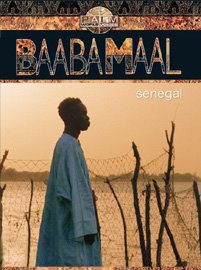
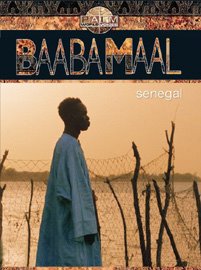
Baaba Maal- Mbolo- CD Senegal (www.calabashmusic.com)
Midival Punditz- CD Midival Times / CD Midival Games
Susheela Rahman- Music For Crocodiles-Track What Silence Said
Afro Celt Sound System- CD Anatomica
Amadou & Mariam- CD Dimanche A Bamako-Track Senegal Fast Food
Seu George-Rebel Rebel- S/T Life Aquatic
Celso Fonseca- Tracks Done De Fluir /Perdi (www.calabashmusic.com)
Nortec Collective-CD Tijuana Sessions Vol 3 (www.calabashmusic.com)
Brian Eno- CD Another Day on Earth- Tracks How Many Worlds / Just Another Day

Amazon.com

Brian Eno- Another Day on Earth
Another Day on Earth is an ambient song cycle that is full of yearning and a mood that Brian Eno has called "brave and resigned." Even in song, Eno is a master of ambience, creating detailed soundworlds and lyrics that don't so much make sense as create a feeling. It's taken him 15 years to create a new vocal album, and the songs span that time, with the welcome reprise of "Under," a devastatingly beautiful hymn of loss and redemption that dates back to 1991's aborted, unreleased My Squelchy Life album. It's turned up before on the Cool World soundtrack and Eno Box II: Vocals. Joining "Under" as one of Eno's most sublime songs is "And Then So Clear," a paean of wasted longing and hope with its cycling rhythm, ethereal guitars, and pitch-shifted vocal harmonies. You can hear Eno's love of gospel music on "This" and "Bottomliners," and can almost picture them in a particularly pensive Baptist church with his double-tracked vocals emulating a solemn choir. But it's not all minor-key reflection. Eno also unleashes a couple of fractured tunes, like "Bonebomb," which is from a project in which he mutated the meter of poets reciting their works. Another Day on Earth is a more personal album from the ambient avatar, a recording of rare and meticulous maturity. --John Diliberto

Amazon.com
Emmanuel Jal & Abdel Gadir Salim- CD Ceasefire
Ceasefire is an inspired collaboration between Southern Sudanese rising-star rapper Jal and established Northern Sudanese singer and oud player Salim. Here the two find common ground within their music. Sudan is in a state of civil war, and while political clashes make for death and starvation, this musical union offers an optimistic alternative, one where the Northern Arabic melodies and rhythms fit hand in glove with the Southern African percussion and Jal's laid-back flow. When the duo digs most deeply into the hip-hop vibe, as it does on Jal's "Aiwa" and "Elengwen," it mixes hiccupping beats, smooth raps, and rich ethnic backdrops. Yet there are also some conventional Arabic songs (with both doing vocals) like the Salim-penned "Ya Salam" and the traditional-leaning "Lemon Bara" that provide their own perspective. Ceasefire will hopefully open the eyes of those on either side of the conflict as well as draw some attention from abroad. It also makes for exciting and innovative listening. --Tad Hendrickson Product Description:For the first time, musicians from the north and south of Sudan come together to explore their common ground. Southern Sudanese artist Emmanuel Jal, one of the hottest rappers to explode out of the African music scene, joins northern Sudanese singer, composer and oud player Abdel Gadir Salim in a captivating musical collaboration. This incredible alliance of a renowned maestro with a young rapper produces music bursting with intricate melodies and a central message calling for peace in Sudan.


Salif KeitaMoffou(Universal)
Moffou marks a return to form for Mali's most famous male solo artist. Salif Keita's career appeared to be flagging slightly upon the release of 1999's lacklustre electro-based Papa. Here, he has wisely opted for an almost totally acoustic production. The combination of Mali's finest traditional instrumentalists with the cream of Paris' neo-classical and nu-jazz acoustic players is an uncommonly happy one.
Guitarists Djelly Moussa Kouyate and Kante Manfile are both long-term Keita associates from their days together in early Malian supergroups The Rail Band and Les Ambassadeurs. They hit the 'jeli' (griot) groove right from the start.The opener, 'Yamore', sets the seal: the song's romantic wistfulness is underlined by guest spots from Cap Verde's Cesaria Evora and Parisian accordionist Benoit Urbain.
Keita's own considerable skill as a guitarist in his three solo performances - especially 'Iniagige' - is in evidence throughout. The effortlessly rocking tempo of 'Madan' juxtaposes Malian fiddles and lutes against Camerounian Guy N'Sangue's funky electric bass and a driving West African percussion section.The album has a consistent recording sound throughout. But it's a homogeneity that matures with repeated listenings into a shifting tapestry of rhythm and texture. For instance, the last two tracks, 'Koukou' and 'Here', share an almost Caribbean lilt. Closer inspection lays bare a strong Brazilian influence in the former, and an old-fashioned calypso edge to the latter, accentuated by Arnaud Devos' novel steel drum work.The album has already achieved some of Keita's strongest sales to date and will undoubtedly figure highly in many 'best of 2002' charts. Highly recommended.
Reviewer: John Armstrong

Natacha Atlas- CD Best of Natacha Atlas
Never heard of Natacha Atlas? Think again. If you're a movie goer then her tones will have wafted over the auditorium during many a blockbuster, most recently Kingdom of Heaven.
Natacha Atlas is all about atmosphere. She was a pioneer mixing Middle Eastern and Western music. Dub, trip hop, Arabic pop - everything from Egypt, Morocco to Palestine.
As someone brought up in Europe Natacha Atlas really has embraced the best of all her worlds.
This might be a best of her songs but half the collection here is of new edits. Purists might be upset but those new to her style won't be disappointed.
And while it might have been her eastern - western traditional mix that got her noticed you'll be amazed at the twist she can put on soul classics like It's A Man's Man's Man's World.

Baaba Maal-Senegal
Senegal's Baaba Maal is considered the voice of his people and was the first artist released on Palm Pictures. Crafting a distinctive sound that fuses traditional African music with pop and reggae elements, Baaba Maal led the way in what was to be termed 'Afro-pop'. This compilation showcases the master in various stages of his esteemed career, using a dazzling convergence of music, photography, film, and words - all of it presented in stunning deluxe packaging containing a treasure trove of beautiful elements.

Baaba Maal comes from the Fouta Toro region in northern Senegal. He belongs to the Fula tribe, a minority in Senegal, Mali and Mauritania, and his music builds on traditional music from these areas. This music is different from the dominant Wolof music in Senegal and is more lyrical and melodious. The singer and guitarist, Baaba Maal, gives his all in everything from traditional arrangements with few instruments, to rock and reggae-influenced versions with full band and modern hi-tech. The same can be said about his lyrics, that spring from traditional myths, via Islam to modern commentaries on social problems in northern Senegal. Baaba Maal does not come from any Griot family, but has studied music at Ecole Des Beuax Arts in Dakar and the Paris Music Conservatory. After studying in Europe he returned to Senegal at the beginning of the 1980s, when he recorded 6 albums that are found only on cassette. In 1985 he formed his own band, Dande Lenol, and got a recording contract with the Paris based company Syllart, that released the 3 strong discs, “Wango”, “Nouvelle Generation” and “Taara”. In 1991 he signed a new contract with the Island company, Mango.Baaba Maal belongs, together with others such as Youssou N’Dour to a generation of pioneering musicians who, in the course of the last decade, have placed Senegal emphatically on the music world’s map. They have convincingly moved music on in their homeland and, as they live in Senegal, have contributed to the steering of its music industry and turned Dakar into an important centre for music in Africa.


Midival PunditzMidival Punditz(Six Degrees)
Midival Punditz, the first Indian electronica band to sign to an international label, have recreated the sound of Asian ambience and trance in a melting of Indian classical and contemporary club music.
The musical partnership of Gaurav Raina and Tapan Raj dates back to childhood, a friendship which helps explain the ease with which their talents gel on the album. Veterans of the New Delhi club scene, the Punditz set up their own studio in 1997, gaining instant respect from the Asian Massive group of DJs, including Talvin Singh and becoming part of Tabla Beat Science.
Fusing folk and electronica can appear premeditated: a mix of too many sounds and not enough subtlety. But not here. This is masterfully produced, each sound meticulously placed with heart and soul, for maximum impact.
The album creates equal space for past and present, East and West, but it's the Punditz first love for Indian classical music which creates its depth and beauty. 'Fabric', is recognisable from the "Monsoon Wedding" soundtrack, and builds looping electronica upon a ghazal sung by 50s star, Heera Devi Misra. The propulsive rhythm of 'Extasis' is far more trance orientated, mixing intelligent drum 'n' bass with soaring santur laden raga. The wholly ambient 'Night' stands out as a vast work, the space between ancient and digital culture radiating soulful sound.
With track titles including 'Forest Dream' and 'Far From Home', this is music to take you far away to extraordinary worlds! Its intrigue lies in the fact that not one track remains the same, but constantly evolves on each listening. Closing the album, 'Dark Age' is an extraordinary piece of music, lost in the snake like travels of Shailendar's bansuri flute, dark beats and haunting semi-classical vocals, it opens itself up to constant exploration.
This album lacks for not a single beat and the sounds of tabla, sarangi and synth are heightened to the max. The experience is over all too quickly: put it on repeat and take the trip over and over again!
Reviewer: Faye Burton


Afro Celt Sound System- CD Anatomica
Perhaps James McNally said it best in an interview with the New York Post in July of 2003. When asked about the Afro Celts' successful approach to music, James responded that the Afro Celts success lies in the balance of the influences of African music, Irish music, ancient traditional instruments and singing styles combined with cutting edge technology - - all seamlessly integrated to take people on a journey and "move from scene to scene in our passages like a drama."

Wednesday, January 18, 2006

Africa's Women Speak Out

(http://news.bbc.co.uk/2/hi/africa/4370007.stm)

Tuesday, January 17, 2006

Playlist 18-01-06

An all Australian content show tonight. Information about these release should be updated by the time goes to air.

1 Bobby Singh- Ashoka- CD Under Eastern Skies (2.27) ABC
2 Guy Strazzullo- Teena de healer- CD Mosaic AIEM CD 003 (6.57)
3 Joseph Tawadros- Pharoah's Dream- CD Storyteller (5.14) ABC 4762280
4 Kim Cunio-Heather lee-Bobby Singh- Om Mane Padme Hum- CD Under Eastern Skies (4.07) ABC
5 Dha-Tere Darr Toh- CD Dha (9.07) Cross Pollution / Vitamin CD 007
6 Adrian McNeil / Bobby Singh- Raga Madhuwanti (abridged version) CD Aasha (10.00) VEDA 4
7 Zulya- Leaving- CD The Waltz of Emptiness (5.21) UAR040

8 Tenzing Tsewang / Llew Kiek- let's gallop on the horse young lady- CD Lotus Hand Tibetan Grooves- (5.55) MMTT 001
9 Tenzing Tsewang / Llew Kiek-Dance away in triple worlds-CD Lotus hand Tibetan Grooves- (5.07) MMTT 001
10 CODA- Smoking Camel- CD For Our Animal Friends Silent Recordings SRL012 (4.02)
11 CODA- The Hunt- CD For Our Animal Friends Silent Recordings SRL012 (6.57)
12 James Ashley Franklin- Looking for Deer- CD Butsuga Celestial Harmonies 13177-2 (4.13)
13 Kim Cunio- The Thanksgiving Scroll- CD Music of the Dead Dea Scrolls- Lotus Foot LFP101.2 (5.03)
14 Kim Sanders- Tanzara- Cd Trance N'Dancin (3.03)
15 The Catholics- Parvati- CD Life on Earth- Rufus RF022 (9.58)


CD Under Eastern Skies- Kim Cunio / Heather Lee / Bobby Singh ao

Under Eastern Skies is a response to some of the great range of Buddhist traditions and experiences. Initially written for the ABC Compass documentaries Buddha Realms and the Art Gallery of NSW' Buddha Radiant Awakening Exhibition, the music uses many of the scales and instruments of Buddhist culture in India, Tibet, Nepal, China and Japan. Created by Kim Cunio - a composer, music historian and performer who is equally at home in reconstructive, contemporary & classical music forms radio. Kim is published by the ABC and was recently nominated for an AGSC award for his television music.

CD Storyteller-Joseph Tawadros

“Storyteller” is the debut CD by a prodigiously talented, young Egyptian-Australian. Joseph Tawadros was born in Cairo in 1983. His family came to Australia in 1986. He’s been a concert lutenist since he was 12. A serious (& seriously good) “classical”/“erudite”/”art” musician in the Arabic sense, he’s an open-eared, musical adventurer, too. Joseph Tawadros has already played his oud {the fretless, Arabic lute which is the ancestor of the European kind} with classical guitarist Slava Grigoryan, the world’s most prominent tabla virtuoso Zakir Hussain, the Australian Chamber Orchestra & with jazz pianist & composer Mark Isaacs. He’s likely the only oud soloist to have performed at both the Sydney Opera House & the Cairo Opera House. Absolutely solo, “Storyteller” is a set of keenly focused, yet highly improvisatory music - much of it composed by Tawadros”

CD-DHA

The release of Dha's self-titled new album heralds a new wave in Eastern fusion music for Australia. Exploring the unique cross over of powerhouse percussive music laced with traditional Indian sounds and western grooves and rhythms, Dha is an eastern fusion ensemble that blurs all boundaries, casting a haunting yet uplifting spell on audiences.

Since their formation in 1999 Dha has thrilled their audiences at world music festivals such as: Bellingen Global Carnival, Woodford Folk Festival, Carnivalé, and the Asian Music Festival at the Sydney Opera House.

Led by the Singh brothers (Bobby on tablas and Sukhi on harmonium and vocals), Dha also features Ben Walsh (from live drum'n'bass crew The Bird) on kit, Cleis Pearce on violin, Barry Hill on double bass and renowned percussionist Greg Sheehan.

CD Aasha-Adrian MCNeil & Bobby Singh

Adrian McNeil, student of Ashok Roy, is Australia's finest Sarod artiste, performing regularly to considerable acclaim in India. Here he teams up with Bobby Singh on the tabla, for a compelling performance.

CD Waltz of Emptiness-Zulya

Artist of the Year 2001 (Australian World Music Awards) World Music Artist of the Year 2002 (Australian LIVE Music Awards) Album of the year 2000 for Aloukie (Australian World Music Awards) World Music Album of the Year 2003 nomination for elusive (Australian Record Industry Awards, ARIA)Best Album 2005 for The Waltz of Emptiness (National Film and Sound Archive Award)
Multi award-winning ZULYA KAMALOVA is the leading proponent of Tatar music in Australia as well as one of the most versatile and accomplished vocalists on the world music scene today. A native of Volga-Kama region of Central Russia, ZULYA began performing Russian and Tatar songs at the age of 9. Later she studied music and languages at university level. Inspired by the diversity of cultures, she made a dramatic decision to settle in Australia in 1991 and began to not only share her traditional music with Australians, but to explore the musical and linguistic riches of the multitude of cultures living in Australia. As a result, ZULYA has developed a totally original approach as an affirmation of her unique identity - an affirmation that takes her Tatar and Russian background to totally new places and in completely new ways. Zulya has independently produced four albums to date, including the ARIA-nominated
elusive (2002) and, together with her band The Children of the Underground, 2004's magical The Waltz of Emptiness (and Other Songs on Russian Themes). Although she is well-known in Australia, Zulya's performances of her gorgeous blend of traditional and original music have recently been enchanting audiences from Serbia to Siberia, Luxembourg to Moscow, Tatarstan to Helsinki and almost everywhere in between. ZULYA now is at an exciting new stage in her already illustrious career.
ZULYA's first release in Australia,
Journey of Voice (1997), a unique collection of vocal styles and traditions received accolades for its versatility, passion and the "achingly beautiful" tone of her voice. In the following years, Australian audiences have been able to witness the continuing rise of this unique musical treasure. ZULYA's later albums, Aloukie (1999) and elusive (2002) have recently been released in Europe and have been awarded and nominated for various awards - the World Music Album of the Year 2000 at the Australian World Music Awards (Aloukie) and ARIA 2003 (elusive). These albums feature traditional and original songs in her distinctive Tatar style but with unusual instrumentation (kora, oud, bouzouki, litungu, jaw harp, kalimba, tuba, flugelhorn, saxillo, tabla, ghatam, violin, accordion and others) presenting the traditional music from a new perspective. Several tracks from these albums have been included in various compilations such as Putumayo's "Music from the Tea Lands" and "Dreamland" along with many others. ZULYA's work has been repeatedly featured on national radio and television to high acclaim, and she was also awarded "Female Artist of the Year" at the World Music Awards (2001) and Best World Music Artist by Australian Live Music Awards (2002). ZULYA has been described as "a remarkable singer, who is not merely versatile..." by Doug Spencer of ABC Radio National. Aloukie and elusive have also been released in Europe by a German label Wespark Music.
She has worked with Bob Brozman, Nikola Parov, Slava Grigoryan, 'Sirocco', Llew Kiek and Epizo Bangoura among others. ZULYA continues to dazzle audiences with her multi-cultural proficiency and passion for music and song and during the last few years has performed at many major venues and festivals in Europe, Russia, Tatarstan and of course in Australia including The Moods (Zurich, Switzerland), Kulturbrauerai (Berlin, Germany), Savoy Teatteri (Helsinki, Finland), Szene Wien (Vienna, Austria), Cafe de Overkant (Netherlands), Kulturfabrik (Luxemburg), Red Square (Moscow, Russia), Piramida (Kazan, Tatarstan), Living Water festival (Altai Mountains, Russia), Red Club (St.Petersburg, Russia) and WOMADELAIDE (SA), Sydney Opera House - Festival of Asian Music and Dance (NSW), The Basement (NSW), The Boite Winter Festival (Vic), National Folk Festival (ACT), "10 Days on the Island" Arts festival (Tas), Woodford Folk Festival (Qld), Brunswick Music Festival (Vic), Brisbane Biennial Festival of Music (Qld), Apollo Bay Music Festival (Vic), Kulcha (WA), Musician in Residence Program, Aboriginal communities (N.T) etc. With her outstanding new band,
The Children of the Underground (Anthony Schulz - accordion, Lucas Michailidis - electric guitar, Andrew Tanner - double bass, Justin Marshall - drums), ZULYA has released her long-awaited Russian album, The Waltz of Emptiness (and Other Songs on Russian Themes) in November 2004 in Australia by UAR and in March 2005 in Europe by Westpark Music.

CD- For All Our Animal Friends


(Silent Recordings/Undercover Music)
While boundaries certainly serve a purpose in music, some of the most exciting music produced comes when these boundaries are unexpectedly broken. Coda are a band that produce music sitting at the edge of electronica, but borrow much of their sound from traditional folk music. Fusing together strings, grooves and gypsy influences, this Sydney collective have delighted a broad range of audiences (from the Sydney Festival to school children with Musica Viva to the Big Day Out) with their innovative compositions.
For Our Animal Friends is Coda’s follow up to their debut, Aria Award nominated album, There Is A Way To Fly, from two years ago. Merely an EP to satiate appetites until the release of their new album later this year, this release finds the band delving into sounds that range from Middle Eastern to gypsy to Moroccan.
The EP starts with Giraffe Girl, which slowly introduces xylophone, strings then keyboard, and builds up into highly textured
and incessant haunting string melodies. This track is followed by the Middle Eastern harmonies of Alunud, a rattle weaving in and out.
Smoking Camel On A Camel provides a folk bent to classical sounds. Rich, orchestral textures, dominated by strings, weave through the track over gypsy dance beats. Circus Bizarre lives up to its name with showground sounding music. It builds up into a fast folk dance jig, and comes to an end with weird electronic noises.
The fifth and final track on the EP is The Hunt, a chilled tribal track. Starting simply with a meandering violin melody, incessant Moroccan influenced drumming is then introduced, topped off with xylophone and kooky electronic sounds.

Sunday, January 15, 2006

Next Wednesday night

Next Wednesday night's program will feature all Australian content. Some of the musicians who will be featured are Kim Sanders, Kim Cunio & Heather Lee, Joseph Tawadros, Tenzing Tsewang, Ashok Roy, Bobby Singh, Adrian MCNeill, The Catholics and more.

Hope you can tune in.

Tuesday, January 10, 2006

Playlist 11 January 06

On the show tomorrow nights, tracks from the following releases

Various Artists- CD: The Rough Guide To Arabesque
Beyrouth Ecœurée - Clotaire K
Dourbiha - Momo
Since its experimental beginnings in the early 1990s, Arabesque's blend of traditional musical roots and modern electronically generated rhythms has taken the world by storm. From the groundbreaking beats of those early days to the cutting edge Dar sounds of today, the artists featured on this album hail from Marrakech, London, Montpellier, Beirut, New York, Paris and Berlin, neatly illustrating the global scope of the Arabesque phenomenon. This Rough Guide offers a wide-ranging introduction to the infectious appeal of modern Arabic electronica.

Emmanuel Jal and Abdel Gadir Salim, CD: Ceasefire

Cesaria Evora- CD: Best of

Cesaria Evora, born in 1941 in the port town of Mindelo on the Cape Verde island of Sao Vicente, is known as the barefoot diva because of her propensity to appear on stage in her bare feet in support of the disadvantaged women and children of her country.
Long known as the queen of the morna, a soulful genre sung in Creole-Portuguese, she mixes her sentimental folk tunes filled with longing and sadness with the acoustic sounds of guitar, cavaquinho, violin, accordian, and clarinet. Evora's Cape Verdean blues often speak of the country's long and bitter history of isolation and slave trade, as well as emigration: almost two-thirds of the million Cape Verdeans alive live abroad.
"Morna is like the blues because it is a way to express life's suffering in music."Evora's voice, a finely-tuned, melancholy instrument with a touch of hoarseness, highlights her emotional phrasing by accenting a word or phrase. Even audiences who do not understand her language are held spell-bound by the emotions evident in her performances.
Now 54, and a grandmother (though never married), Evora is gladdened by her current worldwide popularity,
"... in all those years when I sang in bars and in front of strangers I sometimes had an idea I might someday be successful outside my country. The thought never stayed with me for very long, but here I am."

Jah Wobble- CD: Mu
Reviewed by Wolfgang Steuer
On first listen to Jah Wobble’s album MU I was blown away! There was the expected dub, but there also was Jazz (I thought initially I heard some Miles Davis) and Indian Music (I thought a slice of a bollywood movie) and Jethro Tull flutes. So I expected to read a lot about samples in the liner notes, and found a host of people mentioned that had created these wonderful sounds. To name but a few it was Harry Beckett on trumpet I had mistaken as Miles Davis and Clive Bell whose flute amazed on Samsara all over the groove-meisters work which ties this very ambitious piece of work together. Chris Cookson’s guitar on New Mexico Dub reminds me of the surf guitar histrionics last heard on the Pulp Fiction soundtrack. By last track Into The Light Jean-Pierre Rasle’s pipes with Satomi Takada’s spoken words, you will understand my enthusiasm in this work.In Jah Wobble’s own words though he also credits Mark Angelo (co-producer and mixer of this and many of his previous albums), stating that “he is the most under appreciated and unacknowledged ‘back room boy’ in the game that I know of”. The album started live as a joint project of an ‘universal dub’ in 5.1 sound. This was abandoned very early on due to the technical difficulties this created. We are left with a super stereo sound that places voices and instruments all over the place, enveloping the listener.Mu the title as explained in the liner notes refers to an old Zen Koan. The beautiful cover work is inspired by this, and, as Jah Wobble admits, “hitting that low E on the Bass…THAT’S MU!


Various Artists- CD Congotronics No 2 Buzz 'N' Rumble From The Urb'N' Jungle
Konono No1 - Live From Couleur Café


By
Chris May

Earlier this year, the Congolese trance band known as Konono No. 1—a Mad Maxian agglomeration featuring ingenious and massive DIY amplification, electronically distorted, outsize likembe thumb pianos, and drum and percussion instruments made from recycled industrial scrap—burst out of Kinshasa to shock and awe the European music scene with Congotronics. It wasn't a jazz album by any means, but it was sufficiently creative, dangerous, and uncompromising to appeal to the experimental margins of the jazz, world, rock, and dance music scenes.
There's more of the mesmerising same, served up with a little more variety, on this excellent second volume in the series, subtitled Buzz 'n' Rumble From The Urb 'n' Jungle, featuring Konono alongside six other Kinshasa trance bands. Masanka Sankayi + Kasai Allstars open the album in bass-heavy, throbbing, neo-Konono style with “Wa Muluendu,” and Konono itself shuts things down, more or less apocalyptically, with “T.P. Couleur Cafe.”
In between these two monumental slabs of sound are seven tracks of a relatively (repeat: relatively) more subtle nature. Most of the bands have percussion and likembe sections in their back line, and these are variously augmented by up-front bells, balafons, berimbaus, accordions (a retained Europeanism dating back to the colonial era), slit drums, and rumba-meets-something-like-thrash metal electric guitars.
Compared to the smooth, lyrical grooves of the classic Congolese rumba style spawned by Joseph “Le Grand Kalle” Kabasele in the '50s and honed by Luambe “Franco” Makiadi in the '60s, today's Kinshasa trance bands might seem like rough trade coming out of nowhere. In fact, they are simply the latest and most extreme manifestation of a back-to-the-tribal-roots, post-colonial, punk-rumba, roughing-up tradition that started with Zaiko Langa Langa in the '70s and grew more pronounced with Choc Stars and others in the '80s. Konono and its brother/sister bands are an integral part of the dirt-poor Kinshasa suburbs where they find their audience, more or less recently arrived tribal people from the bush and forest, and they serve to keep traditional tribal cultures—and the human spirit—alive in the most desperate circumstances.
As an added bonus, Congotronics 2 includes a 45-minute DVD showing some of the featured bands in rehearsal. The handheld camera sound quality is poor, but the visuals bring the music to vivid contextual life. The dancing—all the groups include dancers—is a thing of wonder in itself. Basokin are fronted by three dancers whose stately yet astonishingly trippy choreography (and makeup) is inspired, quite probably, by divine intervention. Seeing is believing.


"This is one of the wildest records of the year.Forget all your preconceptions about African music - Congotronics 2 is a whole new strain of pop" (The Observer, UK)"Every rock fan and musician should hear this album as a timely reminder of what their perpetually derivative genre used to be about. This is rock sucked back to the continent of its birth to be granted a glorious resurrection" (Word, UK)
... AND CONGOTRONICS 1 (KONONO No.1)
"So what do [Konono No.1] sound like ? A cargo cult built around a Steve Reich recording and a fuzzbox. The late work of Jimmy Page, had he bought Kurtz's mansion instead of Crowley's. [...] Afro-soul, had Jaki Liebezeit from Can produced in Nigeria rather than Ginger Baker [...] King Leopold's worst nightmare (and the reason he never visited "his" Congo). A New Orleans funeral for Patrice Lumumba. An African funeral for New Orleans [...] You get the idea. (Damon Krukowsky, Boston Phoenix, USA)
"Not only the finest African album of the year, but also the most exciting electronic dance record, this remarkable hybrid of homespun percussion, euphoric whistling and thrillingly overamplified electric thumb pianos is guaranteed to get any party starting" (Ben Thompson, Sunday Telegraph, UK)


State of Bengal Vs Paban das Baul, Tana Tani
(Realworld)

Moner Manush
Tal Rosh

These two WOMAD regulars are arriving from opposite camps, one being electronically geared for the UK dancefloor, the other steeped in ancient folk traditions.

Paban is a member of Bengal's Baul sect, itinerant minstrels whose religious ideas centre around the nameless, sexless nature of God, and the importance of the body as a conduit for spiritual matter. This seems vaguely akin to Sufi beliefs in its visceral nature. Paban was initiated at the age of 14, singing his songs across India's rail lines. He's accustomed to fusion work, having already collaborated with guitarist Sam Mills on the Real Sugar album, for Real World in 1997.

This time, Paban's meeting has taken his music in an even more extreme direction, with Sam Zaman (State Of Bengal) providing club beats, heady production and an uncompromising dialogue with the old ways. The two musicians were introduced at a Nusrat Fateh Ali Khan tribute, shortly after the Qawwali singer's passing. Zaman was already accustomed to spinning Paban's first Real World disc during his DJ sets. Sessions started at Sam's home studio in Upton Park, east London, then continued in what was then Paban's Paris residence.

Paban Das Baul's central contribution to each song is an emotive vocal line, with his specialised Baul instrumentation taking on a decorative role. It's Zaman's gigantic rhythm tracks that form much of the musical muscle, taking a drum 'n' bass format as their starting point, even though this is frequently settled down into a calmer manifestation.

Guest players include Marque Gilmore (specialising in real-drumkit breakbeats) and Asian Dub Foundation's bassist Dr. Das. Zaman encouraged Paban to write his own words, determined to stretch him into unfamiliar positions. Paban's extended technique allows his voice to soar majestically, his lines usually remaining tranquil, even if his musical backing is becoming agitated.

On certain tracks, the Baul element is intensified, with "Ram Rahim" featuring the wobbly khomuk drum, whilst "Padma Nodi" clatters with the banjoesque dotara. The most forceful confrontation happens during "Dohai Allah", which is heavy on the acoustic percussion, yet still pumped up by weighty breakbeats. The majority of the songs maintain their linear flow, underlining a developing musical theme rather than shunting into differing areas.

Reviewer: Martin Longley


Tana Tani' plunges Paban into the dub-heavy melee of the British Asian breakbeat scene, where his ecstatic, smoky vocals soar over juddering beats and squelchy basslines, and his urgent and hypnotic rhythms mutate into frenetic drum 'n' bass breaks.
The collaboration began in Zaman's home studio in Upton Park, east London in December 2002 and continued to grow at Paban's Paris home. During the sessions Zaman began working around Paban's strong, timeless melodies and haunting lyrics, building up each song organically. Often Zaman's syncopated beats were unfamiliar to Paban, and essentially they had to learn each other's music. Both Zaman and Mimlu Sen (Paban's partner and collaborator) made suggestions, and Paban experimented by fitting more familiar rhythmic patterns like the dhrupada of the jhaptal into Zaman's syncopations.
'You can take a Baul to a track,' explains Mimlu Sen, 'but you can't make him synch unless the approach is organic and interior.'

Reviewer: Evening Standard UK

This is described as a folk culture over 500 years old meeting this digital soundscapes of the 21st century. The versus of the title suggests some sort of contest, but if the British Asian music scene has proved anything, it is that the subcontinent's rich and ancient cultures are ripe and durable enought for fusing. State of Bengal (aka Sam Zaman) is a leading DJ and producer in the Asian club scene, and Paban Das Baul is a singer from Bengal's mystical sect of wandering minstrels, the Bauls. While the album's shape and character comes from Zaman, it's felicitous details come from Paban's incantatory vocals and the traditional Baul instruments used on many of the tracks. The title track translates as "pushing and pulling", which could be a metaphor for the whole project. A fine release from the label that pioneered the historic Nusrat Fateh Ali Khan fusions a decade ago.


Reviewer: Songlines Magazine 'Top Of The World' UK

Asian Fusion Disc of the Year So Far


The result of this cultural meshing of streetwise dance production and ancient folk culture is remarkably cohesive, which bears testimony to Zaman's sympathetic production and Paban Das Baul's willingness to embrace Westernised dance sounds.....The album features Asian Dub Foundation's Aniruddha Das on bass, and renowned jazz drummer Marque Gilmour, who replicates drum'n'bass skittering hi-hats and kick-drum patterns to startling effect. The result is extremely funky... and deeply soulful, with Paban's soul-searching voice sounding marvellous throughout. The Asian-fusion disc of the year so far.Rating (out of 5):


Reviewer: Mojo UK

State of Bengal Vs Paban Das Baul
Sometimes getting spiritual while melting your brain appeals. When London's State of Bengal last passed this way, there was a short but memorable collaboration with Ananda Shankar, the psychedelia-minded sitarist. This time, they've teamed up with a leading light of Bengal's Bauls, a musical gypsy caste of minstrels, ascetics and devotees of tantric sex, to go to places others have ventured (Temple of Sound and Rizwan-Muazzam, Massive Attack's remix of Nusrat Fateh Ali Khan) and update them for 2004.


Reviewer: ethnotechno.com internet

State of Bengal Vs Paban Das Baul - Tana Tani
Tana Tani - meaning "push and pull", a metaphor for many things, as we shall see - is a brilliant serenade to what's quickly becoming known as Asian Chill... The very opener is destined for fame, certain to be picked up by more chill-out comps than Thievery Corporation and Groove Armada combined: "Moner Manush," the very definition of lie-back-relax-and-immerse-submerge-yourself-into-your-self-and-the-Self-we'll-take-care-of-everything. From there, it only gets better. "Kali," the black goddess, sees beautiful light as Zaman and Baul once again push/pull meaning into metaphor. The following tribute, "Radha Krishna," is a midtempo mindswirl, and by the time they reach the title track, you've been fully stretched, sedated and surrendering. Even when Zaman programs d-'n-b, as in "Tana Tani," "Ram Rahim" and "Al Keuto Sap," he allows spaciousness to exist. Much like the Baul practice of Aarope Sadhana - the yoga of breathing - Zaman lets his beats out for fresh air. He even steps aside, on occasion, and lets tradition be kept: the heartwrenching "Padma Nodi" and "Kon Ek Pakhi," a minimalist dream. The album's opus, in this journalist's ear, may very well be "Medina," with sounds mimicking the Australian digeridoo and Brazilian berimbau, laid atop an absolutely unbeatable (slightly) broken beat. Paban's voice continues its sensual voyage from headspace to heartspace, and you give in. There is no choice, really. Tana Tani is seductive, reels you in with delicate claws and rips away fragments of your being. When you recover, you realize it was excess dissolved, and you emerge with clarity, focused, inspired and content.
Real World Records
State of Bengal All Rights Reserved 1987-2004 ©

Peter Dickson & Juan Martinez- CD Falsettas

At the age of six he started exploring rhytm. And now at 39, his concerts in Australia and Europe are a rage. Peter Dickson, born in Bangalore is all set to take the city by storm.
Peter always had the urge to create rhythms and fuse music. In his childhood days, he would spend hours playing on buckets with knitting needles to old jazz records. The result surprisingly was good! Peter now resides in Sydney and makes music for a living. His passion is now his profession and has taken him to the top of Australian charts.
"Rhythm to me is the soul of all life. From the first heartbeat of a baby to life around, everything moves to a rhythm. People respond to powerful rhythm and my strength is rhythm", Peter explains. "I try to tailor in soulful melody with rhythm".
Peter's music is a rare Indian rhythm structure that is merged with native Latin grooves and further enhanced with the art of Flamenco. This unique style has it's roots in Indian traditional music. Peter writes Western music notations and harmony, and adapts them to suit Indian percussion instruments. "It has a very Indian feeling to a Western melodic and harmonic structure", he says.
Peter attributes the deep emotional expression that oozes out of his music to his roots that are in Bangalore. "Musicians here play from the heart because it is a reflection of our constant exposure to life in all its dimensions. You see and feel pain, pleasure, success, depression and the entire spectrum of experience vividly. This sort of exposure is not common in the West. It encourages soulful expression and music", he elaborates.
He has nine albums and over a hundred compositions so far. His concerts typically begin with his guitar renditions accompanied by tabla and ghatam support. After a night raag sort of beginning, he moves into a whole range of Latin and jazz styles wit Indian percussion fused in to create melodies that blend the rhythms of the east and west. "My music gives Western audiences a feel of Indian rhythms in a music environment that is familiar to them", he says.
A good fourteen years after his first album, Peter is looking for a market at home. "My albums have done well abroad and I want to bring my music here, where it all started", he smiles. He is now in Bangalore to launch his albums in India and open up possibilities for concerts here.
So how does it feel coming back? "It's a walk down memory lane and an inspiration", he says. "The immense pace of development I see here inspires me and I want to be part of it". He plans to bring his entire troupe here shortly. "I work with some of the best players in the world and it will be a treat for the music lovers here", he says. He has performed with greats like Martin Taylor. Peter feels people here are very music literate and will follow the textures of fusion easily.
The man with a flair for fusion that Bangalore exported is back to share his creations that have captured the hearts of Australian and European audiences.


Marcel Khalife- CD Caress

Marcel Khalifé was born in 1950 in Amchit, Mount-Lebanon. He studied the oud (the Arabic lute) at the Beirut National conservatory, and, ever since, has been injecting a new life into the oud.From 1970 to 1975, Marcel Khalifé taught at the conservatory and other local institutions. During that same period, he toured the Middle East, North Africa, Europe and the United States giving solo performances on the oud.Oud playing was traditionally constrained by the strict techniques that governed its playing. Highly talented and skillful musicians such as Marcel Khalifé were, however, able to free the instrument from those constraints and thus greatly expanding its possibilities.In 1972, Marcel Khalifé created a musical group in his native village with the goal of reviving its musical heritage and the Arabic chorale. The first performances took place in Lebanon. 1976 saw the birth of Al Mayadeen Ensemble. Enriched by the previous ensemble’s musical experiences, Al Mayadeen’s notoriety went well beyond Lebanon. Accompanied by his musical ensemble, Marcel Khalifé began a lifelong far-reaching musical journey, performing in Arab countries, Europe, the United States, Canada, South America, Australia, and Japan.Marcel Khalifé has been invited several times to festivals of international fame such as: Baalbeck, Beit Eddine (Lebanon), Carthage, El Hammamat (Tunisia), Timgad (Algeria), Jarash (Jordan), Arles (France), Krems, Linz (Austria), Bremen (Germany), ReOrient (Sweden), Pavia (Italy), World Music Festival in San Francisco, New York, Cleveland (the USA).He has performed in such prestigious halls as the "Palace of Arts" in Montreal, "Symphony Space" and "Merkin Concert" in New York, "Berklee Theatre" and "New England Conservatory" in Boston, "Royal Festival Hall", and "Queen Elizabeth Hall" in London,"UNESCO Palace" of Beirut, Cairo Opera House (Egypt), "Reciprocity","House of the Cultures of the World" and "UNESCO Hall" in Paris, "Central Dionysia" in Rome, "Yerba Buena" in San Francisco,"Sõdra Teatern" in Stokholm.Since 1974, Marcel Khalifé has been composing music for dance which gave rise to a new genre of dance, the popular Eastern ballet (Caracalla, Sarab Ensemble, Rimah, Popular Art Ensemble)Marcel Khalifé has also been composing soundracks for film, documentary and fiction, produced by Maroun Baghdadi and Oussama Mouhamad among others.Marcel Khalifé has also composed several purely instrumental works like The Symphony of Return, Chants of the East, Concerto Al Andalus "Suite for Oud and Orchestra" "Mouda'aba" (Caress), Diwan Al Oud, "Jadal" Oud duo, Oud Quartet, "Al Samaa" in the traditional Arabic forms andTaqasim, duo for oud and double bass.Marcel Khalifé’s compositions has been performed by several orchestras, notably the Kiev Symphony Orchestra, the Academy of Boulogne Billancourt Orchestra, The San Francisco Chamber Orchestra, the Orchestra of the city of Tunis, and the "Absolute Ensemble".Since 1982, Marcel Khalifé has been writing books on musicthat reflect his avant garde compositions and the maturity of his experience.His challenges, however, are not only musical in character. Interpreter of music and oud performer, he is also a composer who is deeply attached to the text on which he relies. In his association with great contemporary Arab poets, particularly Palestinian poet par excellence, Mahmoud Darwish, he seeks to renew the character of the Arabic song, to break its stereotypes, and to advance the culture of the society that surrounds it.His lyrical recordings adds up to about 20 albums, the likes Promises of the storm, Ahmad Al Arabi, Weddings, Peace Be With you, Ode To A Homeland, Arabic Coffeepot, The Children and Body(Al Jassad,) to name a few.On his journey, Marcel Khalifé invents and creates original music, a novel world of sounds, freed of all pre-established rules. This language elevates him to the level of an ambassador of his own culture and to the vanguard of Near Eastern music in search of innovators.
Rokia Traore- Bowmboi


Rokia TraoreBowmboi(Label Bleu)
On paper Rokia Traore is a bit of a radical. She's one of Mali's leading new singers, although she's not a traditional griot musician. She tries new ideas, combining traditional instruments that aren't usually brought together, and on this album works with the classical musicians, the Kronos Quartet. To my untrained ear her experiments are entirely successful.
The daughter of a Malian' diplomat she built her career in France before returning to Mali and is only now becoming a star there. On this, her third album, she sounds right at the heart of the traditions of West African music.
Rokia's vocal style is very much her own. She doesn't have the high pitched, keening, attack of Oumou Sangare, or the rougher, deeper tang of Kandia Kouyate, both of them great female artists from Mali. Her voice is quavery and bird-like, soft, fragile and attractive. Curiously, it reminds me a little of Ethiopian and even Asian vocal styles. But it has an inner power, and on the faster paced songs she sings with impressive authority. "Mariama", is a passionate, intense duet with male griot singer Ousame Sacko, and one of the album's highlights.
The gentleness of Rokia's voice means this album is a reflective, subtle experience even on the faster songs like "Sara" or "Kote Don". And the two collaborations with The Kronos Quartet work extremely well. The strings lay down a pulsing layer of shifting tones and Rokia murmurs and declaims over them, and on the lovely "Manian" there's a little vocal part that sounds like Laurie Anderson's "O Superman". These tracks don't feel like experiments at all; they sound like something that could have been created in West Africa anytime in the last thousand years.
This is an album full of contemplative and meditative pleasures. If you love Malian music you will probably already have heard of Rokia. If you haven't Bowmboi is certainly worth adding to your collection.
Reviewer: Nick Reynolds


Monday, January 09, 2006

Bob Brozman with Papua New Guinea Stringbands

http://www.worldmusiccentral.org

Songs Of The Volcano, Untainted Guitars of Papua New Guinea

Wednesday, January 04, 2006

Playlist 04-01-06

Joseph Arthur- Redemtion's Son- CD Redemption's Son

One of the most promising of Peter Gabriel's Real World label protégés came not from some dusty, Third World village, but from that American tire and rubber mecca, Akron, Ohio. But while Arthur's previous Gabriel-inspired adventures netted him considerable critical kudos and even a ‘99 Grammy nod for his self-created album art, he turns an even neater trick here. The frameworks for Arthur's 16 poetic, alternately introspective and impressionistic songs may be more firmly rooted in traditional folk and singer-songwriter formula than ever, but the influence of Gabriel seems even more pronounced on the album's evocative, often hypnotic sonic textures. Densely layered yet deceptively organic, it's a record of endless production subtleties in service of songs that trickle and dart like a playful stream of consciousness. Whether putting his own peculiar spin on romantic foibles in the dirge-turns-anthem "Favorite Girl," the upbeat energy of "Let's Embrace" and "In the Night," or conjuring more intriguing existential imagery on the fragile "You Are the Dark," Arthur has produced an album that reveals itself anew on every listen. --Jerry McCulley (Amazon review)

Afro Celt Sound System- CD Anatomica
From Real World Records:
Afro Celt Sound System’s fifth studio album sweeps an incredible sonic range, from their unmistakably beat-driven and cinematic dance epics to emotive, melodic ballads radiant with the band’s trademark fusion of soaring Celtic reels and syncopated African vocals and drum. Guests include Rwandan singer Dorothee Munyaneza (featured on the soundtrack to Hotel Rwanda) and Uzbeki star Sevara Nazarkhan — and lead vocalist Iarla Ó Lionáird turns in marvelous performances in both Gaelic and English. Recorded at Pink Floyd’s old Islington studios and self-produced by the Afro Celts, this joyfully danceable soundscape showcases the extraordinary musicianship and richly articulated vision of this great band, celebrating ten years of unparalleled innovation on the cutting edge of world music.

Afro Celt Sound System with Sinead O'Connor- Release- CD Stigmata S/T

Djelemedy Tounkara - Diaoura / Gnima Diala- CD Sigui
Mali has one of the most intensely musical cultures in all Africa, and among that country's greatest musicians is the guitarist Djelimady Tounkara. While he's not nearly as well known as his compatriot Ali Farka Touré, he has been a driving force in Mali's rich music scene since the early 60s.
Djelimady's Super Rail Band is one of the most popular bands in West Africa. Founded in 1970, the band plays a Malian style of Afro-pop, but which also contains elements of Cuban music.
For this first solo album, Djelimady Tounkara wanted an acoustic concept (unplugged!) with old friends and acquaintances and young musicians with whom he has created strong ties and found affinities. He has made a band which privileges strings and vocals with a very light accompaniment on percussions. His compositions and arrangements reveal a subtle melodist and refined composer, in short a complete musician.
Released in 2001.


Marcel Khalife-Granada- CD Caress

Marcel Khalifé was born in 1950 in Amchit, Mount-Lebanon. He studied the oud (the Arabic lute) at the Beirut National conservatory, and, ever since, has been injecting a new life into the oud.
From 1970 to 1975, Marcel Khalifé taught at the conservatory and other local institutions. During that same period, he toured the Middle East, North Africa, Europe and the United States giving solo performances on the oud.
Oud playing was traditionally constrained by the strict techniques that governed its playing. Highly talented and skillful musicians such as Marcel Khalifé were, however, able to free the instrument from those constraints and thus greatly expanding its possibilities.
In 1972, Marcel Khalifé created a musical group in his native village with the goal of reviving its musical heritage and the Arabic chorale. The first performances took place in Lebanon. 1976 saw the birth of Al Mayadeen Ensemble. Enriched by the previous ensemble’s musical experiences, Al Mayadeen’s notoriety went well beyond Lebanon. Accompanied by his musical ensemble, Marcel Khalifé began a lifelong far-reaching musical journey, performing in Arab countries, Europe, the United States, Canada, South America, Australia, and Japan.
Marcel Khalifé has been invited several times to festivals of international fame such as: Baalbeck, Beit Eddine (Lebanon), Carthage, El Hammamat (Tunisia), Timgad (Algeria), Jarash (Jordan), Arles (France), Krems, Linz (Austria), Bremen (Germany), ReOrient (Sweden), Pavia (Italy), World Music Festival in San Francisco, New York, Cleveland (the USA).
He has performed in such prestigious halls as the "Palace of Arts" in Montreal, "Symphony Space" and "Merkin Concert" in New York, "Berklee Theatre" and "New England Conservatory" in Boston, "Royal Festival Hall", and "Queen Elizabeth Hall" in London,"UNESCO Palace" of Beirut, Cairo Opera House (Egypt), "Reciprocity","House of the Cultures of the World" and "UNESCO Hall" in Paris, "Central Dionysia" in Rome, "Yerba Buena" in San Francisco,"Sõdra Teatern" in Stokholm.
Since 1974, Marcel Khalifé has been composing music for dance which gave rise to a new genre of dance, the popular Eastern ballet (Caracalla, Sarab Ensemble, Rimah, Popular Art Ensemble)
Marcel Khalifé has also been composing soundracks for film, documentary and fiction, produced by Maroun Baghdadi and Oussama Mouhamad among others.
Marcel Khalifé has also composed several purely instrumental works like The Symphony of Return, Chants of the East, Concerto Al Andalus "Suite for Oud and Orchestra" "Mouda'aba" (Caress), Diwan Al Oud, "Jadal" Oud duo, Oud Quartet, "Al Samaa" in the traditional Arabic forms andTaqasim, duo for oud and double bass.
Marcel Khalifé’s compositions has been performed by several orchestras, notably the Kiev Symphony Orchestra, the Academy of Boulogne Billancourt Orchestra, The San Francisco Chamber Orchestra, the Orchestra of the city of Tunis, and the "Absolute Ensemble".
Since 1982, Marcel Khalifé has been writing books on musicthat reflect his avant garde compositions and the maturity of his experience.
His challenges, however, are not only musical in character. Interpreter of music and oud performer, he is also a composer who is deeply attached to the text on which he relies. In his association with great contemporary Arab poets, particularly Palestinian poet par excellence, Mahmoud Darwish, he seeks to renew the character of the Arabic song, to break its stereotypes, and to advance the culture of the society that surrounds it.
His lyrical recordings adds up to about 20 albums, the likes Promises of the storm, Ahmad Al Arabi, Weddings, Peace Be With you, Ode To A Homeland, Arabic Coffeepot, The Children and Body(Al Jassad,) to name a few.
On his journey, Marcel Khalifé invents and creates original music, a novel world of sounds, freed of all pre-established rules. This language elevates him to the level of an ambassador of his own culture and to the vanguard of Near Eastern music in search of innovators.

Susheela Rahman- Light Years / Idi Samayam- CD Music For Crocodiles
As an artist, Raman continues to develop and explore issues of identity with new sounds that celebrate multiplicity. She draws her collaborators from across Europe, Asia, and Africa: Cameroonian bassist Hilaire Penda, Guinea-Bissau born percussionist Djanuno Dabo, American drummer Marque Gilmore, British-Asian tabla player Aref Durvesh, and of course British guitarist and producer Sam Mills are at the heart of this album as they were on Salt Rain. Paradoxically, Music for Crocodiles is both more English and more Indian than either Salt Rain or Love Trap. More than half the songs are in English (her first language) and Raman emerges as a formidable songwriter (listen to What Silence Said and The Same Song). And where on the previous albums there were musicians from everywhere playing Indian songs, here we have musicians from India playing songs in English. A new dimension came from recording in India, as well as in the UK and France. The Indian presence adds joy, light, and depth to the record. tric East African groove and Raman's blues based vocal could be from Addis Ababa, Mumbai, or Chicago. Incidentally the amazing Hammond organ is played by Malian Chek Tdjen Seck, the musical godfather of Paris. Light Years recorded in Madras, is a South Indian melody transmuted here into a sublime English love song. Meanwhile is Raman's melody, sung in English but based on the rare South Indian raga, Kanyakangi, which infuses its sultry, seductive atmosphere. For the first time, Susheela also sings in French on L'ame Volatile. The album was produced by Sam Mills and engineered by Stuart Bruce in the same room at Real World studios as Salt Rain. With much of the same band on the album it was a flashback to recording Ganapati. The buzz and feeling really reminded the whole team of Salt Rain. Everybody had that same feeling of excitement and revelation. Raman and producer Sam Mills put everything they had into this record. They took several months off to prepare for the studio and make sure they had the material they wanted and it's paid off: The buzz the record has created is like Salt Rain too - Raman and Mills have had a hard time keeping hold of their listening copies as people eagerly requested the album. Now we can all hear it.


Smadj- Sel / Vogue- CD Take It And Drive
tunisian born musician jean pierre smadja has been making and recording music since the early nineties, but this album seems certain to bring him to the attention of a wider audience. the first release on a new label backed by the enormously successful restaurateur mourad ‘momo’ mazouz, take it and drive fuses the haunting and ancient sound of the oud, an arab precursor of the guitar, with the latest in experimental electronic music. aphex twin meets a wandering sufi uptown...

while the world/fusion category of contemporary music has been debased by dubious projects involving pan pipes and psychedelic trance, smadj’s melding of tradition and experimentation seems born of a genuine urge to innovate, rather than a desire for his work to grace the sound systems of hippy cafes at summer festivals. the complex, delicate melodies of the oud sit equally happily over bass heavy rumblings and engaging, kinetic, jazz influenced drum patterns. the most meditative and intimate tracks on the album (betty and sel, for example) exploit the possibilities of restrained minimalism. the combination of the oud and smadj’s computerised rhythms is perhaps at its most potent and fascinating when it is uncluttered and sparse – on tristan, the final track, the ebb and flow between the two is compelling.

but the majority of tunes on take it and drive see smadj enlisting a stellar cast of collaborators. the vocals of malian torch singer rokia traore float ethereally over the bass heavy beat (king tubby would be proud of its dubbed out vibes) and distorted vocal samples of he said and add a sense of keening urgency to fatwords. another man who has successfully fused dance music with global influences, talvin singh, weighs in with his tabla to enhance the abstract techno feel of vogue. meanwhile, c’est comme si features more of the distorted vocal samples beloved of electronica pioneers boards of canada over a grinding beat which is offset by a funky guitar lick. amit chatterjee guests on drive with vocals and guitar and the track’s combination of a propulsive beat, oud and indian influenced singing brings to mind transglobal underground at their best. the african chanting and handclaps of meeting with the bushmen (did he actually meet them? i’d love to know) combine with the oud and a driving rhythm to conjure an eerie ambience which evokes the rituals of this almost mythical indigenous people.

take it and drive defies any simplistic categorisation and, while radio 3 will undoubtedly lap it up, the inventiveness and high production values it displays should ensure its wide appeal. from the point of view of the sometimes bland and earnest world of experimental electronica, the warmth of the live instruments and vocals which smadj employs is refreshing, evoking as they do far older musical cultures and traditions.
(review from http://www.musicalbear.com/music/review/album/most_records/smadj/take_it_and_drive)

Tenzing Tsewang & Liew Kiek- Let's Gallop On The Horse Young Lady / Dance Away...In triple Worlds- CD Lotus Hands Tibetan Grooves
With a combination of haunting flute improvisations, ancient Tibetan chanting and mythical Tibetan folk songs, Tenzing Tsewang’s music takes the listener on a profound journey through the Himalayas and into the soul.
Tenzing and Llew are very proud to announce the release of their new CD “Lotus Hand”. Written and recorded over the last 2 years, the album draws on their widely differing backgrounds in folk, rock, reggae, chanting, early music, sampling and sequencing to deliver an aural palette of immeasureable depth. The album features Tenzing's superb and diverse vocal range, from a playful lyricism through rich Tibetan folk textures to his unearthly low monastic chanting. Tenzing is also a master of the unique Tibetan drumnyen (three string lute) which is rarely heard in the west. We hope that this album will reveal it as significant instrument which can be integrated into broader contemporary musical contexts.

Together with Llew's virtuosic baglama and electric guitar, the plucked string textures on this album bring Tibetan and western traditions to a thrilling conjunction. This is underpinned by superb keyboard sounds, a vast array of samples, and percussion ranging from traditional Tibetan ritual instruments, Balkan and Arabic drums, to masterful rock kit played by the inimitable Chad Wackerman.

It is Tenzing's intention to expand the reach of Tibetan music and art beyond his own circle, making it relevant to the time and place in which he lives. In order for his culture to survive long-term, Tenzing believes it has to be brought into the mainstream rather than be isolated. For that, meeting Llew was a perfect and timely karmic connection.


Aditya Verma-Raga Puriya Dhanashri- CD Sarod-Traditional Music From India
Aditya Verma is a charismatic sarod player based in Canada and India. A disciple of legendary sitar player Pandit Ravi Shankar and renowned sarod master Ustad Aashish Khan, Verma has also trained under Ustad Ali Akbar Khan, India's leading exponent of the instrument. Verma grew up in Montreal and started playing the tabla at an early age under the guidance of his father, Dr. Narendra Verma, and Ustad Zakir Hussain. From 1987, he has lived in India studying Hindustani classical music and specializing in the sarod. In recent years, Verma has won the admiration of audiences across North America, Europe and India with electrifying performances that reveal his emotional aesthetics and virtuosity. Besides playing concerts on stage, television and radio, Verma also gives lecture demonstrations, teaches and composes music of different styles for recordings and film. He is the recipient of numerous awards.

Debashish Bhattacharya- CD Calcutta Slide Guitar
Pandit (master) Debashish Bhattacharya is one of the world’s most remarkable slide guitarists and this album represents the culmination of a lifetime of intensive study, performance and innovation. All the guitars heard on 3: Calcutta Slide-Guitar are unique instruments designed by Debashish himself, a Trinity of Guitars – Chaturangui, Gandharvi and Anandi – representing three generations of instruments, while also continuing a thousand-year tradition of music. 3: Calcutta Slide-Guitar dazzles the listener with hypnotic patterns and stunning music shaped from Debashish’s original three-finger picking technique.

‘Each instrument possesses a sound of its own, from the joyous innocence of the smallest to the complexity of the largest, on which he uses a unique three-finger picking technique that gives him lightning speed and creates hypnotic flurries of notes that it would take a battery of special effects to produce from a Western guitar. The results are as beautiful as they are extraordinary.’ The Times, UK – 4****stars

The notes to this CD reveal that one Tau Moe, described as a Hawaiian guitar legend, played in Calcutta in 1929 and sparked a vogue which lasted into the 1940s. Debashish, born 1963, met Tau Moe in the year 2004, by which time he had himself come a very long way (or several very long ways).

His father had some time before accepted a Hawaiian lap guitar in settlement of a debt, and at a very early age Debashish started trying to play it. At the age of four he gave an infant prodigy concert on the instrument on All India Radio, and the story thereafter can't be done justice to at the length permissible in a review. It would be necessary to talk not merely about Pandit Brij Bhushan Kabra, "founder of the Indian raga slide guitar", but about the lessons Debashish had on orthodox Western guitar and on sitar; and about the considerable learning and apprenticeship which takes raga playing beyond questions of mere technical proficiency.

Debashish no doubt has the fingers for a lot of things. I can't say exactly what music he might be playing at any time. It is clear that he had the option of proceeding into something called "World" music, which enthusiasts envisage as a combining of traditions into something ever richer and more complex -- rather than wondering whether, having found affinities between one historically worked music and another, the result might just dissolve into things in common between two traditions; a sort of muddying like what happens to flavour when food's severely over-spiced: mediocrity cum monotony. Mention of Tau Moe's appearance in Calcutta all those years ago, and its reported effect, could at least stir some awareness that Debashish's preference for other than the typically modern way represented depth rather than restriction of experience.

In any event, Debashish took to the high art of raga, which he does not identify with the culture of an upper class. Raga is of great musical and spiritual depth, not to be regarded as any longer -- or ever -- the prerogative of the moneyed, or the inheritors of title and privilege. There is also no question of watered down or halfway or mixed or chased raga as an alternative. In playing slide guitar, his concern is fundamentally to do the same thing, play raga, by different means: a difficult thing worth doing and very important. The art involves restoration, the music's anything but stale, the performance is fresh.

Rather than plucking strings with some fingers and bending the same strings with other fingers, Debashish works with a three-finger plucking style and bends notes with the slide. In very rough terms the same way as Hawaiian guitarists, or for a notable case, B.K. Turner, "The Black Ace", the Texas bluesman Paul Oliver rediscovered in 1960. Ace used a straightforward guitar, not the Hawaiian lap steel guitar (The little table with strings across it. For wild and African-Western use of that instrument, see or better hear the "Sacred Steel" [very, very] hot gospellers well represented on the Arhoolie label).

Debashish has moved from different standard sorts of guitar to create (I suppose design, since I shudder to think of his fingers doing carpentry) his own guitars. The ones he seems to use nowadays, and plays on this set, are three in number.

One of them is scarcely more than a ukelele, and he says playing it is ike holding a baby. It has four strings and he uses it here in playing a six-minute or so prelude based on a raga associated with (to paraphrase) romantic peace and pathos. Trying here to translate out of any specialised discussion, the point to be made is how far this gentle string music avoids sophistication, for all its breathtaking demonstration on a mechanically simple but sonically complex four-string instrument.

The first of the two ragas which follows uses a 14-string instrument, which sounds in the occasional short phrase almost like a 12-string, but in areas that even the Georgia bluesmen Willie McTell, Barbecue Bob, and Charlie Lincoln did not investigate even with their own slides (although McTell played some amazing things). Mention of occasional resemblances between this instrument's sounds and those of flamenco guitar or veena or sarangi or saz needn't be taken as indicating that the 14-string Gandharvi (as this guitar is called) is somehow a bumper version of all of them put together in one package. You might be inspired to listen a little more to the 12e-string bluesmen, or Ramon Montoya, and hear where they are, once you've heard Debashish. This second item of his programme is an evening raga, noted for "peace, humour and amazement".

The 22-string guitar with which the recital ends is a morning raga, and the increments of strings from four to 14 to 22 represent no great outward unfolding of bigger and better capacity. The physical and mechanical extensions amounted to a slow and careful build, and the big range of the many-stringed guitar has nothing to do with easy-to-play. Any increase in opportunity must be matched with increase in sensitivity and control and dexterity. The trinity of guitars, as Debashish calls them, are devoted to raga, and serve it in a real sense by presenting the music without the aspects of sitar sound which have been too easily parodied. The actual movement of the music forfeits nothing in significant colour, and the ear more attuned to the guitar as "normal" is spared confusion by echoes of the exotic.

John Abercrombie comes to mind as a guitarist who seems to have ventured into some of the sonic realm explored here. This is a remarkably satisfying recital, and a review essayed in a "for beginners" style should conclude by saying that while trying to sell the music is the last thing I'd expect of the performer here, well, this should strike outside ears as very approachable. Peace.

— 27 May 2005
(http://www.popmatters.com/music/reviews/b/bhattacharyadebashish-calcutta.shtml)

Thursday, December 29, 2005

Playlist 28-12-05

Here is what I played last night in case you were listening.

Papua New Guinea Stringbands with Bob Brozman- Songs of The Volcano

Bob Brozman is a guitarist like no other: an established and prolific recording artist, performer, producer, and author, Bob is a non-stop world traveler and tireless researcher in ethnomusicology. His work with musicians from around the world in the past several years has marked him as not only a virtuoso musician and slide guitarist, but also as a pioneer in finding a common thread among global musical cultures.

SONGS OF THE VOLCANO is Bob's next release. This special CD/DVD package features the music that Bob recorded with 5 Papua New Guinea Stringbands, plus the accompanying documentary by filmmaker Phil Donnison.
World renowned guitarist Bob Brozman travelled to Papua New Guinea – one of the last places on the planet to have guitars arrive from afar – to capture a sound largely untainted by outside influences; a raw, unique sound developed in isolation. The energetic and distinctive blend of voice and instrument performed by the Rabaul community’s local stringbands reflects their unfailing optimism in the face of adversity, be it war or the volcanic eruptions that have destroyed the town twice in one century, making this album truly ‘Songs Of The Volcano’.
In addition to this extraordinary album, this package features a full length, behind the scenes DVD documentary of the making of the album.


Songs of the Volcano - The Music
One of the few accidental, yet beneficial, side-effects of colonialism has been guitars washing up on shores all over the world. Papua New Guinea is no exception. Home to a huge indigenous population speaking more than 800 languages, it lay largely undiscovered until the late nineteenth and early twentieth centuries and hence is one of the last places on the planet to have guitars arrive from afar.
Rabaul, in Papua New Guinea’s far flung province of East New Britain, is a town which has had its share of hard times. In the same century it has been destroyed twice by massive volcanic cataclysms and once by a devastating war imposed on it by outsiders. The Tolai people of Rabaul have suffered greatly from these natural and manmade disasters and yet, somehow, have always managed to bounce back and keep their spirits high. One of the main contributing factors to their capacity for optimism is their music, an energetic and unique blend of voices and instruments performed by the community’s local stringbands.
Bob Brozman is a world expert and leading exponent of the National guitar. An ethnomusicologist fascinated by the global voyage taken by the guitar over the last 500 years, he has collaborated with local musicians all over the world.
To create Songs Of The Volcano, in his capacity as Adjunct Professor of Music at Sydney’s Macquarie University, Bob went with filmmaker Phil Donnison to five villages in East New Britain to perform with five different Tolai stringbands. The purpose of filming and recording the performances was partly to document this fragile music before it disappears, and partly to facilitate the musicians in Papua New Guinea where there is an astonishing lack of musical infrastructure.
Rabaul is the location where guitars first arrived in Papua New Guinea, and the music carries a fragile innocence and beauty reminiscent of what guitar music may have sounded like in Hawaii in 1860, or Mexico in 1830. Most music travelled throughout the Pacific Ocean on boats, with sailors leaving behind instruments and ideas to then percolate in isolation. Hence, the music on this album will seem at once exotic, yet somehow familiar. Even today, there is still very little mass media penetration in Papua New Guinea, though that is changing and makes the preservation of this raw and unique sound more necessary.
This album and accompanying film present the story of this creative collaboration, a joint effort between an indomitable group of island musicians and one of the world’s greatest guitarists. Unlike Bob’s other world music collaborations, where there is a blend of styles between Bob and another established artist, Songs Of The Volcano has Bob in a more supportive role, playing simply as a member of each band in their own style.
The creation of this project not only yielded some great friendships, an unforgettable story and some remarkable results, but will enable the musicians to continue their pursuit of a musical life.
The musicians on Songs Of The Volcano are the first recipients of instruments, strings and musical supplies from Bob’s ongoing Global Music Aid Foundation, which seeks to provide donated instruments and materials to musicians in developing countries.
Through the language of guitar, Bob's ongoing body of work is launching a new aesthetic called "World Blues." His musical influences draw on a host of tones and beats from Delta Blues, Hawaiian, West African, Indian, Okinawan, Caribbean, Gypsy and Django-style Jazz, to the most modern rhythms of hip-hop, sega, funk, ska, calypso, maloya, and world island music.


Harry Manx - Brick & Stone / Reuben's Train-CD Dog My Cat

Harry Manx’s debut CD, Dog My Cat,breaks significant new ground in the blues world. A virtual one-man-band, Manx draws the listener in with his mastery of the lap slide guitar, harmonica, banjo, and vocals. But what makes Harry Manx truly stand out is the fact that he also plays the Mohan veena – a 20-string Indian slide guitar. Manx spent five years in India studying under the creator of this guitar/sitar hybrid, V.M. Bhatt, who won a Grammy award with Ry Cooder in 1994 for their CD Meeting by the River.

Vishwa Mohan Bhatt- Dhun In Rag Pilu- CD Saradaman

Sheila Chandra- Is / Not A Word in The Sky-CD This Sentence is True

Gigi-Aynama- CD Gigi

Issa Bagayogo- Diarabi- CD Sya

Issa Bagayogo is one of the great, if tongue-twisting, names in world music. In fact, even in his homeland of Mali, they rarely use his last name; he's usually just called "Techno Issa". Issa topped the charts in 2002 with his groundbreaking Timbuktu, an album that spawned a host of imitators hoping to match his compelling blend of Malian roots music and Western dance technology. But no one's been able to pull it off as convincingly and as elegantly as Issa has. Now he's back to show how it's done. Tassoumakan (meaning "Voice of Fire") is Issa's third full-length album, and represents the maturing of an artist who has found a way to honor his country's great musical traditions while creating a truly global, modern sound.

Since the music of Mali is the source of much of the world's popular music (the blues, R&B, soul, rock, funk, hip-hop), Issa Bagayogo's recordings are like an introduction to a great-grandparent you didn't know was still alive. Working with the French producer/keyboardist Yves Wernert, Bagayogo shows that the musical traditions of Mali are perhaps stronger now than ever before, building on the rhythms and the spirit of Manding emperors and Wassoulou hunters of a millennium ago, and evolving into something contemporary and relevant for listeners whether they're in Timbuktu or Toledo.

Baaba Maal- CD Senegal- Jamma Jeningi

Music was an integral part of Baaba's childhood as he grew up on the banks of the river Senegal. Born to the Hal Pulaar people, (known to the English speaking world as Fulani) his mother used songs she composed herself to educate and instill in him the value of intelligent and thoughtful lyrics. Technically speaking, he was not destined to become the master musician he is today by virtue of the fact that he was not born into the caste of artists and communicators known as Griots. Through time, travel and education, his experiences have resulted in profound self awareness allowing him to deliver the message of empowerment, enlightenment, and peace.
His early edudcation in St. Louis (the original French colonial capital) lead him to win an art scholarship in Senegal's modern capital, Dakar. There he joined Asly Fouta, a group of seventy musicians. Thus began his study of local instruments which he was later expanded through an extensive tour of West Africa with longtime friend, Mansour Seck. Going from village to village, they tapped the oldest person in each location to learn about the history of the village, the country and the music. The final leg of his studies were completed at the Conservatoire des Beaux Arts in Paris. Following his return to Senegal, he formed his band Daande Lenol "Voice Of The People."
Complementing his comprehension of traditional music, he was also influenced by black American singers of the 1960's such as James Brown, Otis Redding and Wilson Pickett. He later discovered Jamaican musicians such as Toots Hibbert, Bob Marley and Jimmy Cliff when they toured Senegal in the mid 1970's which further broadened his musical expression.

Using his music as a vehicle to express his concerns and empower his people, Baaba Maal sings and speaks for Africa with unprecedented authority.


Salif Keita / More Kante CD- Rail Band - Tiedioucouya

Mory Kante, Salif Keita and Djelimady Tounkara and many other great musicians from Mali started as members of the Rail Band : One the most legendary names of African music.

The Rail Band was founded in 1970, in Mali, with the sponsorship of the railway administration and the Ministry of Information. The National Railway Company secured a permanent venue at the Buffet Bar in the Station Hotel in Bamako. The band was formed with the hope of safeguarding and developing Malian music. The general idea was that weary travelers would tumble into the Buffet Bar where the Rail Band would perform real Manding music. Singing in Bambara, a Manding language spoken not only in Mali, but also in Guinea, in Gambia, and parts of Senegal, the band adopted traditional kora and balafon songs and rhythms mixing in an Islamic-influenced vocal style to what was becoming modern urban pop music. Salif Keita began singing lead for the Rail Band at it's inception, when he was only twenty-one. Instruments and equipment were government-owned and band members were considered government employees. The Rail Band quickly became a sort of rite-of-passage for Malian musical talent. As mentioned, Salif Keita got his start with them, as did guitarist Kante Manfila (who both soon left the Rail Band to start Les Ambassadeurs), and singer Mory Kante (who assumed lead vocal responsibilities after Keita left). The Rail Band's music was Manding-influenced, latin-tinged, with with lightness and swing, and despite the modern instruments you can clearly hear the strains of the original Manding music. The idea of the original Rail Band stills survives to this day, though they now compete with disco's and video clubs and as a result they started playing only once a week.Rail Band is one of African pop music's most important bands, a sort of African answer to The Beatles or Rolling Stones. The parallels are not as unlikely as they may at first appear. Both the Beatles and Stones began by copying American prototypes, while in 1960s and 1970s Africa people copied Cuban music. After liberation, several African governments wished to do something to stimulate their own African culture and several of them - for example the Governments of Mali and Guinea - set about constructing state bands. Without coercing musicians to play only traditional music, they gave them instruments and put them on the state payrolls. Several of these bands came to play an important role in the blossoming of African music in the 1960s and 1970s, among other reasons because many artists for the first time had access to modern instruments such as electric guitar, keyboard and saxophone. Rail Band belongs to this tradition but stands in a unique position because of its closeness to the Malian railway. In 1970 the stationmaster in Bamako asked the Griot Tidiana Kone to put together a band that could play in the foyer of the railway hotel and drive the culture forward. In the beginning Rail Band played for hours, a cultural blend of pop songs and more traditional Malian songs with modern settings. Salif Keita came to the group in the early days as a singer and was with them for ages before breaking out and forming Les Ambassadeurs. Mory Kante started his career with Rail Band when he studied the kora in Bamako. One day Salif Keita arrived too late to play, so overtook Mory Kante as vocalist, and both worked for a while as singers. In the five years that Rail Band existed, they developed a special style and mixed calypso and Latin American music, jazz and big band sounds with their own, local traditions. The album "Rail Band" with Salif Keita & Mory Kante is a good collection of the classic songs from the legendary band. Much of the material is quite special Tand provides an atmosphere of jamming sessions, with songs lasting up to ten minutes. These songs have a unique authenticity, characterised by a newly created optimism that in many ways can be compared with The Beatles in Europe. It is also terribly interesting to hear the predecessors to the recent songs of Salif Keita, for example "Jurukan" that is an early version of the successful track "Mandjou", but here sounds more raw and rickety. The soul and atmosphere are not lacking here, anyway, and it's just like steppinginto the railway hotel in Bamako in 1971.


Ali Akhbar Khan- Water Lady- CD garden of Dreams

Karsh Kale- Realise- Distance- CD Realise

Karsh Kale (pronounced Kursh Kah-lay), born of Indian parents, and brought up in the US, has long played Indian classical music on the tabla. Currently, he leads one of New York's coolest ensembles, and his monthly spins at Paisley and Joe's Pub are some of the hottest tickets on the New York scene.

Schooled in drums and a fiend for electronics, Kale has infused the worlds of East and West so well that separation seems impossible. With his trademark electronic tabla sound, Kale weaves strands of Indian ragas through one of the most distinctive albums of electonica, his first solo album Realize. Approaching the songs in the way an Indian musician would, Kale looks at them as a repertoire that can be reinterpreted. Many of his songs utilize traditional Indian folk material that has been rearranged into a contemporary genre.

Kale has played alongside and worked with some of the world's top artists including Sting, Zakir Hussain, Baaba Maal, Herbie Hancock, Bill Laswell, and Ustad Sultan Khan (who is featured on Realize playing the sarangi and makes a rare vocal appearance on 'Satellite' and 'Light Up the Love').

Black Star Liner- CD Yemen Cutta Connection

Black Star Liner emerge in 1994 in Leeds on Chris Madden's Soundclash label with a remix of The Rootsman's Soundclashcityrockers EP. Black Star Liner put out their first EP on Soundclash in 1994 to media acclaim, grabbing NME single of the week with their debut 'Smoke the Prophets'.
The Rootsman features prominently on Black Star Liner's first Soundclash release, Smoke the Prophets, remixing Soft Sitar to brilliant effect with emphasis on the driving percussion, reluctant bass line and swirling chimes. Black Star Liner have repaid the remix duties with versions of Rougher Than a Lion and Pass the Chalice.
Black Star Liner's second Soundclash outing, High Turkish Influence, includes versions of Yemen Cutta Connection, to be reworked and renamed Killah Connection for appearance on the debut album Yemen Cutta Connection on EXP. The release also includes a coarser version of Ga Ga than appears later on the album and the track Distoten, perhaps Black Star Liner at their very finest in combining traditional eastern instrumentation and dub bass in a revived form. Distoten, unlike other early tracks, does not get reworked or re-released with the move to EXP.
Black Star Liner's move to Feargal Sharkey's EXP label produces a series of releases (Harmon Session Special EP, Jawz EP, Halaal Rock EP, Spanish Omega and Yemen Cutta Connection) and considerable promotion, only for EXP to later dissolve. The EXP recordings and reworkings add refined production to the Black Star Liner sound, sometimes complementing the tracks and at other times smoothing over welcome discordance, notably in the rougher Big Feet Bunker-produced Ga Ga. The first EXP release includes Yeboah's Jawz, a musical monument to ex-Leeds football player Tony Yeboah, and later to appear on the Halaal Rock EP. The track is deceptively simple, hiding detailed percussive treatment which adds to the fury and energy of the song. The Jawz EP also includes remixed versions of Harmon Session Special as Harmon Bomb Drop (one of Black Star Liner's finest moments!) and Anna Drone, in addition to the short loop edit Tuniasitol! The short dub edit style is revisited in Jazaad Rodeo!, a dismembered rumbling of vocal samples, percussion and bass. The debut album on EXP, Yemen Cutta Connection includes a number of reworked tracks, plus material previously unreleased - among these, Ottoman Empire Strikes Back, Hooba Hooba!, Inverse and None Stop to the Border. The album displays each of the darker, beautiful and humorous components of Black Star Liner's music and has found its way in to many journalists' recommendations of best albums of 1996. Black Star Liner's connections with EXP end with the Halaal Rock EP, notable for its beautifully-long and excellent remix by Dave Ball and Ingo Vaux of Duggie Dhol, a track co-written and featuring vocals by Cornershop's Tjinder Singh.
Signing to WEA in 1997, Black Star Liner release the Rock Freak EP, a collection of relatively short tracks signalling a progression in their music. Rock Freak is Hindu-Kraftwerk at its most perfect, with heavy beats, distorted guitar and vocoder. Inder Automatic beautifully crafts together indian percussion, dub bass and effect-laden guitar, with the later version to appear on Bengali Bantam Youth Experience! with added indian vocals. The country'n'eastern Low BMW and the percussive frenzy of Shoona round off a long-awaited return and first release on WEA.
Black Star Liner declare Halaal and Rock Freak dead in 1999 and re-emerge once again to bring us the Bengali Bantam Youth Experience! direct from the Ebonic Beat Bunker...

Dhol Foundation- Seven Heaven- CD Big Drum Small World

Saturday, December 24, 2005

Playlist 21-12-05

OK I'm a bit late with the playlist. I had good intentions but work and the lead up to Christmas got the better of me. Quite a bit of African guitar music, as well as new material from former PIL bass player Jah Wobble. Not quite sure how I feel about this release yet though it does have some instantly likable tracks on it. I do however love the new Afro Celt release and I'm sure this will get quite a bit of airplay on the show over the next few weeks.I seem to be listening to more and more African music, something I haven't done for a long time. There is so much talent and musical diversity available coming out of the African nation that it's hard to keep up. Agan I have to say thanks to Calbash Music for allowing me access to their catalog.The diversity of sound available via this online retailer is second to none.

Afro Celt Sound System- Anatomic- CD Anatomic

Smadj- Vogue- CD Take It & Drive

Bouba Sacko- Tiramakan (calabashmusic.com)

Ali Farka Toure / Ry Cooder - Gomni - CD Talking Timbuktu

Boubacar Traore- CD Je Chanterai Pour Toi

Djelimady Tounkara- Amary Ndaou- CD Sigui

Jah Wobble- Buddha of Compassion- CD Mu

Nitin Sawhney- Falling- CD Human

Nitin Sawhney ID

Transglobal Underground – Kese Kese remix

Bally Sagoo- Kese Kese remix

(Both from DH Cheb I Sabbah’s Maha Maya-Shri Durga Remixed)

Afro Celt Sound System- Mojave- CD Anatomic

Tuesday, December 13, 2005

Powerspot 14 December 2005

It's difficult to try and put together a 90 minute show at the end of the year which asks the question "What have been the best and most interesting pieces of music I have heard this year?". Not necessarily new music either. I am always delighted to find new musical sounds which have escaped me in the past. Amadou & Mariam from Mali spring to mind immediately with their excellent release of 2004 entitled Dimanche a Bamako. The track I am featuring off this on Wednesday night's show is one which I have played repeatedly- Senegal Fast Food featuring Manu Chao.In fact a lot of the pieces you will hear have been played repeatedly this year because not only are they wonderfully crafted pieces of music, but they also give me great delight whenever I play them. From Khinshasa comes Konono No1 with their overamplified sound systems, electrified likembes (thumb pianos) resonators and all manner of odd hand made instruments making a mad chaotic cacophony of sounds. It's raw, honest and unlike anything I have ever heard. Listeners are connecting with it. There are sounds from Delhi's electro hindu pop wunderkinder Midival Punditz. These guys make interesting modern electronic Indian dance music and I am looking forward to interviewing them next year.From Tijuano Mexico comes the Nortec Collective, as well as music from African superstars Baaba Maal & Salif Keita; achingly heartfelt & beautiful Brazilian sounds from Celso Fonseca (defintely a highlight for me this year- made me sit up and listen to Brazilian music again), as well new material from Susheela Rahman. Lastly I will be broadcasting another audio grab from the DVD by 1 Giant Leap from the UK, a long time firm favourite of mine.

As I mentioned, it is difficult to put a Best Of Powerspot 2005 together. What I have tried to do with tonight's show is give listeners new and old a starting point from which to begin their own journey. I hope you enjoy what you will hear.

Saturday, December 10, 2005

Playlist 10 December 05

Talvin Singh- Sway of the Verses - CD Ha
Afrocelts- Rise Above It - CD Seed
Amanda Shankar- Light My Fire - CD Outcaste First Five Years
Badmarsh & Shri- Sajanna - CD Signs
Brown Man Green Man-John Crow Flies East- CD Outcaste First Five Years
The Milky Bar Kid- Keeping Trankuility- CD Anokha Soundz of the Asian Underground
Al Di Meola- Last Tango For Astor / Milonga del Angel- CD Al di Meola Plays Piazzolla
Gerardo Nunez- Calima- CD Calima
Natacha Atlas-I Put A Spell On You- CD Best of....
Lili Boniche-Amir Leghram- CD Alger Alger
MERCAN DEDE & Secret Tribe -CD Nar
Thierry Robin-La Petite Mer / Pundela- CD Gitans
Jah Wobble / Bill Laswell ao- 6th Chamber- CD Radioaxiom

Friday, December 02, 2005

Playlist 3 December 05- mini radiothon night


2 SER has a mini radiothon tonight. We are trying to raise some funds before the end of the year to help meet the cost of running a radio station. If you didn't get involved with the main radiothon drive back in August, please do so now. Every little bit helps in keeping this unique station on air. The playlist will be somewhat more upbeat as such.

Afro Celt Sound System- Persistance of Memory/ When You're Falling- CD POD
Nitin Sawhney- Raag- CD Human
Nitin Sawhney- Homelands- CD All Mixed Up (Freeform Five Mix)
Adrian Sherwood- hari Up Hari- CD Never Trust A Hippy
Anouar Brahem- Kerkenak / Parfum Di Gitane- CD Barzakh
Thierry Robin- Reggae Rajasthani- CD Rakhi
1 Giant Leap- Audio Extract from the DDVD 1 Giant Leap feat. Ram Dass / Dennis Hopper / Anita Roddick
Martyn Bennett- Blackbird- CD Grit
Nusrat Fateh Ali Khan- Nast Mazroon Se Allah Bachae- CD Devotional Songs

Papa Wemba- Show Me The Way- CD Emotion
Marcos Valle- Brasil et O India- CD Escape
Midival Punditz- Air- Midival Times
Nitin Sawhney- Eastern Eyes- CD Human
Asian Dub Foundation- RAAFI
DJ Cam- various tracks-CD Substances

Thursday, December 01, 2005

Powerspot's new time slot

The program will as of December 14, 2005 be moving to Wednesday nights 7pm till 8.30pm which I'm really happy about. It means that with a 90 minute time frame I will be changing the format somewhat, possibly to a more upbeat view of world music and less of those long soundscapes I have been indulging in for too long. If you have any ideas of musical content I urge you to get in touch via email. Feedback is important.